Abstract
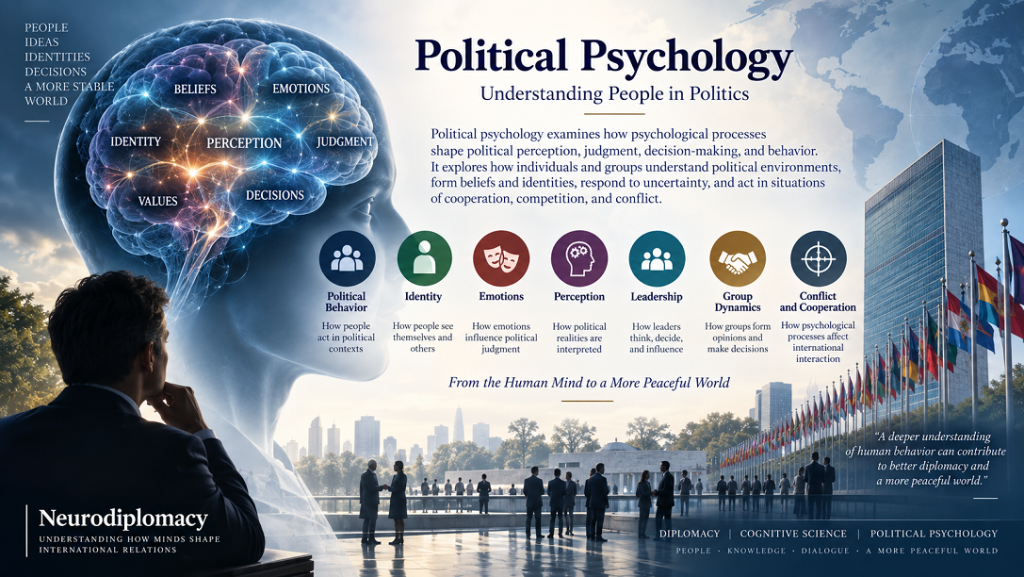
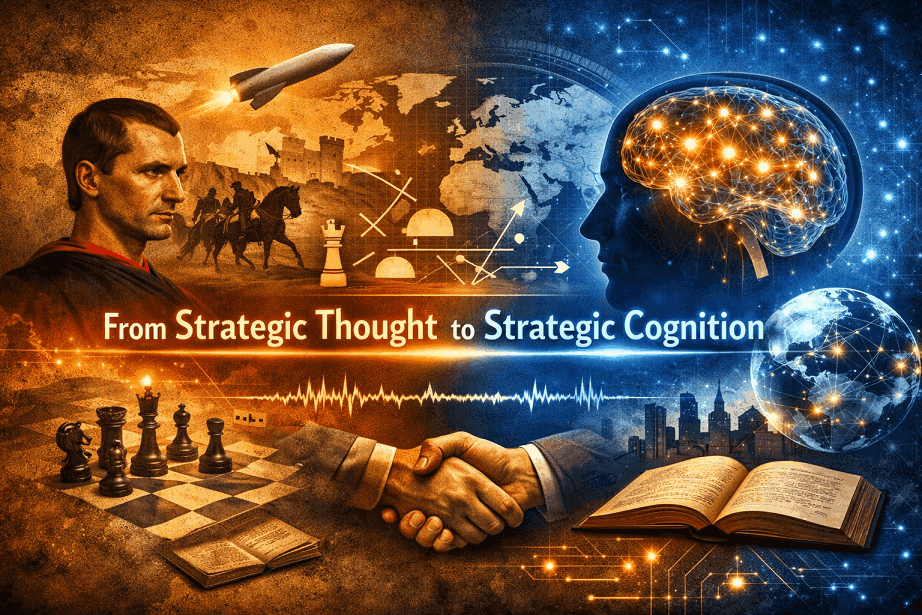
Peter Paret, Gordon A. Craig, and Felix Gilbert’s Makers of Modern Strategy from Machiavelli to the Nuclear Age (1986) represents one of the most influential works in the intellectual history of strategic studies. Through its examination of major strategic thinkers from the Renaissance to the nuclear era, the volume demonstrates how concepts of war, security, power, and statecraft have evolved alongside political, technological, and social transformations. However, while the book provides a comprehensive history of strategic ideas, it gives limited attention to the cognitive mechanisms through which strategic ideas are created, interpreted, and implemented. This article proposes an extension of Paret’s framework through the incorporation of neurodiplomacy, an emerging interdisciplinary approach that integrates neuroscience, cognitive psychology, political psychology, and diplomacy.
The article argues that strategic thought is not only a product of historical circumstances, military innovation, and political structures; it is also a product of human cognition. The strategic theories of Machiavelli, Clausewitz, Mahan, Douhet, Liddell Hart, and nuclear strategists were developed through processes involving perception, memory, imagination, emotional evaluation, risk assessment, and decision-making under uncertainty. A neurodiplomatic reinterpretation of strategic history provides a new analytical dimension: it examines how the human brain processes threats, constructs strategic narratives, evaluates adversaries, and transforms information into policy choices.
By integrating neurodiplomacy with the intellectual tradition represented in Makers of Modern Strategy, this article proposes a cognitive evolution of strategic studies—from the study of strategic ideas toward the study of the minds that produce strategic ideas. This approach contributes to contemporary International Relations, strategic studies, and foreign policy analysis by offering a neurocognitive understanding of war, peace, diplomacy, and strategic decision-making.
Keywords: Neurodiplomacy; Strategic Studies; Makers of Modern Strategy; Clausewitz; Machiavelli; Cognitive Science; Foreign Policy Decision-Making; Political Psychology.
1. Introduction: From Strategic Ideas to Strategic Minds
The study of strategy has traditionally focused on the relationship between political objectives, military capabilities, and the use of force. Strategic thinkers have attempted to answer fundamental questions:
- How should states protect themselves?
- How should leaders respond to threats?
- How can political objectives be achieved through military and diplomatic means?
- How can uncertainty be managed in international competition?
The classic volume Makers of Modern Strategy from Machiavelli to the Nuclear Age, edited by Peter Paret, Gordon A. Craig, and Felix Gilbert, provides one of the most comprehensive intellectual histories of how these questions have been addressed over centuries.
The book’s central contribution is demonstrating that strategy is not a fixed concept. It changes according to transformations in politics, technology, society, and international order. Machiavelli’s strategic thinking emerged from the formation of modern states; Clausewitz’s theory reflected the revolutionary and Napoleonic era; naval and air power theories responded to technological change; nuclear strategy emerged from the unprecedented destructive potential of atomic weapons.
However, behind every strategic transformation lies a fundamental element that receives less explicit attention:
the human mind.
Strategic theories are created by individuals and institutions attempting to understand complex realities. Leaders and strategists do not respond directly to the world itself; they respond to their perceptions of the world. They interpret threats, evaluate risks, imagine future possibilities, and make decisions through cognitive processes shaped by experience, culture, emotions, and institutional environments.
Neurodiplomacy introduces this missing dimension.
It argues that strategic history should not only examine the evolution of strategic concepts but also investigate the neurocognitive foundations that make strategic thinking possible.
2. The Cognitive Foundations of Strategic Thought
Traditional strategic studies often assume that strategists analyze problems rationally and develop optimal solutions. However, contemporary neuroscience and cognitive psychology demonstrate that human decision-making is influenced by multiple interconnected processes.
Strategic judgment involves:
- Perception
- Attention
- Memory
- Emotional evaluation
- Risk assessment
- Pattern recognition
- Imagination
- Social cognition
These processes influence how leaders understand international environments.
A state does not simply identify a threat; policymakers perceive and interpret something as a threat.
A military capability does not possess meaning independently; its meaning depends on how decision-makers understand intentions, history, and context.
Therefore, strategic competition is partly a competition between interpretations.
This insight creates a bridge between strategic studies and neurodiplomacy.
3. Machiavelli and the Neurocognition of Political Survival
In Makers of Modern Strategy, Machiavelli represents one of the earliest foundations of modern strategic thought.
Machiavelli argued that successful rulers must understand political reality rather than rely on idealistic assumptions. He emphasized adaptability, strategic calculation, and the importance of maintaining state power.
From a neurodiplomatic perspective, Machiavelli’s contribution can be interpreted as an early recognition of cognitive flexibility.
Effective leaders must:
- Understand changing circumstances
- Adapt strategies
- Anticipate opponents’ behavior
- Control emotional impulses
- Evaluate risks realistically
Machiavelli’s famous distinction between virtù and fortuna reflects a fundamental cognitive challenge: leaders operate in uncertain environments where success depends upon both judgment and adaptation.
Neurodiplomacy would interpret Machiavellian strategy as the ability to manage uncertainty through advanced perception and decision-making.
4. Clausewitz and the Cognitive Nature of War
Clausewitz occupies a central position in modern strategic thought because of his understanding of war as a political and human activity.
His famous argument that war is the continuation of politics by other means suggests that military action cannot be separated from human intentions, emotions, and social forces.
Several Clausewitzian concepts have direct connections with neurodiplomacy.
4.1 Friction and Cognitive Limits
Clausewitz’s concept of friction describes the difference between theoretical plans and real-world execution.
From a neurocognitive perspective, friction emerges partly because humans operate under:
- Limited information
- Stress
- Uncertainty
- Emotional pressure
- Cognitive constraints
Strategic plans fail not only because of external obstacles but because human beings cannot perfectly predict complex environments.
4.2 Moral Forces and Emotion
Clausewitz emphasized morale, courage, fear, and motivation.
Modern neuroscience confirms that emotions play a central role in decision-making and collective behavior.
War is not simply a contest of material capabilities; it is also a contest of:
- Beliefs
- Motivation
- Identity
- Psychological resilience
A neurodiplomatic reading therefore expands Clausewitz by examining the neural and psychological foundations of these moral forces.
5. Naval Power, Air Power, and Strategic Imagination
The strategic theories of Alfred Thayer Mahan and Giulio Douhet demonstrate how technology transforms strategic cognition.
Mahan argued that naval power determines national influence because control of maritime routes shapes economic and military strength.
Douhet argued that air power introduced a revolutionary possibility: the ability to bypass traditional battlefields and strike directly at societies.
From a neurodiplomatic perspective, these theories illustrate the role of strategic imagination.
Strategists do not merely analyze existing capabilities; they imagine future possibilities.
The human brain has the capacity to construct scenarios about future conflicts, technological developments, and political outcomes.
Strategic innovation therefore depends partly on cognitive creativity.
6. Nuclear Strategy and the Psychology of Deterrence
The nuclear age represents perhaps the strongest example of the relationship between strategy and cognition.
Nuclear weapons transformed strategic thinking because traditional concepts of victory became problematic. The possibility of mutual destruction required new concepts:
- Deterrence
- Credibility
- Rationality
- Escalation management
- Strategic stability
However, nuclear strategy also revealed the psychological dimensions of international security.
Deterrence depends on:
- Perception of intentions
- Communication
- Trust and mistrust
- Risk calculation
- Emotional control
The Cuban Missile Crisis demonstrated that nuclear stability depended not only on weapons but also on human judgment under extreme pressure.
A neurodiplomatic analysis asks:
- How did leaders interpret incomplete information?
- How did emotions influence choices?
- How were risks cognitively evaluated?
- How did decision-makers avoid catastrophic escalation?
7. Neurodiplomacy as the Next Evolution of Strategic Studies
The incorporation of neurodiplomacy into strategic studies does not reject the insights of Makers of Modern Strategy. Instead, it extends them.
Paret’s volume explains:
How strategic ideas evolved.
Neurodiplomacy asks:
How did human minds create, evaluate, and transform those strategic ideas?
This represents a movement from:
Traditional Strategic Studies
Power → Strategy → Decision → Action
toward:
Neurodiplomatic Strategic Studies
Information → Perception → Cognition → Emotion → Decision → Strategy → Action
The addition of neurodiplomacy introduces several new research questions:
- How do leaders perceive emerging threats?
- How do cognitive biases influence military planning?
- How does institutional culture shape strategic thinking?
- How can decision-making systems reduce errors?
- How can diplomacy improve cognitive understanding between adversaries?
8. The Neurodiplomatic Institutional Decision-Making Model (NIDM) and Strategic Thought
The Neurodiplomatic Institutional Decision-Making Model (NIDM) provides a practical framework for applying neurodiplomacy to strategic institutions.
It suggests that effective strategic decision-making requires seven stages:
1. Strategic Information Acquisition
Gathering diverse and reliable information.
2. Cognitive Filtering
Separating meaningful signals from information overload.
3. Neurocognitive Analysis
Identifying assumptions, biases, and alternative interpretations.
4. Emotional Regulation
Managing fear, anger, confidence, and psychological pressure.
5. Strategic Integration
Combining military, diplomatic, economic, ethical, and political considerations.
6. Decision Implementation
Executing strategy through coordinated institutions.
7. Institutional Learning
Evaluating outcomes and improving future decisions.
Applied to the thinkers examined in Makers of Modern Strategy, NIDM provides a framework for understanding not only their theories but also the cognitive processes behind strategic innovation.
9. Implications for Contemporary International Relations
The integration of neurodiplomacy into strategic studies has important implications for modern global politics.
Today’s strategic environment includes:
- Artificial intelligence competition
- Cyber warfare
- Information warfare
- Great-power rivalry
- Nuclear risks
- Climate security
These challenges require not only technological capabilities but also improved cognitive decision-making.
Future strategic institutions must develop:
- Cognitive resilience
- Analytical diversity
- Emotional intelligence
- Strategic empathy
- Institutional learning mechanisms
Neurodiplomacy therefore contributes to a more complete understanding of security and diplomacy.
Conclusion: From Makers of Strategy to Makers of Strategic Minds
Makers of Modern Strategy from Machiavelli to the Nuclear Age remains a foundational work because it demonstrates that strategy evolves with political and technological transformation. However, the next stage in strategic studies requires examining the cognitive foundations of strategic thought itself.
Neurodiplomacy provides this additional perspective.
It reveals that strategy is not created only by weapons, geography, institutions, or power structures. It is created by human minds attempting to understand uncertainty and shape the future.
Machiavelli’s political realism, Clausewitz’s theory of war, Mahan’s maritime strategy, Douhet’s air power theory, and nuclear deterrence concepts all represent different expressions of human cognitive engagement with complex strategic environments.
The future of strategic studies may therefore require a new question:
Not only “What strategies do states create?”
but also:
“How do human minds create strategies, how do institutions process them, and how can cognitive science improve decisions about war and peace?”
The integration of neurodiplomacy with the intellectual tradition of Makers of Modern Strategy opens a new pathway toward understanding world politics—one that connects strategic history with the science of the human mind.
References
- Paret, P., Craig, G. A., & Gilbert, F. (Eds.). (1986). Makers of modern strategy from Machiavelli to the nuclear age. Princeton University Press.
- Clausewitz, C. von. (1976). On War. Princeton University Press.
- Jervis, R. (1976). Perception and Misperception in International Politics. Princeton University Press.
- Kahneman, D. (2011). Thinking, Fast and Slow. Farrar, Straus and Giroux.
- Damasio, A. (1994). Descartes’ Error: Emotion, Reason, and the Human Brain. Putnam.
- Janis, I. L. (1972). Victims of Groupthink. Houghton Mifflin.
- Simon, H. A. (1957). Models of Man: Social and Rational. Wiley.