Introduction
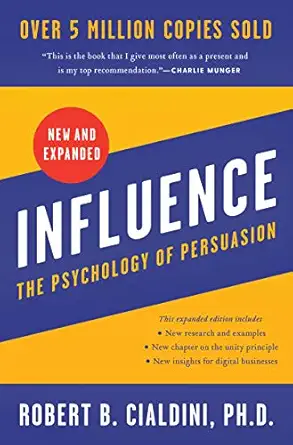
Robert B. Cialdini’s Influence: The Psychology of Persuasion is widely recognized as one of the most influential books ever written on the science of persuasion, compliance, and human decision-making. Since its first publication in 1984, the book has become a foundational text in social psychology, behavioral economics, marketing, communication studies, management, and political science. The New and Expanded Edition (2021) updates this classic work by incorporating recent empirical research, contemporary examples drawn from digital communication and social media, and a seventh principle of persuasion—Unity—which reflects advances in understanding social identity and group affiliation.
Cialdini, Professor Emeritus of Psychology and Marketing at Arizona State University, has devoted decades to studying the psychological mechanisms that shape human behavior. Unlike many theoretical works, Influence combines rigorous scientific research with extensive field observations. To understand how persuasion operates in everyday life, Cialdini immersed himself in professions that rely heavily on influencing others, including sales, fundraising, advertising, and marketing. This combination of experimental psychology and real-world observation makes the book academically robust while remaining accessible to practitioners and general readers.
The central thesis of the book is that people frequently rely on automatic cognitive shortcuts, or heuristics, when making decisions. These mental shortcuts simplify complex judgments, allowing individuals to function efficiently in environments saturated with information. However, these same cognitive mechanisms also make individuals susceptible to persuasive influence. By identifying the universal principles underlying persuasion, Cialdini seeks not only to explain why people say “yes,” but also to help readers recognize and defend themselves against unethical manipulation.
Summary of the Book
The book is organized around seven universal principles of persuasion, each supported by extensive psychological research and illustrated through numerous case studies and real-life examples.
The first principle, Reciprocity, describes the universal tendency to repay favors, gifts, or concessions received from others. Across cultures, reciprocity serves as a fundamental norm that promotes cooperation and social stability. Yet, because individuals often feel obligated to return even unsolicited favors, this principle can also be exploited for persuasive purposes. Cialdini demonstrates how marketers, negotiators, charities, and diplomats alike use reciprocity to establish relationships and encourage compliance.
The second principle, Commitment and Consistency, is based on the psychological desire to behave consistently with one’s previous commitments and publicly expressed beliefs. Once individuals commit themselves to a particular course of action, they often continue supporting it even when circumstances change. Cialdini explains that consistency contributes to personal identity and social credibility, making it one of the strongest predictors of future behavior.
The third principle, Social Proof, argues that individuals frequently determine appropriate behavior by observing the actions of others, particularly during situations characterized by uncertainty or ambiguity. This tendency explains the influence of testimonials, popularity indicators, customer reviews, and social trends. In modern digital environments, social proof has become increasingly significant through online ratings, viral content, and social media engagement.
The fourth principle, Liking, emphasizes that people are more easily persuaded by individuals whom they like, trust, or perceive as similar to themselves. Similarity, familiarity, attractiveness, compliments, and cooperation all contribute to interpersonal liking and consequently increase persuasive effectiveness.
The fifth principle, Authority, demonstrates that individuals naturally defer to experts and legitimate authority figures. Professional credentials, institutional reputation, uniforms, titles, and demonstrated expertise all enhance persuasive credibility. Although deference to authority often promotes efficient decision-making, it may also result in unquestioning obedience when authority is misused.
The sixth principle, Scarcity, explains that opportunities appear more valuable when they are limited or becoming unavailable. Limited editions, deadlines, exclusive opportunities, and competitive access all increase perceived value because individuals associate scarcity with importance and potential loss.
The final principle introduced in the expanded edition is Unity. Cialdini argues that persuasion becomes especially powerful when communicators and audiences perceive themselves as belonging to the same social group or sharing a common identity. Unlike liking, which depends upon interpersonal attraction, unity emerges from shared identities such as family, nationality, religion, profession, or organizational membership. The inclusion of unity reflects growing recognition within psychology that identity profoundly shapes judgment, cooperation, and collective action.
Throughout the book, Cialdini emphasizes that these principles are neither inherently ethical nor unethical. Their moral character depends entirely upon how they are employed. Ethical persuasion facilitates informed decision-making and mutually beneficial outcomes, whereas manipulation exploits cognitive tendencies through deception or coercion.
Major Themes and Contributions
One of the book’s most significant contributions is its demonstration that persuasion is fundamentally psychological rather than rhetorical. While traditional approaches often emphasize communication skills, logical argumentation, or negotiation tactics, Cialdini shows that successful persuasion depends primarily upon understanding predictable patterns of human cognition and social behavior.
A second major contribution is the integration of laboratory research with practical application. Rather than presenting abstract psychological theories, Cialdini translates decades of empirical findings into principles that operate in business, politics, healthcare, education, law, diplomacy, and everyday interpersonal interactions. This integration has made Influence one of the rare academic works to achieve both scholarly recognition and widespread practical impact.
The book also contributes significantly to behavioral decision-making literature by demonstrating that many human decisions are guided by automatic rather than fully rational processes. Individuals often believe they make decisions through careful deliberation, yet Cialdini’s research illustrates how environmental cues, social expectations, and cognitive shortcuts frequently shape choices before conscious reasoning begins. In this respect, Influence complements the work of Daniel Kahneman, Amos Tversky, and other scholars who challenged classical assumptions of rational decision-making.
Furthermore, the expanded edition successfully updates the discussion for the twenty-first century. Digital marketing, algorithmic recommendations, influencer culture, online reviews, crowdfunding, and social networking have amplified the operation of persuasion principles. Although technology has transformed communication channels, Cialdini convincingly argues that the psychological foundations of persuasion remain remarkably constant.
Critical Evaluation
The principal strength of Influence lies in its remarkable balance between scientific rigor and practical accessibility. Cialdini draws upon hundreds of empirical studies while avoiding unnecessary technical complexity. His writing style is clear, engaging, and supported by numerous illustrative examples that make psychological concepts understandable without sacrificing academic credibility.
Another notable strength is the interdisciplinary relevance of the book. Although rooted in social psychology, its insights extend to economics, organizational behavior, communication studies, political science, negotiation, international relations, leadership, and public administration. Few works have influenced such a broad range of academic disciplines.
The inclusion of the principle of Unity represents an important theoretical advancement. Contemporary psychological research increasingly recognizes the central role of identity in shaping political attitudes, organizational behavior, conflict, and cooperation. By incorporating unity into the persuasion framework, Cialdini acknowledges developments in social identity theory and collective behavior that have become increasingly important in modern societies.
Equally commendable is the book’s ethical perspective. Rather than encouraging manipulation, Cialdini repeatedly emphasizes responsible influence grounded in honesty, transparency, and mutual benefit. He also provides readers with strategies for recognizing deceptive persuasion attempts, thereby strengthening both practical resilience and ethical awareness.
Despite its considerable strengths, several limitations deserve consideration. First, while the principles enjoy substantial empirical support, the book sometimes presents illustrative anecdotes that cannot substitute for systematic comparative evidence. Academic readers interested in methodological detail may therefore need to consult the original research literature.
Second, the seven principles occasionally overlap in practice. Authority frequently interacts with liking, reciprocity may reinforce commitment, and unity often strengthens social proof. Real-world persuasion rarely depends upon a single isolated mechanism, making causal distinctions more complex than the conceptual framework sometimes suggests.
Third, although Cialdini acknowledges cultural diversity, much of the supporting evidence originates from Western societies. Cross-cultural research indicates that persuasion strategies vary according to cultural values, social norms, and institutional contexts. Future editions could strengthen their analysis by incorporating broader comparative evidence from non-Western societies.
Finally, recent developments in artificial intelligence, personalized algorithms, and computational propaganda raise new questions regarding persuasion that extend beyond the book’s current scope. As digital technologies increasingly personalize information environments, future scholarship will need to examine how traditional persuasion principles interact with machine learning, automated decision systems, and synthetic media.
Relevance to International Relations and Neurodiplomacy
Although Influence focuses primarily on interpersonal persuasion, its implications extend far beyond individual interactions. International diplomacy fundamentally depends upon persuasion rather than coercion alone. States seek to influence allies, rivals, international organizations, and public opinion through communication, negotiation, credibility, and trust.
Reciprocity has long served as a cornerstone of diplomatic practice through reciprocal concessions, confidence-building measures, and treaty obligations. Commitment and consistency explain why governments often maintain previously announced policies in order to preserve international credibility. Social proof contributes to the diffusion of international norms, while authority strengthens the legitimacy of international organizations and expert institutions. Scarcity influences negotiations over limited resources, strategic technologies, and geopolitical opportunities. Unity provides important insights into alliance formation, regional integration, and collective security arrangements based upon shared identities and common values.
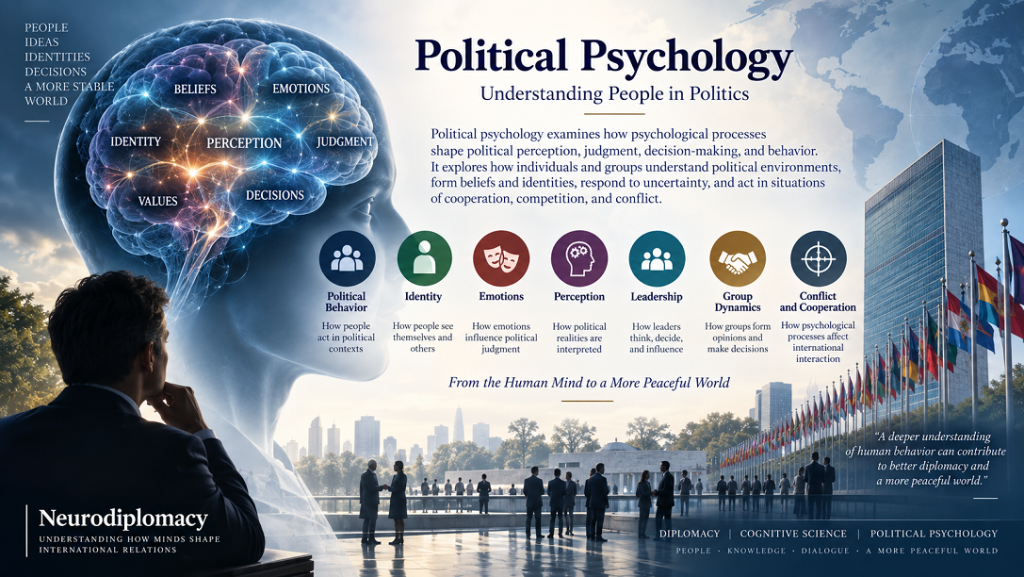
The book is particularly relevant to the emerging field of Neurodiplomacy, which emphasizes the cognitive and neuropsychological foundations of diplomatic decision-making. Cialdini’s persuasion principles reflect automatic cognitive processes that influence perception, judgment, trust, and cooperation before conscious analytical reasoning fully develops. His work therefore complements dual-process theories of cognition, behavioral economics, and contemporary neuroscience.
For Neurodiplomacy, persuasion is not merely a communication strategy but a cognitive process rooted in the functioning of the human brain. Diplomatic negotiations involve emotions, heuristics, identity, memory, attention, and social cognition—all of which shape foreign policy decisions. Understanding these mechanisms enables diplomats and policymakers to design more effective communication strategies while avoiding cognitive biases that may undermine rational judgment.
Consequently, Influence provides a valuable conceptual bridge between social psychology and international relations. It reinforces the growing recognition that successful diplomacy depends not only upon material power but also upon understanding how individuals and institutions perceive information, evaluate credibility, and make decisions under conditions of uncertainty.
Conclusion
Robert Cialdini’s Influence: The Psychology of Persuasion remains one of the most important contributions to the scientific study of persuasion and human behavior. The 2021 expanded edition successfully modernizes a classic work by incorporating contemporary research and introducing the principle of Unity, thereby strengthening its relevance for an increasingly interconnected and digitally mediated world.
The book’s greatest achievement lies in demonstrating that persuasion is grounded in predictable psychological processes rather than manipulation or charisma alone. By combining rigorous empirical research with practical application, Cialdini has produced a work that continues to influence scholarship and professional practice across numerous disciplines.
For scholars of psychology, behavioral economics, communication, negotiation, diplomacy, and international relations, Influence offers an indispensable theoretical foundation. Its insights are especially valuable for researchers interested in foreign policy decision-making and Neurodiplomacy, where understanding the cognitive mechanisms underlying persuasion, trust, identity, and cooperation has become increasingly important. More than four decades after its original publication, Influence continues to demonstrate that effective leadership and diplomacy begin with a deep understanding of how the human mind makes decisions.
Reference
Cialdini, R. B. (2021). Influence: The psychology of persuasion (New & expanded ed.). Harper Business.