Introduction
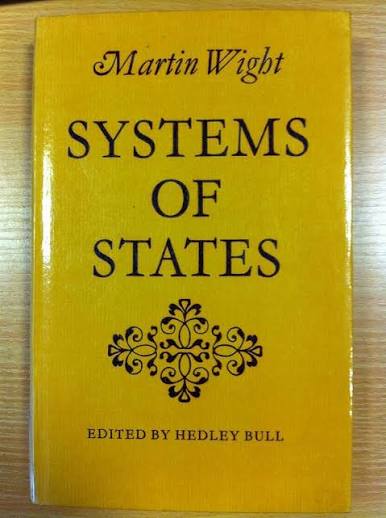
Martin Wight’s Systems of States, published posthumously in 1977, is one of the foundational works in the intellectual development of the English School of International Relations. The book represents a profound historical and philosophical exploration of the nature of international politics, the evolution of state systems, and the recurring patterns of order and conflict among political communities. Although Wight never produced a conventional grand theory of International Relations, his historical approach and conceptual insights profoundly influenced later scholars, particularly Hedley Bull, Barry Buzan, and Tim Dunne, who developed and expanded the English School tradition.
Martin Wight (1913–1972) was one of the most important British thinkers in twentieth-century international thought. As a member of the British Committee on the Theory of International Politics, Wight played a central role in shaping an alternative approach to International Relations that differed from the dominant American behavioral and realist traditions. His scholarship was characterized by historical depth, philosophical reflection, and an interest in the moral and cultural foundations of international order.
The central argument of Systems of States is that international politics should be understood historically through the study of different systems of states that have emerged across time. Wight rejects the idea that the modern European state system represents the only possible model of international relations. Instead, he examines various historical examples—from ancient civilizations to modern Europe—to demonstrate how political communities have organized their relationships through different patterns of power, diplomacy, law, and shared expectations.
The book’s significance lies not only in its historical analysis but also in its contribution to the development of the English School’s central concern: how order is possible in a world without a central authority. Wight’s work provides the historical and philosophical foundations for later concepts such as international society, international order, and the relationship between power and morality.
Summary of the Book
In Systems of States, Wight investigates the historical development of international systems by examining different examples of political communities interacting with one another. Rather than focusing exclusively on modern nation-states, he adopts a broad historical perspective to explore how various civilizations created forms of international organization.
A key theme of the book is the distinction between international systems and domestic political systems. Domestic societies possess centralized authority, whereas systems of states operate under conditions of anarchy. However, Wight emphasizes that anarchy does not necessarily mean chaos. Throughout history, states and political communities have developed practices, institutions, and norms that enable coexistence despite the absence of a world government.
Wight examines several historical systems, including the ancient Greek city-state system, the Roman world, the Islamic international order, the Chinese tributary system, and the modern European state system. Through these comparisons, he demonstrates that international relations have taken different forms depending on cultural, political, and historical contexts.
One of Wight’s most important arguments is that international systems differ according to the degree of social interaction, political organization, and shared understanding among their members. Some systems are characterized primarily by competition and power balancing, while others contain stronger elements of hierarchy, cultural unity, or common values.
The European states system receives particular attention because Wight views it as historically distinctive. He explains how the European balance of power, diplomacy, international law, and the recognition of sovereign equality contributed to the development of modern international society. However, he does not present the European experience as universally applicable. Instead, he emphasizes that international systems are historical constructions shaped by particular circumstances.
Throughout the book, Wight explores three recurring traditions of international thought that later became central to the English School: realism, rationalism, and revolutionism. Although these categories were developed more fully in his other works, they are reflected throughout Systems of States.
The realist tradition emphasizes power, conflict, and the struggle for survival among political communities. The rationalist tradition focuses on diplomacy, law, negotiation, and coexistence among states. The revolutionist tradition emphasizes universal moral principles and the possibility of transcending the limitations of state sovereignty.
These traditions demonstrate that international politics has always involved tensions between power, order, and justice. States seek security and survival, but they also participate in social relationships governed by norms, expectations, and institutions.
Major Themes and Contributions
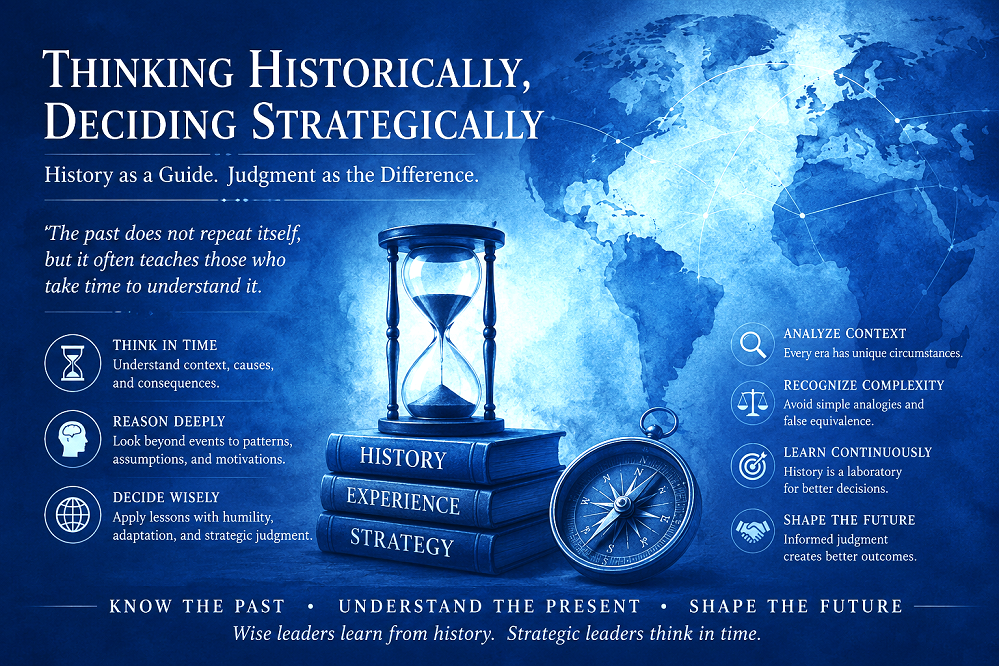
One of the most important contributions of Systems of States is its historical approach to International Relations theory. At a time when many scholars were increasingly interested in scientific models and abstract theories, Wight emphasized that international politics must be understood through historical experience. He argued that ideas, traditions, and cultural contexts shape the behavior of states.
A second major contribution is Wight’s conceptualization of international systems as historical and social formations. He demonstrated that international relations are not fixed or universal but evolve according to changing political circumstances. This insight influenced later constructivist and historical approaches within International Relations.
Another significant contribution is his challenge to simplistic interpretations of anarchy. Wight recognized that the absence of a central authority creates uncertainty and competition, but he also showed that states develop institutions and practices that create stability. This argument became central to Hedley Bull’s concept of international society.
Wight’s analysis of diplomacy is another important contribution. He viewed diplomacy not merely as a practical tool of foreign policy but as a fundamental institution through which states communicate, negotiate, and maintain relationships. His work helped establish diplomacy as a central subject of International Relations theory.
The book also contributes to comparative international history. By examining different systems of states, Wight encourages scholars to move beyond a narrow European perspective and consider alternative forms of political organization. This comparative approach remains highly relevant in contemporary debates about global order and non-Western international relations.
Perhaps the most enduring contribution of Systems of States is its philosophical depth. Wight recognized that international politics involves permanent tensions between competing values: security and justice, sovereignty and humanity, order and change. Rather than seeking simple solutions, he demonstrated that these tensions are inherent features of international life.
Critical Evaluation
The greatest strength of Systems of States is its intellectual richness. Wight combines history, political philosophy, international law, and diplomatic studies to create a multidimensional understanding of world politics. His work demonstrates that International Relations cannot be reduced to calculations of power alone.
Another strength is the originality of his comparative historical approach. By examining multiple international systems, Wight avoids assuming that the European state system represents the only model of international organization. This perspective has become increasingly important as scholars examine global order from non-Western perspectives.
Wight’s emphasis on ideas and traditions is also a major contribution. He demonstrates that political behavior is shaped not only by material interests but also by historical memories, moral beliefs, and intellectual traditions. This insight has influenced constructivist approaches and contemporary studies of identity and norms.
However, the book also has limitations. The first concerns its abstract and philosophical style. Unlike contemporary International Relations works that emphasize empirical testing and clearly defined variables, Wight’s analysis is interpretive and historical. Some scholars may find his arguments difficult to apply to specific empirical cases.
A second limitation is that the book reflects the intellectual context of its time. Although Wight examines non-European systems, his analysis remains influenced by European historical experiences and categories. Contemporary scholars have called for greater engagement with perspectives from Asia, Africa, Latin America, and indigenous political traditions.
A third limitation concerns the limited attention given to non-state actors. Like much traditional International Relations scholarship, Wight focuses primarily on states. In today’s world, multinational corporations, international organizations, social movements, digital networks, and transnational communities play increasingly important roles.
Nevertheless, these limitations do not diminish the book’s importance. Rather, they indicate areas where Wight’s insights can be extended through contemporary research.
Relevance to International Relations and Neurodiplomacy
Systems of States has important implications for both International Relations and the emerging field of Neurodiplomacy. Wight’s central insight—that international politics is shaped by historical experiences, ideas, identities, and social relationships—closely aligns with cognitive approaches to world politics.
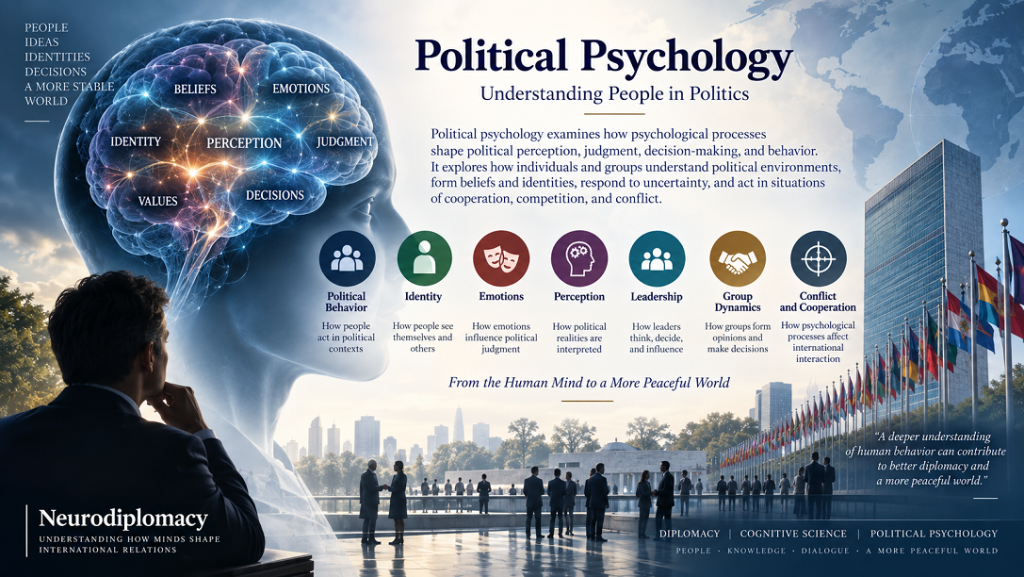
Neurodiplomacy examines how human cognition influences diplomatic perception, communication, negotiation, and foreign policy decision-making. Wight’s historical approach provides the broader intellectual environment in which these cognitive processes occur. International systems are not simply arrangements of material power; they are also mental frameworks through which political actors interpret the world.
For example, Wight’s discussion of different traditions of international thought can be connected to cognitive patterns in foreign policy. Realist approaches often emphasize threat perception and strategic competition, rationalist approaches emphasize communication and cooperation, and revolutionist approaches emphasize moral identity and universal values. These different perspectives reflect different ways of interpreting international reality.
Wight’s emphasis on diplomacy is particularly relevant to Neurodiplomacy. Diplomatic systems function because individuals and societies develop shared expectations, trust mechanisms, and communication practices. Understanding how these processes operate requires attention to cognition, emotion, memory, and social identity.
Furthermore, Wight’s concept of historical traditions connects with research on collective memory and political cognition. States do not respond to international events based only on present circumstances; they interpret events through historical narratives and identities. These cognitive frameworks influence perceptions of allies, rivals, threats, and opportunities.
Therefore, Neurodiplomacy can extend Wight’s historical-philosophical insights by examining the cognitive mechanisms through which international systems are perceived, maintained, and transformed.
Conclusion
Martin Wight’s Systems of States remains a foundational work in the study of International Relations and a central text in the development of the English School. Through its historical and philosophical analysis, the book demonstrates that international politics is a complex interaction between power, institutions, ideas, and social relationships.
Wight’s greatest contribution lies in showing that states exist within historically developed systems that shape their behavior and expectations. His work challenges purely realist interpretations of international politics while avoiding overly optimistic assumptions about global cooperation.
Although the book reflects its historical context and requires further development to address contemporary issues such as globalization, digital transformation, and non-state actors, its intellectual significance remains undeniable. It provides essential insights into international order, diplomacy, and the relationship between history and political behavior.
For scholars of International Relations, diplomacy, global governance, and Neurodiplomacy, Systems of States offers a powerful reminder that world politics is not only a matter of power and strategy but also a product of human ideas, perceptions, traditions, and collective understandings.
Reference
Wight, M. (1977). Systems of states. Leicester University Press.