Introduction
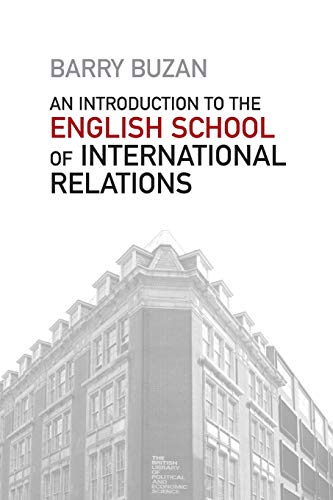
Barry Buzan’s An Introduction to the English School of International Relations: The Societal Approach is one of the most significant contemporary contributions to the study of International Relations (IR) theory and represents a comprehensive effort to clarify, develop, and modernize the English School tradition. Published in 2014, the book provides a systematic introduction to an approach that occupies a distinctive position between realism and liberalism by emphasizing the importance of international society, shared norms, institutions, and collective identities in shaping world politics.
Barry Buzan, one of the most influential scholars in contemporary International Relations, has made major contributions to security studies, regional security complexes, and English School theory. In this book, he seeks to explain the theoretical foundations of the English School while addressing some of the criticisms and ambiguities that have surrounded it since its emergence. Building upon the ideas of scholars such as Hedley Bull, Martin Wight, and Adam Watson, Buzan argues that international politics cannot be understood solely through the lens of power competition or material interests. Instead, states exist within a social environment characterized by shared rules, institutions, and practices.
The central argument of the book is that the English School provides a unique societal approach to world politics. It recognizes that the international system is anarchic, as realists emphasize, but also argues that states form an international society through shared understandings and institutional practices. Buzan’s main objective is to strengthen the theoretical coherence of the English School by explaining its concepts, expanding its analytical framework, and demonstrating its relevance to contemporary global challenges.
Summary of the Book
Buzan begins by introducing the origins and intellectual foundations of the English School. He explains that the tradition developed primarily through the work of British scholars who sought to overcome the limitations of both realism and liberal internationalism. Realism emphasizes power, survival, and competition, while liberal approaches focus on cooperation and institutions. The English School attempts to integrate both perspectives by arguing that international relations contain elements of both conflict and cooperation.
A central focus of the book is the distinction among three key concepts: international system, international society, and world society. These concepts provide the foundation of the English School’s analytical framework.
An international system exists when states interact and influence each other’s decisions. This concept reflects a realist understanding of international politics, where states operate within an anarchic environment and respond primarily to power considerations.
An international society develops when states recognize common interests, shared rules, and institutions that regulate their behavior. This concept represents the core contribution of the English School and builds upon Hedley Bull’s argument that international anarchy does not prevent the existence of social order.
A world society, the most ambitious concept, moves beyond states by focusing on individuals, humanity, and global social structures. Buzan explains that world society has historically been less developed than international society but has become increasingly important due to globalization, human rights, transnational movements, and global challenges.
A major contribution of the book is Buzan’s discussion of the pluralist and solidarist traditions within the English School. Pluralists emphasize the importance of sovereignty, non-intervention, and coexistence among culturally diverse states. They argue that international society should primarily preserve order and stability. Solidarists, by contrast, emphasize shared values, human rights, and the possibility of collective action to address global injustices.
Buzan argues that this debate is not simply a disagreement between opposing theories but reflects a fundamental tension within international society between maintaining order and promoting justice. This tension remains central to contemporary debates concerning humanitarian intervention, global governance, and international responsibility.
The book also examines the institutional foundations of international society. Following Hedley Bull, Buzan emphasizes institutions such as diplomacy, international law, balance of power, great-power management, and war. However, he expands the discussion by exploring how these institutions evolve and adapt within changing international contexts.
Another important theme is Buzan’s attempt to reconstruct and refine the English School. He argues that previous versions of the theory sometimes lacked conceptual clarity and sufficient analytical development. By introducing the idea of a “societal approach,” Buzan seeks to make the English School more systematic and capable of explaining contemporary international politics.
Major Themes and Contributions
One of the book’s most important contributions is its effort to position the English School as a distinctive and independent theoretical approach within International Relations. For many years, IR debates were dominated by realism, liberalism, and later constructivism. Buzan demonstrates that the English School should not be viewed as merely a compromise between these approaches but as a unique perspective emphasizing the social dimensions of international politics.
A second major contribution is the development of the concept of international society. Buzan explains that international relations are not only shaped by material power but also by shared norms, institutions, and collective expectations. States behave differently depending on the social environment in which they operate. This insight has influenced constructivist approaches and broader debates concerning norms, identity, and legitimacy in world politics.
The book also provides an important contribution to the study of global order. Buzan argues that order is not simply produced by dominance or balance of power but also through social practices and institutional arrangements. This perspective helps explain why states frequently follow international rules even when they possess the capability to ignore them.
Another significant contribution is the expansion of the English School beyond its traditional European focus. Earlier versions of the theory were often criticized for reflecting a Western historical experience. Buzan addresses this issue by exploring the global expansion of international society and considering how non-Western states have shaped contemporary international order.
The book is particularly valuable for understanding contemporary challenges such as globalization, human rights, international organizations, and global governance. These issues cannot be adequately explained through traditional power politics alone. They require attention to social relationships, shared meanings, and institutional evolution.
Critical Evaluation
The greatest strength of Buzan’s book is its theoretical clarity. He successfully organizes a complex intellectual tradition and provides readers with a coherent understanding of the English School’s concepts and debates. The book is especially valuable for students and researchers seeking an accessible yet sophisticated introduction to the field.
Another strength is Buzan’s balanced analysis. Rather than presenting the English School as superior to competing theories, he demonstrates how different approaches illuminate different aspects of international politics. His discussion recognizes the importance of power while also emphasizing the significance of norms, institutions, and social interaction.
The book’s interdisciplinary character is another important advantage. Buzan draws upon international history, political theory, sociology, security studies, and international law. This broad perspective reflects the complexity of global politics and strengthens the explanatory power of the English School.
Furthermore, Buzan’s effort to update the English School for the twenty-first century is highly valuable. By addressing globalization, world society, and non-Western perspectives, he expands the relevance of the theory beyond its traditional foundations.
However, the book also presents certain challenges. The conceptual richness of the English School can sometimes create ambiguity. Concepts such as international society and world society are intellectually powerful but difficult to operationalize for empirical research. Scholars may disagree about how these concepts can be measured or applied in specific cases.
Another limitation concerns the continued emphasis on states as central actors. Although Buzan recognizes the importance of individuals and transnational actors through the concept of world society, the analytical framework remains primarily state-focused. In an era of multinational corporations, digital networks, global social movements, and artificial intelligence, additional attention to non-state actors would further strengthen the approach.
Relevance to International Relations and Neurodiplomacy
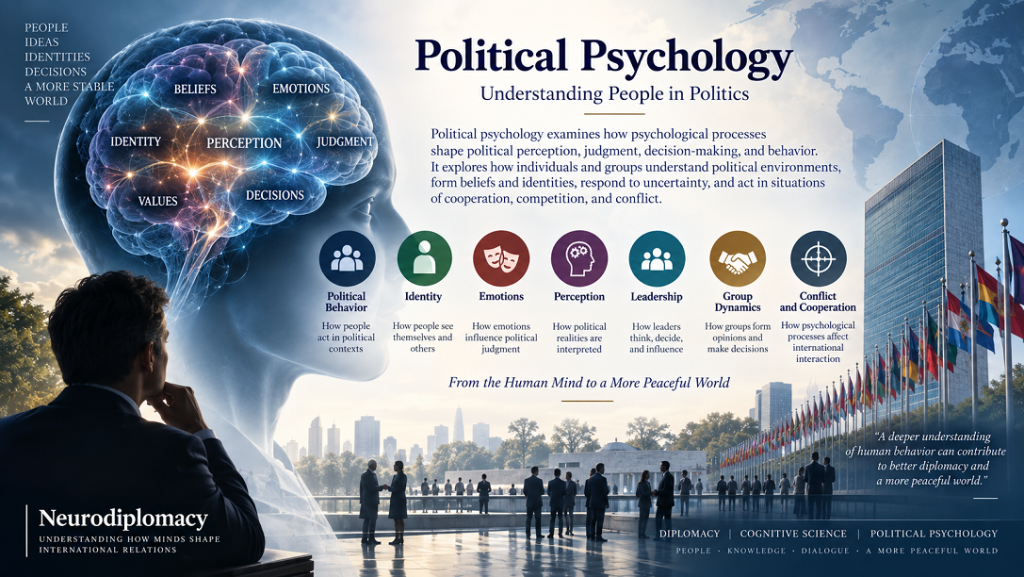
Buzan’s work has significant relevance for both contemporary International Relations and the emerging field of Neurodiplomacy. The English School emphasizes that world politics is not simply a mechanical interaction among states but a social environment shaped by perceptions, identities, norms, and shared meanings.
This perspective aligns closely with Neurodiplomacy’s focus on how cognitive processes influence international behavior. International society exists not only because states have institutions and rules but because political leaders and societies perceive those institutions as legitimate and meaningful. The effectiveness of diplomacy depends upon how actors interpret signals, construct identities, evaluate trust, and process information.
Buzan’s emphasis on social interaction complements a neurocognitive approach to diplomacy. For example, international norms influence behavior only when they become psychologically internalized by decision-makers and societies. Similarly, diplomatic institutions function effectively because individuals develop expectations, memories, and cognitive frameworks that support cooperation.
The English School’s focus on identity and shared values is particularly relevant to understanding alliance formation, conflict resolution, and international cooperation. Neurodiplomacy extends this analysis by examining the cognitive mechanisms underlying identity formation, empathy, perception, and collective decision-making.
Moreover, Buzan’s discussion of order and justice connects with research on moral psychology and political cognition. Decisions about humanitarian intervention, sovereignty, and global responsibility are not determined solely by strategic calculations; they are also shaped by emotions, values, narratives, and perceptions of legitimacy.
Therefore, Buzan’s societal approach provides an essential structural foundation, while Neurodiplomacy offers a cognitive explanation of how international society is created, maintained, and transformed through human minds.
Conclusion
Barry Buzan’s An Introduction to the English School of International Relations: The Societal Approach is an essential contribution to contemporary International Relations scholarship. By clarifying the concepts, debates, and theoretical foundations of the English School, Buzan successfully demonstrates its continuing relevance for understanding global politics.
The book’s central insight—that international relations involve not only power competition but also social interaction, shared norms, and institutional practices—provides a powerful alternative to purely material explanations of world affairs. Its analysis of international system, international society, and world society offers a comprehensive framework for studying order, cooperation, and conflict in global politics.
Although the approach faces challenges concerning conceptual complexity and the changing role of non-state actors, Buzan’s work remains a landmark contribution. For scholars of diplomacy, international relations theory, global governance, and Neurodiplomacy, the book provides a valuable foundation for understanding how international order is constructed through both institutions and human cognition.
Ultimately, An Introduction to the English School of International Relations demonstrates that world politics is not merely a struggle among states but a social process shaped by ideas, identities, relationships, and collective understandings. This insight makes Buzan’s work highly relevant for twenty-first-century diplomacy and for emerging approaches seeking to integrate international relations with cognitive science.
Reference
Buzan, B. (2014). An introduction to the English School of international relations: The societal approach. Polity Press.