Introduction
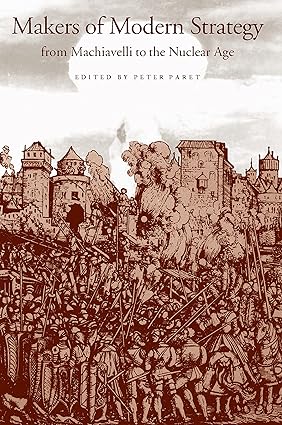
Peter Paret, Gordon A. Craig, and Felix Gilbert’s edited volume Makers of Modern Strategy from Machiavelli to the Nuclear Age (1986) is widely regarded as one of the most influential works in the study of strategic thought and military history. As a successor to Edward Mead Earle’s earlier classic Makers of Modern Strategy: Military Thought from Machiavelli to Hitler (1943), Paret’s volume expands the intellectual and historical scope of strategic studies by extending the analysis beyond traditional military doctrine to include political, social, technological, and cultural dimensions of strategy.
The book examines how major thinkers and practitioners from the sixteenth century to the nuclear era conceptualized the relationship between war, politics, society, and state power. Rather than presenting strategy as a purely military activity concerned with battlefield operations, the contributors demonstrate that strategic thought is fundamentally connected to broader questions of political organization, national interests, diplomacy, technological transformation, and human decision-making.
The enduring significance of this volume lies in its central argument: strategy is not simply the application of military force; it is the intellectual process through which societies organize the use of power to achieve political objectives. In this sense, the book remains highly relevant not only for military historians but also for scholars of International Relations, diplomacy, security studies, and contemporary strategic decision-making.
Structure and Scope of the Book
The volume consists of a series of analytical essays written by leading historians and strategic studies scholars. Rather than offering a chronological narrative of military history, the editors organize the book around influential strategic thinkers and traditions that shaped modern understandings of war and international politics.
The book begins with Renaissance strategic thought and continues through the development of modern statecraft, revolutionary warfare, industrial warfare, total war, and nuclear strategy.
Major figures examined include:
- Niccolò Machiavelli
- Carl von Clausewitz
- Antoine-Henri Jomini
- Alfred Thayer Mahan
- Halford Mackinder
- Giulio Douhet
- Basil Liddell Hart
The final sections address twentieth-century strategic problems, particularly nuclear weapons, deterrence, and the transformation of warfare in the nuclear age.
This broad intellectual range allows readers to observe how strategic thinking evolved alongside major transformations in political organization, technology, and international order.
Machiavelli and the Foundations of Modern Strategic Thought
One of the book’s most important contributions is its treatment of Machiavelli as a foundational figure in modern strategic thinking.
The contributors demonstrate that Machiavelli’s significance extends beyond his reputation as a theorist of political power. In works such as The Prince and The Art of War, Machiavelli introduced a modern understanding of the relationship between political authority, military organization, and state survival.
Machiavelli rejected medieval assumptions about warfare and argued that effective states require strong political institutions and disciplined military forces. His strategic thought reflected the emergence of the modern state system, where security depended upon organized national power.
From a contemporary International Relations perspective, Machiavelli’s ideas anticipate several themes associated with Realism:
- The importance of power
- The centrality of state interests
- The inevitability of conflict
- The relationship between political objectives and military means
However, Paret and his colleagues avoid reducing Machiavelli to a simple realist thinker. Instead, they place him within his historical context, emphasizing his concern with civic organization, political legitimacy, and the relationship between citizens and military institutions.
Clausewitz and the Political Nature of War
Among the most influential chapters in the book is the discussion of Carl von Clausewitz.
Clausewitz’s On War remains one of the most important works in strategic studies because of its fundamental proposition that:
War is the continuation of politics by other means.
The contributors explain that Clausewitz rejected purely technical approaches to warfare. For him, strategy could not be separated from political objectives, human psychology, uncertainty, and the social environment.
Several Clausewitzian concepts remain central to modern strategic analysis:
- The relationship between political goals and military operations
- The importance of uncertainty and friction
- The role of moral forces
- The interaction between chance and rational planning
From the perspective of International Relations, Clausewitz provides a bridge between military strategy and political theory. His work demonstrates that war cannot be understood independently from diplomacy, national interests, and political decision-making.
The Transformation of Strategy in the Industrial Age
A major strength of the book is its explanation of how industrialization transformed strategic thinking.
The nineteenth and twentieth centuries witnessed fundamental changes:
- Mass armies
- Industrial production
- Railways and communication systems
- New weapons technologies
- Total mobilization of societies
Strategists such as Jomini, Mahan, and Douhet attempted to understand how technological change altered the relationship between military power and political influence.
For example, Alfred Thayer Mahan emphasized the importance of naval power and maritime dominance. His theories influenced great-power competition and demonstrated how geography, commerce, and military capability interact.
Similarly, air power theorists argued that technological developments could fundamentally change the nature of warfare by allowing states to strike directly against societies and industrial centers.
The book effectively demonstrates that strategic thought evolves in response to technological and social transformation.
The Nuclear Age and the Transformation of Strategy
The final sections of the volume address perhaps the greatest strategic challenge of the twentieth century: nuclear weapons.
The emergence of nuclear weapons transformed traditional concepts of victory, deterrence, and security.
In previous eras, strategy focused primarily on defeating opponents militarily. Nuclear strategy introduced a paradox: the ability to destroy an opponent could make actual military victory impossible.
The contributors examine concepts such as:
- Nuclear deterrence
- Strategic stability
- Second-strike capability
- Arms control
- Limited war
The nuclear age required strategists to think beyond traditional battlefield concepts and consider psychological, political, and technological dimensions of security.
This aspect of the book is particularly relevant for contemporary studies of strategic decision-making because nuclear strategy depends heavily on perception, communication, credibility, and risk assessment.
Theoretical Contribution to International Relations
Although Makers of Modern Strategy is primarily a work of strategic history, it has significant implications for International Relations theory.
The book contributes to several theoretical debates:
Realism
The emphasis on power, security, and strategic competition strongly connects with realist traditions.
Political Psychology
The discussions of leadership, perception, and decision-making demonstrate the importance of human judgment in strategic affairs.
Constructivism
The evolution of strategic ideas shows how concepts of war and security are socially constructed and historically changing.
Foreign Policy Analysis
The book highlights how individuals and institutions shape strategic choices.
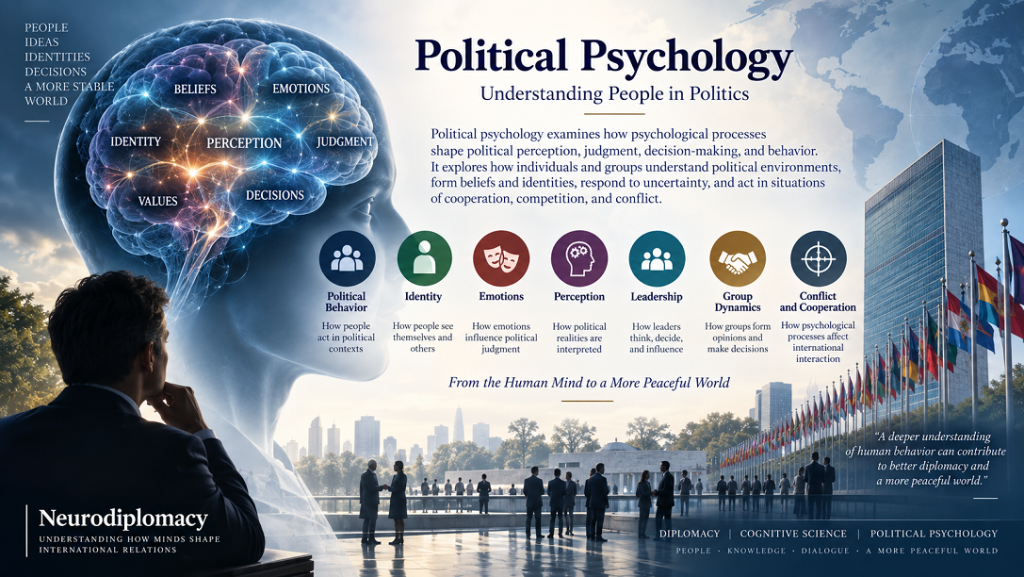
From a contemporary perspective, the book also provides a foundation for emerging fields such as neurodiplomacy, because many strategic decisions discussed in the volume involve perception, uncertainty, cognitive judgment, emotional influence, and institutional learning.
Strengths
The major strength of Makers of Modern Strategy is its intellectual breadth.
First, it successfully demonstrates that strategy is a multidisciplinary field involving:
- Politics
- History
- Geography
- Technology
- Economics
- Psychology
Second, the book avoids simplistic explanations of military history. The contributors do not present strategy as merely a collection of battlefield techniques but as a reflection of broader political and social transformations.
Third, the historical approach provides valuable insight into how strategic ideas develop over time.
Limitations
Despite its many strengths, the book also has limitations.
First, as with many classic works of strategic studies, it focuses primarily on Western strategic thinkers. Although this reflects the intellectual tradition it examines, contemporary strategic studies increasingly recognizes the importance of non-Western perspectives, including Chinese, Islamic, Indian, and other traditions of strategic thought.
Second, the book gives relatively limited attention to gender, social identity, and civilian experiences of war. Later developments in security studies and feminist International Relations have expanded the understanding of strategy beyond traditional military perspectives.
Third, while the book discusses human decision-making, it does not incorporate contemporary developments in neuroscience and cognitive science. A modern extension of strategic studies could examine how human cognition, emotions, and biases influence strategic choices.
Relevance for Contemporary Strategic Studies and Neurodiplomacy
From a neurodiplomatic perspective, Makers of Modern Strategy provides an important historical foundation.
The strategic thinkers discussed in the book were not only analyzing military capabilities; they were analyzing human behavior under conditions of uncertainty and competition.
Modern neurodiplomacy extends this inquiry by asking:
- How do leaders perceive threats?
- How do cognitive biases influence strategic judgment?
- How does fear affect escalation decisions?
- How do institutions learn from strategic failures?
- How can diplomatic systems improve decision quality?
The transition from classical strategy to neurodiplomatic analysis represents an expansion from studying strategic ideas to studying the cognitive processes that create strategic ideas.
Conclusion
Makers of Modern Strategy from Machiavelli to the Nuclear Age remains one of the most important works in the field of strategic studies. Through its examination of major thinkers and historical transformations, the book demonstrates that strategy is a dynamic intellectual tradition shaped by politics, technology, society, and human judgment.
Its greatest contribution is showing that warfare cannot be separated from political objectives and human decision-making. Strategy is ultimately an activity of the mind: it involves perception, interpretation, calculation, imagination, and judgment.
For scholars of International Relations and emerging fields such as neurodiplomacy, the book provides a crucial foundation. It reminds us that understanding global politics requires not only examining states, institutions, and power structures but also understanding the human cognitive processes through which strategic choices are made.
More than three decades after its publication, Makers of Modern Strategy from Machiavelli to the Nuclear Age remains a landmark work because it addresses a timeless question:
How do human beings organize power, interpret threats, and make decisions about war and peace?
Reference
Paret, P., Craig, G. A., & Gilbert, F. (Eds.). (1986). Makers of modern strategy from Machiavelli to the nuclear age. Princeton University Press.