Introduction
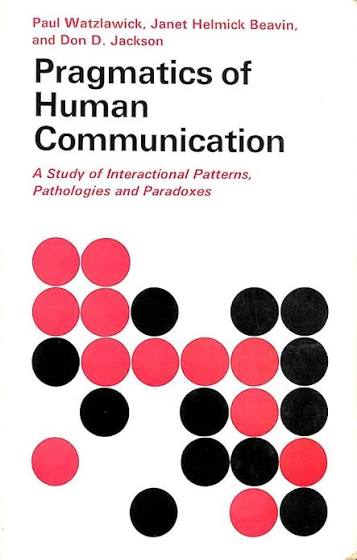
Paul Watzlawick, Janet H. Beavin, and Don D. Jackson’s Pragmatics of Human Communication: A Study of Interactional Patterns, Pathologies, and Paradoxes (1967) is one of the most influential works in the fields of communication theory, psychology, family systems theory, and interpersonal interaction. Developed at the Mental Research Institute (MRI) in Palo Alto, California, the book transformed the study of communication by shifting attention from the transmission of information to the dynamics of human interaction. Rather than asking only what people communicate, the authors examine how communication creates relationships, shapes perceptions, and influences behavior.
Drawing upon systems theory, cybernetics, linguistics, psychiatry, and social psychology, the authors argue that communication is a continuous process through which individuals construct social reality. Their formulation of the Five Axioms of Communication has become one of the foundational frameworks in communication studies and continues to influence research in psychology, counseling, organizational communication, negotiation, conflict resolution, and diplomacy.
This review examines the book’s principal arguments, theoretical contributions, strengths, limitations, contemporary relevance, and significance from the perspective of the emerging field of neurodiplomacy.
Overview of the Book
The central argument of Pragmatics of Human Communication is that communication is not merely the exchange of information but the process through which human relationships are organized and maintained. Every communicative act simultaneously conveys information and defines the relationship between communicators.
The authors reject linear models of communication in favor of a systemic approach in which communication consists of continuous feedback loops. Individuals influence one another reciprocally, making communication a dynamic and circular process rather than a simple sequence of messages.
The book’s most influential contribution is the formulation of the Five Axioms of Human Communication:
First Axiom: One Cannot Not Communicate
Every behavior communicates something. Silence, inaction, facial expressions, gestures, and physical presence all convey meaning. Communication is therefore unavoidable.
Second Axiom: Every Communication Has a Content and a Relationship Dimension
Messages communicate both factual information (content) and information about the relationship between participants. The relationship dimension determines how the content is interpreted.
Third Axiom: The Punctuation of Communication Sequences
Individuals often interpret the same interaction differently because they assign different causes and effects to communication events. Misunderstanding frequently arises from conflicting interpretations of interaction sequences.
Fourth Axiom: Digital and Analogic Communication
Communication occurs through both verbal language (digital communication) and nonverbal signals such as tone of voice, facial expressions, posture, and gestures (analogic communication). Effective communication requires consistency between these dimensions.
Fifth Axiom: Symmetrical and Complementary Interaction
Relationships develop through either symmetrical interactions based on equality or complementary interactions based on differences in roles and authority. Both patterns shape interpersonal and institutional relationships.
Major Contributions
One of the book’s most significant contributions is the establishment of communication as an interactive and systemic process rather than a one-way transmission of information. This perspective fundamentally transformed communication research across multiple disciplines.
The formulation of the Five Axioms represents another major contribution. These principles provide a comprehensive framework for understanding interpersonal communication, conflict, negotiation, leadership, organizational behavior, and social interaction.
The book also introduced systems theory into communication studies, emphasizing that communication must be understood within the broader context of relationships and social systems rather than as isolated messages.
Furthermore, the authors demonstrated that communication itself can generate conflict independently of substantive disagreements. Misinterpretation, contradictory messages, and dysfunctional interaction patterns frequently become primary sources of interpersonal and organizational conflict.
Strengths of the Book
The greatest strength of Pragmatics of Human Communication lies in its interdisciplinary character. By integrating psychology, linguistics, cybernetics, systems theory, and psychiatry, the authors developed a remarkably comprehensive model of human communication.
Another strength is the enduring applicability of the Five Axioms. More than half a century after publication, these principles continue to inform research and practice in psychotherapy, education, leadership, organizational management, diplomacy, and mediation.
The book is also distinguished by its emphasis on the relational dimension of communication. By demonstrating that communication simultaneously conveys information and defines relationships, the authors provided a richer understanding of human interaction than traditional transmission models.
Finally, its systemic perspective anticipated many later developments in cognitive science, social neuroscience, organizational theory, and conflict resolution.
Limitations
Despite its enduring influence, Pragmatics of Human Communication has several limitations.
First, the book predates many advances in neuroscience and cognitive science. Although it provides a sophisticated account of communication patterns, it offers limited explanation of the neural mechanisms underlying perception, attention, emotion, and language processing.
Second, the theory focuses primarily on interpersonal communication and gives relatively limited attention to large-scale political communication, international diplomacy, intercultural negotiation, and digital communication technologies that now shape global interaction.
Third, the Five Axioms are primarily conceptual rather than empirically derived. Contemporary communication research increasingly emphasizes experimental methods, neuroimaging, computational modeling, and cross-cultural validation.
Finally, the book devotes limited attention to cognitive biases, emotional regulation, and decision-making processes that influence how messages are interpreted and acted upon.
Contemporary Relevance
The insights presented in Pragmatics of Human Communication remain highly relevant in the twenty-first century. Globalization, digital communication, social media, virtual diplomacy, and international negotiation have increased the importance of understanding how communication shapes perception, trust, and cooperation.
International crises often escalate because of misunderstandings, conflicting narratives, ambiguous signals, and failures of communication rather than objective incompatibility of interests alone. The authors’ emphasis on interaction patterns therefore remains highly applicable to diplomacy, mediation, and conflict resolution.
The book is equally relevant for organizational leadership, public diplomacy, strategic communication, intercultural dialogue, and international negotiations, where the relationship dimension of communication frequently determines political outcomes.
A Neurodiplomatic Perspective
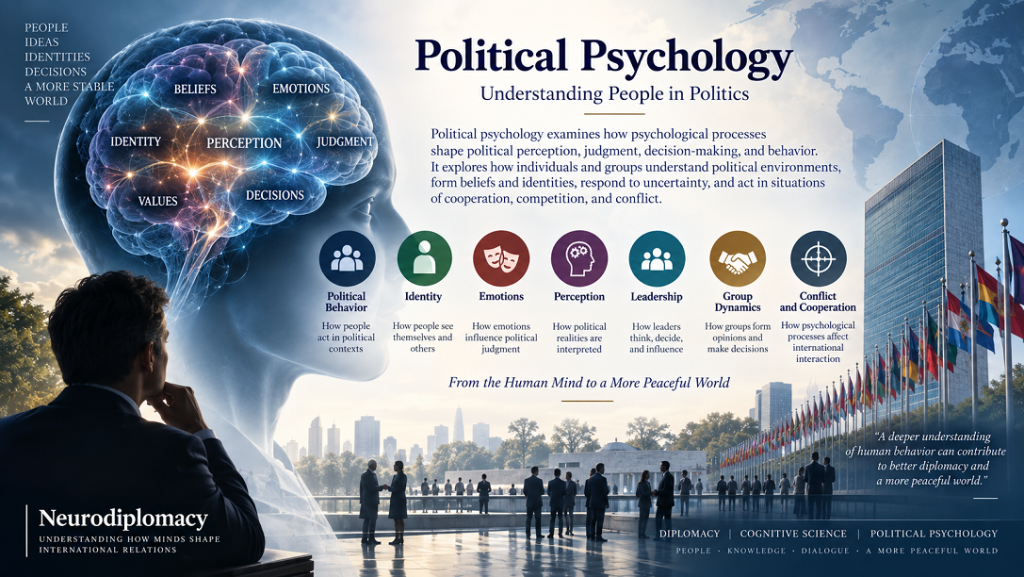
From the perspective of neurodiplomacy, Pragmatics of Human Communication represents one of the most important theoretical foundations for understanding diplomatic communication.
Diplomacy depends not only upon the exchange of information but also upon the construction of trust, legitimacy, credibility, and mutual understanding. Watzlawick and his colleagues demonstrate that every diplomatic message simultaneously conveys political content and defines the relationship between negotiating parties.
Neurodiplomacy extends this interactional framework by integrating findings from neuroscience and cognitive science. Diplomatic communication is understood as a process through which political actors perceive, interpret, predict, and emotionally respond to one another. Attention, memory, empathy, emotional regulation, cognitive framing, and perspective-taking all influence how diplomatic messages are understood.
The Second Axiom—distinguishing between content and relationship—is particularly significant for diplomacy. International negotiations frequently fail not because of disagreement over substantive issues but because parties perceive disrespect, distrust, or threats to identity. Neurodiplomacy explains these dynamics through contemporary research on social cognition, emotional processing, and interpersonal trust.
Similarly, the Third Axiom concerning punctuation helps explain how states often interpret the same sequence of events differently, contributing to security dilemmas, crisis escalation, and reciprocal hostility. Neurodiplomacy complements this insight by examining how cognitive biases, historical memory, and emotional experiences shape these differing interpretations.
Rather than viewing communication as a simple transmission of information, neurodiplomacy conceptualizes diplomacy as a neurocognitive process in which language, perception, emotion, and social interaction continuously shape international behavior. In this respect, Pragmatics of Human Communication provides one of the most important communication-theoretical foundations for the development of neurodiplomacy.
Conclusion
Pragmatics of Human Communication remains one of the landmark works in communication theory and interpersonal psychology. Paul Watzlawick, Janet H. Beavin, and Don D. Jackson fundamentally transformed the understanding of communication by demonstrating that human interaction is systemic, relational, and continuously shaped by patterns of feedback.
The Five Axioms of Communication continue to influence scholarship across psychology, communication studies, organizational behavior, mediation, counseling, and conflict resolution. Their emphasis on relationships, interpretation, and interaction provides enduring insights into the dynamics of human communication.
From a neurodiplomatic perspective, the book offers a foundational framework for understanding diplomacy as a cognitive and relational process. By integrating its communication principles with contemporary neuroscience, cognitive science, and International Relations, neurodiplomacy extends the authors’ insights into the study of international negotiation, foreign policy, and global governance. Together, these perspectives demonstrate that successful diplomacy depends not only on power and national interests but also on how human beings communicate, interpret, and construct shared political realities.
Reference
Watzlawick, P., Beavin, J. H., & Jackson, D. D. (1967). Pragmatics of human communication: A study of interactional patterns, pathologies, and paradoxes. W. W. Norton & Company.