Diplomacy: The Art of Building Bridges in a Divided World
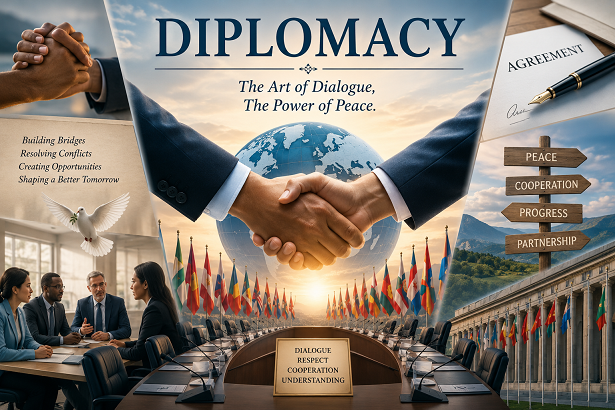
Diplomacy is often described as the art of communication between nations. It is the process through which countries manage their relationships, negotiate agreements, resolve disputes, and pursue their interests through dialogue rather than force. Although diplomacy may not always make headlines like wars or political crises, it quietly shapes the course of world history every day. Behind major peace agreements, international partnerships, trade deals, and global initiatives lies the careful work of diplomats and diplomatic negotiations.
In an era marked by globalization, technological advancement, environmental challenges, and geopolitical tensions, diplomacy has become more important than ever. It serves as the foundation upon which peaceful international relations are built and maintained.
What Is Diplomacy?
Diplomacy can be defined as the practice of managing relations between states and other international actors through communication, negotiation, and peaceful interaction. It is one of the primary instruments of foreign policy and is used by governments to protect national interests while fostering cooperation with other nations.
At its core, diplomacy is about finding common ground. Different countries often have different political systems, cultures, economic priorities, and security concerns. Diplomacy provides a framework through which these differences can be discussed, negotiated, and managed without resorting to violence.
The word “diplomacy” often brings to mind ambassadors attending international conferences or leaders shaking hands after signing agreements. However, diplomacy extends far beyond ceremonial events. It involves continuous communication, strategic negotiation, information gathering, conflict management, and relationship building.
Diplomacy is conducted by diplomats, ambassadors, foreign ministers, heads of state, and representatives of international organizations. These individuals serve as the voice of their nations abroad and play a crucial role in shaping international affairs.
The Essence of Diplomacy: Communication Over Confrontation
The fundamental principle of diplomacy is simple yet powerful: talk before you fight.
Diplomacy recognizes that disagreements between nations are inevitable. Countries compete for resources, influence, markets, and security. However, rather than allowing these differences to escalate into hostility, diplomacy creates channels for discussion and negotiation.
A skilled diplomat seeks solutions that satisfy the interests of all parties involved. Through patience, persuasion, compromise, and strategic thinking, diplomacy transforms potential conflicts into opportunities for cooperation.
This emphasis on dialogue makes diplomacy one of humanity’s most valuable tools for maintaining peace and stability.
The Major Functions of Diplomacy
1. Representation
Diplomats act as official representatives of their countries in foreign states and international organizations. They communicate their government’s policies, values, and interests while also observing political developments abroad.
Representation helps countries maintain formal relationships and ensures that governments remain informed about global events that may affect their national interests.
2. Negotiation
Negotiation is the heart of diplomacy. Countries negotiate on issues ranging from trade and security to environmental protection and cultural exchange.
Successful negotiations require careful preparation, effective communication, and the ability to balance competing interests. Through negotiation, states can reach agreements that benefit all parties and avoid unnecessary conflicts.
3. Conflict Resolution
Diplomacy serves as a critical mechanism for preventing and resolving disputes. When tensions arise between countries, diplomatic channels provide opportunities for dialogue and mediation.
Many international conflicts have been de-escalated through diplomatic efforts that encouraged compromise and mutual understanding. Without diplomacy, many disagreements could spiral into prolonged confrontations.
4. Promotion of National Interests
Every nation seeks to advance its economic, political, and security interests. Diplomacy allows countries to pursue these goals peacefully.
Whether negotiating trade agreements, attracting foreign investment, securing strategic partnerships, or protecting citizens abroad, diplomacy helps governments achieve objectives that contribute to national prosperity and stability.
5. Information Gathering
Diplomats provide governments with valuable information about political, economic, and social developments in other countries. This information helps policymakers make informed decisions and anticipate potential challenges or opportunities.
Why Is Diplomacy Important?
1. Diplomacy Preserves Peace
Perhaps the most important function of diplomacy is the preservation of peace. Throughout history, diplomacy has helped prevent countless conflicts by creating opportunities for dialogue before disagreements escalate into violence.
Peace is not simply the absence of war; it is the presence of communication, understanding, and cooperation. Diplomacy creates the conditions necessary for peaceful coexistence among nations.
When leaders engage in diplomatic discussions, they demonstrate a commitment to solving problems through reason rather than force. This reduces tensions and increases the likelihood of peaceful outcomes.
2. Diplomacy Strengthens International Cooperation
The challenges facing humanity today do not stop at national borders. Climate change, pandemics, cyber threats, terrorism, migration, and environmental degradation affect countries around the globe.
No single nation can solve these issues alone.
Diplomacy enables countries to work together by facilitating dialogue, coordination, and collective action. International cooperation is essential for addressing global problems, and diplomacy provides the framework through which such cooperation becomes possible.
3. Diplomacy Promotes Economic Growth
Economic prosperity often depends on strong international relationships. Through diplomatic efforts, countries negotiate trade agreements, establish investment partnerships, and open new markets for businesses.
These agreements create opportunities for economic growth, innovation, and job creation. Diplomacy helps ensure that nations can benefit from global trade while protecting their economic interests.
In today’s interconnected economy, diplomacy is not only a political necessity but also an economic one.
4. Diplomacy Builds Trust Between Nations
Trust is one of the most valuable resources in international relations. Countries are more likely to cooperate when they trust one another’s intentions and commitments.
Diplomacy fosters trust through regular communication, transparency, and mutual engagement. Even when countries disagree, diplomatic channels help maintain dialogue and prevent misunderstandings.
Building trust takes time, but it is essential for long-term stability and successful international partnerships.
5. Diplomacy Protects Citizens Abroad
Millions of people travel, work, study, and live outside their home countries. Diplomatic missions such as embassies and consulates provide assistance to these citizens when they encounter difficulties abroad.
Whether responding to natural disasters, political crises, legal issues, or emergencies, diplomats help ensure the safety and well-being of their fellow citizens.
6. Diplomacy Encourages Cultural Understanding
Diplomacy is not only about governments; it is also about people. Cultural exchanges, educational programs, and international partnerships help foster mutual understanding among societies.
By promoting dialogue between different cultures, diplomacy reduces stereotypes, encourages respect, and strengthens global connections.
In a world where cultural misunderstandings can create tension, diplomacy serves as a bridge between diverse communities.
Diplomacy in the Twenty-First Century
Modern diplomacy faces new challenges and opportunities. Advances in communication technology have transformed how governments interact. Diplomats now engage through digital platforms, virtual meetings, and social media in addition to traditional diplomatic channels.
At the same time, globalization has increased the importance of international cooperation. Events in one region can have immediate consequences elsewhere, making diplomacy more essential than ever.
Today’s diplomats must navigate complex issues such as climate change, artificial intelligence, cyber security, global health crises, and international migration. Their ability to build consensus and foster cooperation will significantly influence the future of international relations.
Conclusion
Diplomacy is far more than formal meetings and political ceremonies. It is the art of transforming differences into dialogue, conflicts into cooperation, and uncertainty into understanding. It allows nations to communicate, negotiate, and work together in pursuit of common goals.
In a world filled with diverse interests, cultures, and challenges, diplomacy acts as a bridge that connects nations and promotes peaceful coexistence. It preserves peace, strengthens cooperation, supports economic growth, builds trust, protects citizens, and helps address global problems.
Ultimately, diplomacy is important because it reminds us that conversation is more powerful than confrontation and that lasting solutions are often found not on battlefields, but at negotiating tables. Through diplomacy, nations can build a more stable, prosperous, and peaceful world for future generations.