Bibliographic Information
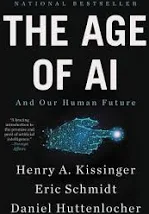
Kissinger, Henry A., Schmidt, Eric, & Huttenlocher, Daniel. (2021). The Age of AI: And Our Human Future. New York: Little, Brown and Company.
Introduction
The Age of AI: And Our Human Future (2021), written by Henry A. Kissinger, Eric Schmidt, and Daniel Huttenlocher, represents one of the most significant interdisciplinary reflections on the implications of artificial intelligence for politics, diplomacy, security, knowledge, and human civilization. The book brings together three distinct perspectives: Kissinger’s experience as a statesman and strategic thinker, Schmidt’s background as a technology leader and former CEO of Google, and Huttenlocher’s expertise in computer science and technological innovation.
Rather than presenting artificial intelligence merely as a technological revolution, the authors argue that AI represents a profound transformation in the relationship between humans and knowledge itself. Unlike previous technologies that primarily extended human physical capabilities, artificial intelligence challenges human cognitive authority by generating insights, identifying patterns, and producing solutions beyond traditional human reasoning.
The central question of the book is therefore philosophical as much as technological:
How will humanity govern itself when machines become capable of interpreting reality and producing knowledge independently?
For diplomacy and international relations, this question is particularly significant. AI is not simply a tool for economic competition; it is becoming a strategic factor that influences power, security, communication, and global governance.
From a Neurodiplomatic perspective, The Age of AI is highly relevant because it explores the transformation of human cognition, decision-making, and perception in an era where artificial intelligence increasingly participates in shaping reality.
Overview of the Book
The book is organized around the argument that artificial intelligence represents a fundamental break in human history.
The authors identify three major transformations produced by AI:
- A new relationship between humans and machines.
- A transformation of knowledge and decision-making.
- A restructuring of international politics and global order.
Traditional technologies generally amplified human abilities.
AI, however, introduces a new possibility:
Machines may develop analytical capacities that humans cannot fully understand.
This creates unprecedented challenges for governance, ethics, diplomacy, and strategic decision-making.
Central Argument: AI and the Transformation of Human Understanding
The most important argument of the book is that AI changes not only what humans can do but also how humans understand the world.
Historically, human knowledge was based on:
- observation,
- experience,
- reasoning,
- interpretation.
AI introduces another form of knowledge production based on:
- machine learning,
- algorithmic analysis,
- pattern recognition,
- computational prediction.
The authors argue that humans may increasingly encounter conclusions generated by machines without fully understanding the reasoning behind them.
This creates a fundamental epistemological challenge:
Can humans govern effectively when important decisions are influenced by systems whose thinking processes are not completely transparent?
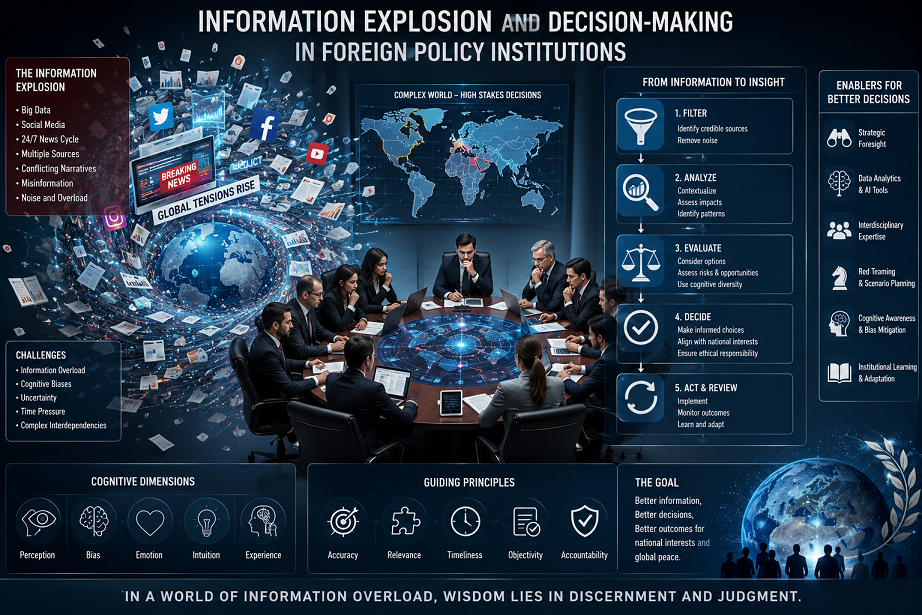
AI and Foreign Policy Decision-Making
One of the most important contributions of the book concerns the relationship between artificial intelligence and statecraft.
Foreign policy has traditionally depended upon human judgment.
Diplomats and leaders evaluate:
- intentions,
- risks,
- strategic opportunities,
- political consequences.
However, AI introduces new capabilities in:
- intelligence analysis,
- military planning,
- economic forecasting,
- geopolitical prediction.
The authors suggest that AI may transform how governments understand international affairs.
For foreign ministries, this raises important questions:
- Should AI participate in strategic decision-making?
- How much authority should be given to algorithmic recommendations?
- How can diplomats maintain human judgment in AI-supported environments?
AI and the Changing Nature of Power
A central theme of the book is that AI will redefine international power.
Traditional power has been based largely on:
- military capabilities,
- economic resources,
- territorial control.
In the AI era, power increasingly depends upon:
- technological innovation,
- computational capacity,
- data resources,
- algorithmic expertise.
The authors argue that countries leading in AI development may gain significant geopolitical advantages.
This has direct implications for diplomacy.
Future diplomatic competition may increasingly involve:
- technological alliances,
- AI governance agreements,
- digital sovereignty,
- competition over technological standards.
AI and Diplomacy
From a diplomatic perspective, The Age of AI suggests that diplomacy itself will undergo significant transformation.
AI can support diplomacy through:
- strategic analysis,
- translation,
- information processing,
- scenario development,
- crisis prediction.
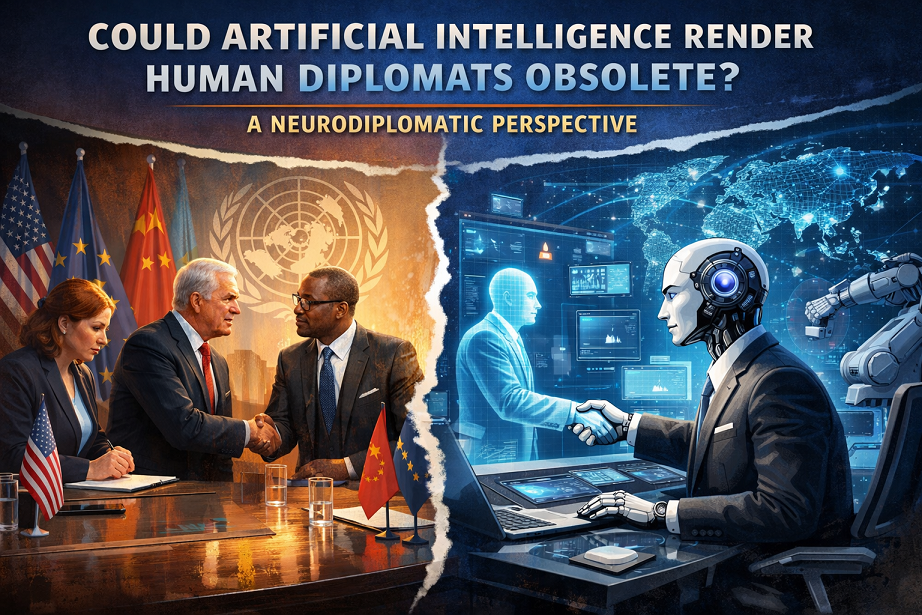
However, the authors emphasize that technology cannot replace the human dimensions of diplomacy.
Diplomacy requires:
- trust,
- empathy,
- negotiation,
- cultural understanding,
- ethical judgment.
These remain fundamentally human capabilities.
Neurodiplomatic Perspective: AI and the Human Mind
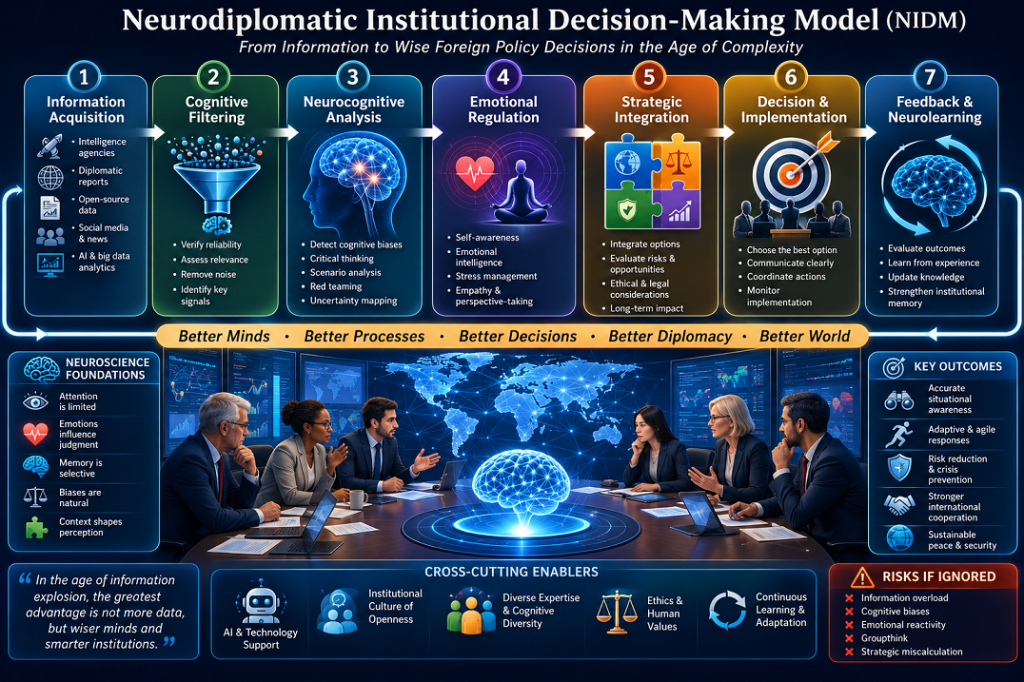
The book has significant relevance for Neurodiplomacy because it addresses the changing relationship between artificial and human intelligence.
Neurodiplomacy examines how:
- perception,
- cognition,
- emotions,
- decision-making,
- communication
shape international relations.
AI introduces a new dimension:
Diplomacy will increasingly involve interaction between human cognition and machine intelligence.
This creates several challenges.
Cognitive Dependence
Diplomats may become overly dependent on AI recommendations.
Cognitive Transformation
AI may change how diplomats analyze information and make decisions.
Cognitive Advantage
Diplomats who understand both human psychology and AI capabilities may possess strategic advantages.
AI, Perception, and International Relations
International politics has always been shaped by perception.
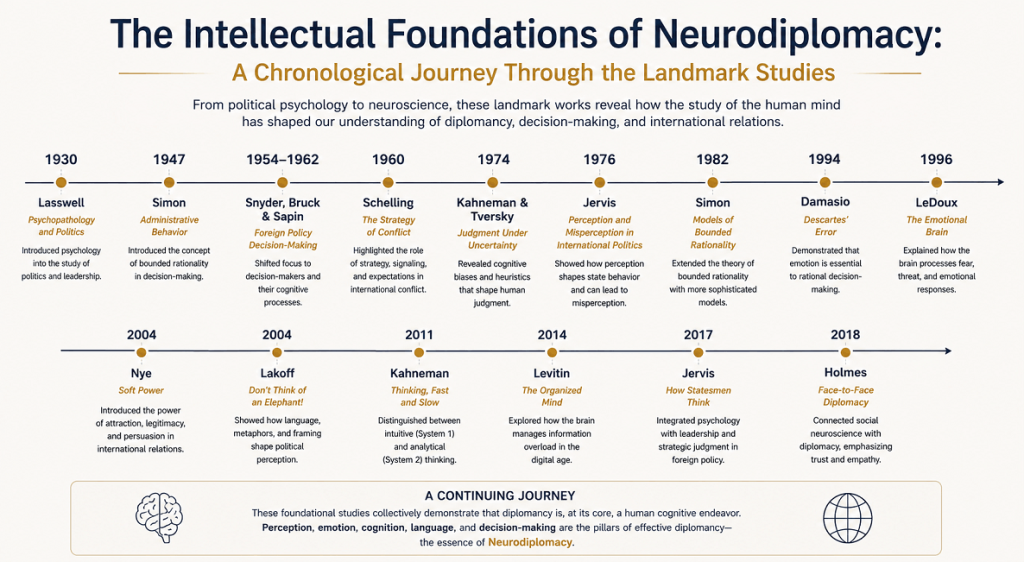
Robert Jervis demonstrated that states often respond not to objective reality but to their interpretation of reality.
AI may influence this process by shaping:
- intelligence assessments,
- media narratives,
- strategic forecasts,
- public opinion.
This creates a new field of competition:
The struggle over algorithmic perception.
Countries may compete not only to control territory and resources but also to influence how information is interpreted.
AI and Strategic Decision-Making
The book raises important questions about the future of strategic thinking.
AI may improve decision-making by:
- identifying patterns,
- analyzing complex data,
- predicting possible outcomes.
However, strategic decisions require more than prediction.
They require:
- values,
- judgment,
- responsibility,
- creativity.
A machine may calculate possible consequences, but humans must decide what consequences are desirable.
AI and International Security
Security is one of the book’s major concerns.
AI affects:
- military strategy,
- cyber operations,
- intelligence,
- autonomous weapons.
The authors warn that AI may create new forms of strategic instability.
For example:
- faster decision cycles,
- autonomous systems,
- algorithmic competition
may increase risks of misunderstanding and escalation.
Diplomacy will therefore play a critical role in developing international AI governance.
Strengths of the Book
1. Interdisciplinary Perspective
One of the greatest strengths of The Age of AI is the combination of political, technological, and philosophical perspectives.
The authors successfully connect:
- international relations,
- technology,
- history,
- philosophy,
- security studies.
2. Strategic Importance
The book addresses one of the most important issues of the twenty-first century.
Its analysis is highly relevant for:
- governments,
- diplomats,
- policymakers,
- technology leaders.
3. Historical Perspective
Kissinger contributes a valuable historical understanding of how technological changes have transformed international order.
The book connects AI with previous technological revolutions while emphasizing its unique characteristics.
4. Ethical Reflection
The authors do not present AI simply as an opportunity.
They also examine:
- responsibility,
- governance,
- human identity,
- political consequences.
Limitations
1. Limited Technical Explanation
Although the book discusses AI extensively, it does not provide detailed technical explanations of machine learning or algorithmic systems.
Readers seeking technical depth may find the discussion relatively broad.
2. Limited Attention to Social Perspectives
Some critics argue that the book focuses heavily on states and strategic competition while giving less attention to:
- social inequality,
- labor transformation,
- everyday human experiences.
3. Technological Determinism
At some points, the book may appear to assume that AI development will inevitably transform society in particular ways.
However, political choices, regulations, and ethical decisions will significantly influence AI’s future.
Implications for Ministries of Foreign Affairs
The arguments of The Age of AI have significant implications for foreign ministries.
Future diplomatic institutions should develop:
AI Diplomatic Units
Specialized teams analyzing technological developments.
AI Literacy Programs
Training diplomats to understand AI capabilities and limitations.
Digital Sovereignty Strategies
Developing policies concerning data, technology, and national security.
Human-AI Collaboration Frameworks
Ensuring AI supports rather than replaces diplomatic judgment.
Implications for Neurodiplomacy
The book provides a foundation for expanding Neurodiplomatic research.
Future diplomacy will require understanding:
- how humans interact with intelligent systems,
- how AI influences perception,
- how technology affects decision-making,
- how diplomats maintain human judgment.
Neurodiplomacy therefore becomes increasingly important as the relationship between human cognition and artificial intelligence evolves.
Conclusion
The Age of AI: And Our Human Future is a landmark contribution to understanding the political and philosophical consequences of artificial intelligence. Kissinger, Schmidt, and Huttenlocher successfully demonstrate that AI represents more than a technological innovation; it represents a transformation in knowledge, decision-making, power, and international order.
For diplomacy and international relations, the book provides a powerful warning and an important opportunity. AI will enhance diplomatic capabilities, but it will also challenge traditional assumptions about human judgment and political authority.
From a Neurodiplomatic perspective, the central lesson of the book is that the future of diplomacy will depend upon maintaining a productive relationship between human intelligence and artificial intelligence. Machines may expand analytical capacity, but humans remain responsible for meaning, ethics, trust, and strategic wisdom.
The diplomats of the future will not compete against AI; they will need to become capable partners with it. The success of twenty-first-century diplomacy will depend on humanity’s ability to combine technological intelligence with human consciousness, empathy, and responsibility.