Book Information
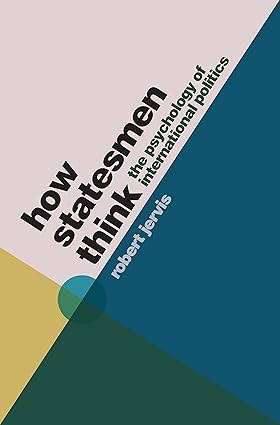
Jervis, Robert. How Statesmen Think: The Psychology of International Politics. Princeton, NJ: Princeton University Press, 2017.
Introduction
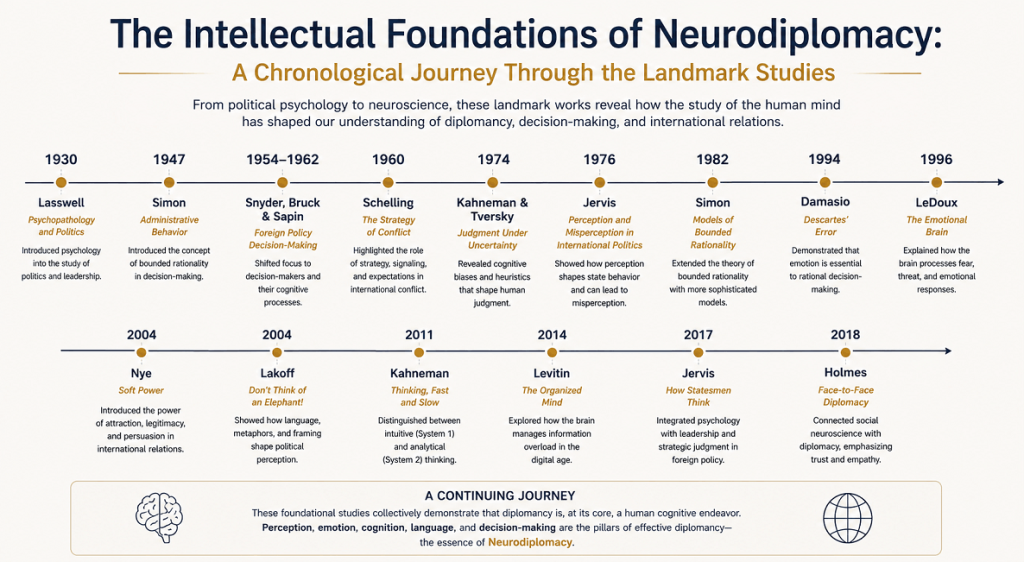
In How Statesmen Think: The Psychology of International Politics, Robert Jervis, one of the most influential scholars of international relations and political psychology, extends his longstanding interest in perception, cognition, and decision-making in foreign policy. Building upon themes first developed in his seminal work Perception and Misperception in International Politics (1976), Jervis explores how political leaders interpret complex international environments and how psychological factors influence foreign policy decisions.
The book challenges traditional assumptions that statesmen act as fully rational actors who objectively assess information and pursue clearly defined national interests. Instead, Jervis argues that leaders operate under conditions of uncertainty and ambiguity, relying on cognitive frameworks, historical analogies, beliefs, emotions, and mental shortcuts to make sense of international events. Consequently, foreign policy outcomes are often shaped not only by material power and strategic interests but also by the ways leaders perceive and interpret reality.
Through a sophisticated integration of political psychology, cognitive science, and international relations theory, Jervis provides a compelling analysis of the human dimensions of statecraft and decision-making.
Central Argument
The central thesis of the book is that statesmen do not respond directly to objective reality. Rather, they respond to their perceptions and interpretations of reality.
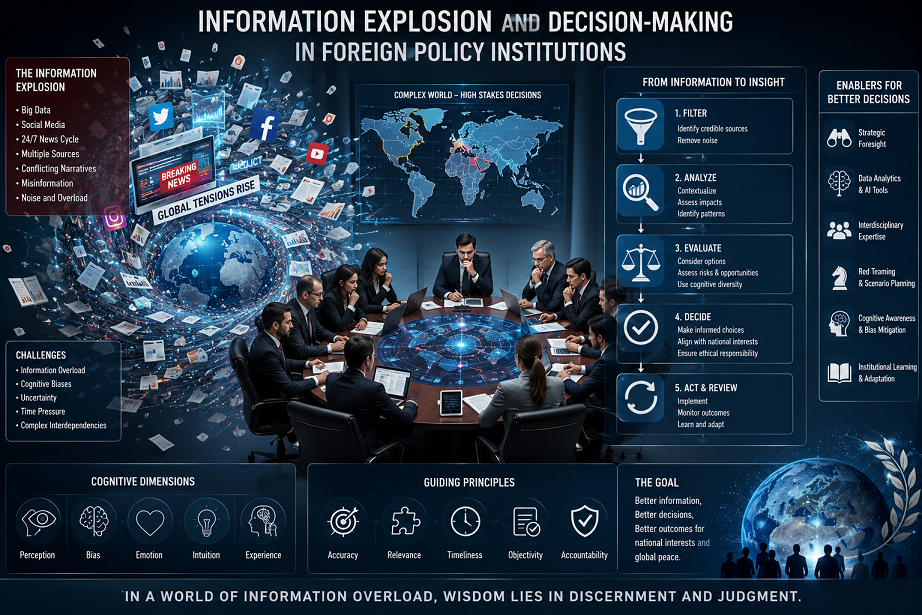
Jervis contends that international politics is characterized by uncertainty, incomplete information, and rapidly changing circumstances. Because leaders cannot process all available information perfectly, they rely on cognitive frameworks that simplify complex environments. These mental models help decision-makers understand international events but can also generate errors, biases, and misperceptions.
The book argues that policymakers:
-
Interpret information through pre-existing beliefs.
-
Employ historical analogies to understand contemporary events.
-
Are influenced by emotions and psychological predispositions.
-
Frequently operate under uncertainty and ambiguity.
-
Often make decisions based on subjective interpretations rather than objective facts.
As a result, understanding international politics requires understanding how leaders think.
Major Themes
Cognition and Decision-Making
One of the book’s most important contributions is its detailed analysis of cognitive processes in foreign policy decision-making.
Jervis demonstrates that leaders must constantly interpret complex information about adversaries, allies, crises, and emerging threats. Because the international environment is inherently uncertain, decision-makers often rely on mental shortcuts and cognitive schemas.
These cognitive structures influence:
-
Risk assessment.
-
Strategic judgment.
-
Threat perception.
-
Policy formulation.
-
Crisis management.
The book illustrates how leaders’ perceptions can significantly affect foreign policy outcomes, sometimes independently of objective circumstances.
The Role of Historical Analogies
A recurring theme throughout the book is the use of historical analogies.
Jervis argues that leaders frequently interpret contemporary events through lessons derived from past experiences. Historical analogies can provide useful guidance but may also produce distortions when inappropriate comparisons are applied.
Examples such as the Munich Agreement, the Vietnam War, and the Cold War often serve as cognitive reference points that shape leaders’ decisions in subsequent crises.
This discussion highlights the importance of memory and historical interpretation in international politics.
Perception and Misperception
Building upon his earlier work, Jervis examines how leaders form perceptions of other states’ intentions and capabilities.
He argues that international conflict often emerges not solely from incompatible interests but from differing interpretations of events. States may misunderstand one another’s intentions, exaggerate threats, or misread signals, thereby increasing the likelihood of conflict.
The analysis underscores the importance of communication, trust, and accurate information in diplomacy and foreign policy.
Emotions and Political Judgment
Although international relations has traditionally emphasized rational calculation, Jervis demonstrates that emotions play a significant role in political decision-making.
Fear, anger, pride, humiliation, and empathy can influence how leaders interpret information and evaluate policy options. Emotional reactions may affect risk-taking behavior, negotiation strategies, and crisis responses.
This recognition of emotion as an integral component of decision-making aligns with contemporary developments in cognitive science and neuroscience.
Theoretical Contributions
Bridging International Relations and Psychology
One of the book’s greatest strengths is its successful integration of psychology into international relations.
Jervis demonstrates that political behavior cannot be fully understood through structural or rationalist explanations alone. Psychological variables such as perception, cognition, emotion, and belief systems are equally important for understanding foreign policy decisions.
This interdisciplinary approach enriches traditional international relations theory and provides a more comprehensive understanding of state behavior.
Advancing Political Psychology
The book makes a substantial contribution to political psychology by applying cognitive theories to real-world diplomatic and strategic problems.
Jervis draws upon research in:
-
Cognitive psychology.
-
Decision science.
-
Behavioral economics.
-
Social psychology.
to explain how leaders think and act under conditions of uncertainty.
Challenging Rational Actor Models
The book offers a powerful critique of simplistic rational actor models.
While Jervis does not reject rationality entirely, he argues that rationality is bounded by cognitive limitations, informational constraints, and psychological influences.
This perspective provides a more realistic account of how foreign policy decisions are actually made.
Methodological Strengths
Interdisciplinary Analysis
A major strength of the book is its interdisciplinary character. Jervis combines theoretical insights from psychology with historical and political analysis, creating a framework that is both intellectually rigorous and practically relevant.
Rich Historical Illustrations
The book employs numerous historical examples to demonstrate how psychological factors influence international politics. These examples help connect abstract concepts to real-world diplomatic and strategic situations.
Clarity and Accessibility
Despite addressing complex theoretical issues, Jervis writes with remarkable clarity. The book is accessible to scholars, students, diplomats, and policymakers alike.
Relevance to Cognitive Science
The book is highly relevant to cognitive science because it examines how human cognition influences political behavior.
Key cognitive science themes include:
-
Information processing.
-
Cognitive biases.
-
Mental models.
-
Decision-making under uncertainty.
-
Learning and adaptation.
-
Perception and attention.
Jervis effectively demonstrates that international politics is fundamentally a cognitive process involving interpretation, judgment, and meaning-making.
His arguments anticipate and complement contemporary research on cognitive biases, heuristics, and bounded rationality.
Relevance to Diplomacy
The book offers important lessons for diplomats and practitioners of international relations.
Diplomacy depends heavily on:
-
Understanding perceptions.
-
Managing uncertainty.
-
Building trust.
-
Interpreting signals.
-
Reducing misperceptions.
Jervis shows that many diplomatic failures result from misunderstandings rather than deliberate hostility. Consequently, effective diplomacy requires sensitivity to the psychological dimensions of international interaction.
The book highlights the importance of empathy, communication, and perspective-taking in diplomatic practice.
Relevance to Neurodiplomacy
For scholars interested in Neurodiplomacy, How Statesmen Think is particularly significant.
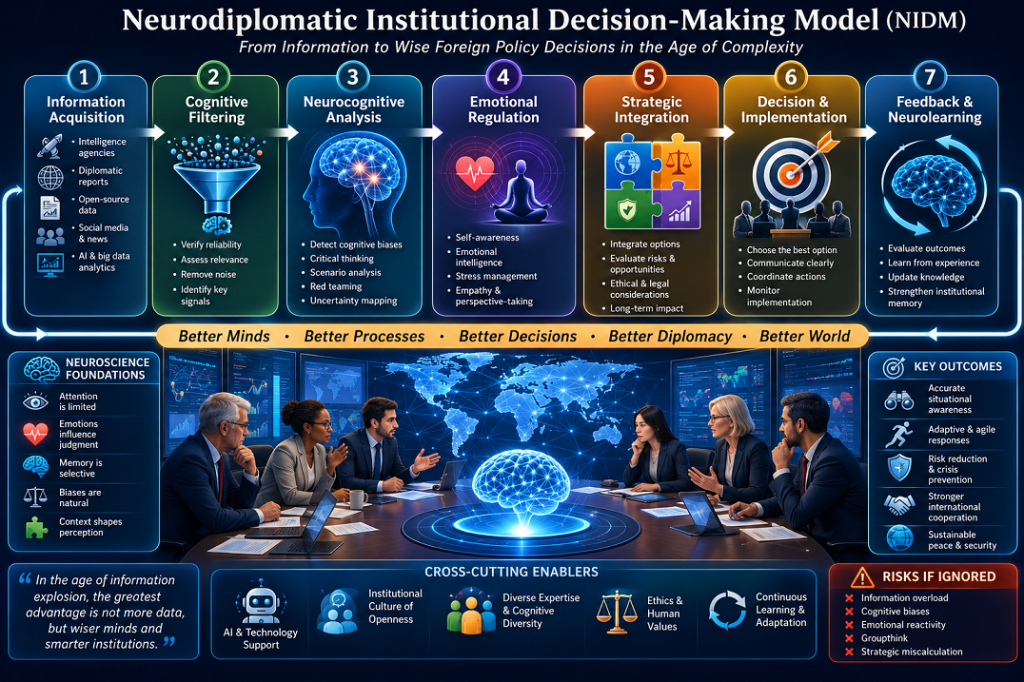
Neurodiplomacy seeks to integrate diplomacy with cognitive science, neuroscience, political psychology, and communication studies. Jervis’s work provides a strong theoretical foundation for this approach by demonstrating that diplomatic outcomes are shaped by cognitive and psychological processes.
The book contributes to neurodiplomatic thinking through its emphasis on:
-
Cognitive biases.
-
Perception and misperception.
-
Emotional influences.
-
Decision-making processes.
-
Strategic communication.
-
Leadership psychology.
In many respects, the book can be viewed as an essential bridge between traditional diplomatic studies and contemporary cognitive approaches to international relations.
Limitations
Despite its many strengths, the book has some limitations.
Limited Attention to Neuroscience
Although Jervis engages extensively with psychology and cognition, the book gives relatively little attention to developments in neuroscience. Future research could extend his framework by incorporating findings on emotion regulation, neural decision-making processes, and social cognition.
Empirical Measurement Challenges
As with much research in political psychology, it remains difficult to measure cognitive processes directly. Some arguments necessarily rely on inference from historical evidence rather than direct observation.
Less Emphasis on Structural Factors
Some realist scholars may argue that the book places greater emphasis on psychological variables than on structural determinants such as power distributions and geopolitical constraints.
Nevertheless, these criticisms do not diminish the book’s overall significance.
Conclusion
How Statesmen Think: The Psychology of International Politics is a sophisticated, insightful, and highly influential contribution to international relations scholarship. Robert Jervis successfully demonstrates that understanding world politics requires understanding how leaders perceive, interpret, and respond to international events.
By integrating insights from psychology, cognitive science, and foreign policy analysis, Jervis provides a richer and more realistic account of diplomatic and political decision-making than traditional rationalist models alone can offer. The book’s emphasis on perception, cognition, emotion, and judgment makes it particularly relevant for contemporary studies of diplomacy, political psychology, cognitive science, and neurodiplomacy.
For scholars and practitioners seeking to understand the human dimensions of international politics, How Statesmen Think is essential reading and stands as one of the most important contributions to the study of leadership and decision-making in world affairs.
Overall Assessment
A masterful and intellectually rigorous examination of how cognition, perception, and psychology shape foreign policy and international relations, offering indispensable insights for scholars of diplomacy, political psychology, cognitive science, and global governance.