Introduction
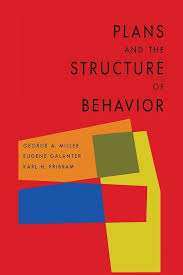
George A. Miller, Eugene Galanter, and Karl H. Pribram’s Plans and the Structure of Behavior (1960) is widely regarded as one of the foundational works of the cognitive revolution in psychology and cognitive science. Published during a period when behaviorism dominated psychological research, the book challenged stimulus-response explanations of human behavior by proposing that human action is guided by internal cognitive processes, plans, goals, and feedback mechanisms.
The authors introduced a new framework for understanding behavior as purposeful, organized, and goal-directed rather than merely reactive. Their most influential contribution, the TOTE (Test–Operate–Test–Exit) model, provided an alternative to the traditional reflex-based model of behavior and became one of the earliest computational models of human cognition.
Beyond psychology, Plans and the Structure of Behavior has profoundly influenced neuroscience, artificial intelligence, cognitive psychology, linguistics, organizational theory, decision-making research, and Neuro-Linguistic Programming (NLP). Today, it remains a landmark in understanding how individuals perceive information, formulate intentions, monitor progress, and adapt their actions to changing environments.
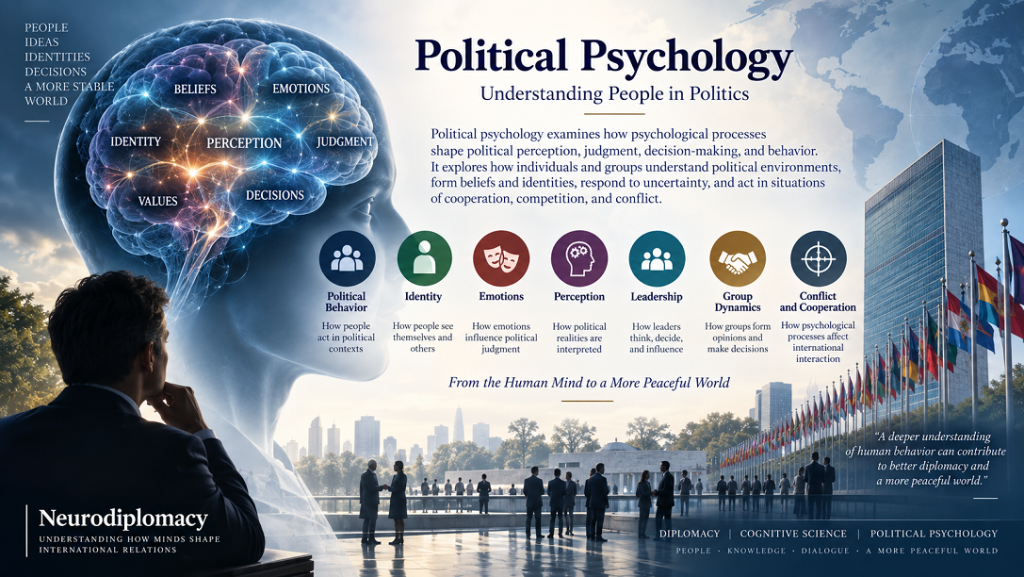
This review examines the book’s principal arguments, theoretical contributions, strengths, limitations, contemporary relevance, and significance from the perspective of the emerging field of neurodiplomacy.
Overview of the Book
The central argument of Plans and the Structure of Behavior is that human behavior cannot be adequately explained through simple stimulus-response associations. Instead, behavior is guided by internal cognitive structures that organize perception, planning, decision-making, and action toward specific goals.
The authors argue that individuals continuously compare their current situation with desired outcomes. Whenever discrepancies exist between present conditions and intended goals, cognitive processes generate actions designed to reduce those differences. Human behavior is therefore characterized by continuous monitoring, feedback, and adjustment rather than fixed behavioral routines.
The book introduces the concept of plans as hierarchical cognitive programs that organize complex sequences of behavior. These plans range from simple motor actions to sophisticated forms of reasoning, communication, and problem-solving.
The most influential innovation is the TOTE unit (Test–Operate–Test–Exit). Rather than viewing behavior as a linear response to external stimuli, the TOTE model proposes that individuals first evaluate their current state (Test), perform an action (Operate), evaluate the results (Test), and terminate the process when the desired objective has been achieved (Exit). This cyclical model anticipated many later developments in cognitive science, systems theory, artificial intelligence, and adaptive decision-making.
Major Contributions
One of the book’s greatest contributions is its role in the cognitive revolution. Miller, Galanter, and Pribram helped shift psychology away from behaviorism by demonstrating that internal mental processes are legitimate and essential subjects of scientific investigation.
Another major contribution is the development of the TOTE model, which fundamentally changed how researchers conceptualize goal-directed behavior. The TOTE framework introduced feedback, monitoring, and self-regulation as central components of cognition, replacing simplistic linear models with dynamic adaptive processes.
The concept of hierarchical planning also represented a major theoretical innovation. The authors argued that complex human behavior is organized through nested plans operating at multiple levels of abstraction, from basic actions to long-term strategies. This insight has influenced research in executive function, organizational behavior, robotics, artificial intelligence, and cognitive neuroscience.
The interdisciplinary character of the book is another important contribution. By integrating psychology, neuroscience, information theory, linguistics, and cybernetics, the authors anticipated the emergence of cognitive science as a unified interdisciplinary field.
Strengths of the Book
One of the book’s greatest strengths is its theoretical originality. At a time when psychology was largely dominated by observable behavior, the authors courageously argued that cognition, planning, intention, and internal representation are indispensable for understanding human behavior.
Another major strength is the elegance of the TOTE model. Its simplicity allows it to explain a wide range of behaviors while remaining sufficiently flexible to accommodate increasingly complex cognitive processes. The emphasis on feedback and continuous evaluation remains highly relevant to contemporary theories of learning, decision-making, and adaptive behavior.
The book is also remarkable for its interdisciplinary influence. Its concepts have shaped research across psychology, neuroscience, artificial intelligence, education, organizational studies, and communication science.
Furthermore, the authors’ emphasis on hierarchical planning anticipated later research on executive functions and strategic decision-making, which has become central to modern cognitive neuroscience.
Limitations
Despite its groundbreaking contributions, Plans and the Structure of Behavior reflects the scientific context of its time and has several limitations.
First, many of its theoretical propositions were formulated before the development of modern neuroimaging techniques. Consequently, the authors could not empirically examine the neural mechanisms underlying planning, attention, working memory, or executive control that contemporary neuroscience now investigates.
Second, the computational character of the TOTE model sometimes underestimates the complexity of human emotion, social interaction, and cultural influences. Later research has demonstrated that cognition cannot be fully understood without considering emotional regulation, motivation, identity, and interpersonal communication.
Third, although the book addresses planning and cognition, it gives relatively limited attention to uncertainty, ambiguity, and social negotiation. These factors are particularly important in political decision-making and international diplomacy.
Finally, advances in embodied cognition and distributed cognition suggest that cognitive processes extend beyond internal mental representations alone and are shaped by interactions with physical, social, and institutional environments.
Contemporary Relevance
More than six decades after its publication, Plans and the Structure of Behavior remains remarkably relevant. Modern research in neuroscience, cognitive psychology, artificial intelligence, robotics, and decision science continues to rely on principles of planning, feedback, goal monitoring, and adaptive control introduced by Miller, Galanter, and Pribram.
Contemporary developments in artificial intelligence, autonomous systems, cognitive architectures, and executive decision-making increasingly reflect the cyclical logic of planning and feedback proposed in the TOTE framework.
The book is equally relevant to organizational leadership, negotiation, public policy, crisis management, and diplomatic strategy, where effective decision-making depends upon continuous assessment, learning, and adaptation rather than rigid adherence to predetermined plans.
A Neurodiplomatic Perspective
From the perspective of neurodiplomacy, Plans and the Structure of Behavior provides one of the most important cognitive foundations for understanding diplomatic decision-making.
Diplomatic negotiations are rarely linear processes. Negotiators continuously evaluate information, revise objectives, adjust communication strategies, monitor the responses of counterparts, and modify their actions as negotiations evolve. These processes closely resemble the feedback cycles described by the TOTE model.
Neurodiplomacy extends this framework by incorporating contemporary findings from neuroscience regarding attention, emotional regulation, social cognition, empathy, prediction, and executive control. Diplomatic behavior is understood as a dynamic process in which leaders continually test assumptions, interpret new information, evaluate risks, and adapt strategies within changing international environments.
Furthermore, the concept of hierarchical planning aligns closely with modern foreign policy analysis. National strategies consist of multiple interconnected plans operating at political, military, economic, diplomatic, and communicative levels. Neurodiplomacy explains how these plans are cognitively constructed, coordinated, and modified through learning and experience.
Rather than viewing diplomacy as a sequence of isolated decisions, neurodiplomacy conceptualizes it as an adaptive cognitive system characterized by continuous feedback, strategic learning, and collaborative problem-solving. In this sense, Miller, Galanter, and Pribram’s work provides one of the intellectual foundations upon which neurodiplomacy can build a scientifically grounded theory of diplomatic cognition.
Conclusion
Plans and the Structure of Behavior remains one of the landmark publications in the history of cognitive science. George A. Miller, Eugene Galanter, and Karl H. Pribram fundamentally transformed the understanding of human behavior by demonstrating that cognition is organized through plans, goals, feedback, and adaptive control rather than simple stimulus-response mechanisms.
The introduction of the TOTE model and hierarchical planning established conceptual foundations that continue to influence psychology, neuroscience, artificial intelligence, organizational theory, and decision science. The book’s interdisciplinary vision anticipated many developments that have become central to contemporary cognitive research.
From a neurodiplomatic perspective, Plans and the Structure of Behavior is particularly valuable because it provides a scientific framework for understanding how diplomats and political leaders formulate objectives, monitor changing environments, revise strategies, and learn from experience. By integrating these cognitive principles with modern neuroscience, psychology, and International Relations, neurodiplomacy extends the book’s legacy into the study of diplomacy and global politics. It demonstrates that effective diplomacy depends not only on power, institutions, or strategic interests, but also on the cognitive architecture through which human beings perceive, plan, communicate, and adapt in an increasingly complex international environment.
Reference
Miller, G. A., Galanter, E., & Pribram, K. H. (1960). Plans and the structure of behavior. Holt, Rinehart and Winston.