Bibliographic Information
Snow, Nancy, and Nicholas J. Cull (eds.). Routledge Handbook of Public Diplomacy. 2nd ed. New York: Routledge, 2020. (Routledge Handbooks Series).
Introduction
The Routledge Handbook of Public Diplomacy is one of the most comprehensive and influential reference works in the field of public diplomacy. Edited by Nancy Snow and Nicholas J. Cull—two of the world’s foremost scholars of diplomacy, strategic communication, and international relations—the second edition reflects the remarkable transformation of public diplomacy over the past decade. Expanding substantially upon the first edition published in 2009, the handbook incorporates new theoretical perspectives, global case studies, and emerging issues such as digital diplomacy, corporate diplomacy, nation branding, ethics, and social media.
The volume responds to an international environment characterized by rapid technological change, geopolitical competition, globalization, and the increasing importance of communication in foreign policy. It argues that diplomacy today extends far beyond traditional government-to-government negotiations and increasingly involves direct engagement with foreign publics, civil society organizations, multinational corporations, media networks, and digital platforms.
By combining contributions from leading scholars and practitioners from different regions of the world, the handbook provides an interdisciplinary and globally oriented examination of public diplomacy in theory and practice. It is an indispensable resource for scholars, diplomats, policymakers, communication specialists, and students seeking to understand how states build influence, credibility, and international legitimacy in the twenty-first century.
Overview of the Handbook
The central premise of the handbook is that public diplomacy has become a fundamental instrument of international relations.
Whereas classical diplomacy concentrated on negotiations between governments, contemporary diplomacy increasingly focuses on engaging foreign societies through dialogue, communication, education, culture, media, and digital technologies. Governments now compete not only through military strength and economic resources but also through ideas, narratives, credibility, reputation, and public trust.
The editors demonstrate that public diplomacy is no longer a peripheral activity but a central component of foreign policy strategy. Successful diplomacy requires governments to communicate effectively with diverse international audiences while building long-term relationships based upon mutual understanding and cooperation.
Major Themes
The Evolution of Public Diplomacy
One of the handbook’s major strengths is its historical analysis of the evolution of public diplomacy.
The contributors trace the development of the field from its early association with propaganda and international broadcasting to contemporary approaches emphasizing dialogue, mutual engagement, listening, and relationship building.
The handbook demonstrates that modern public diplomacy has become increasingly participatory and network-oriented, reflecting broader changes in international communication and globalization.
Strategic Communication
Strategic communication occupies a central place throughout the volume.
The contributors argue that governments must ensure consistency between diplomatic messages and foreign policy actions. Credibility, transparency, and authenticity are presented as essential prerequisites for successful communication.
Rather than viewing communication simply as message dissemination, the handbook emphasizes strategic communication as an ongoing process of relationship management that strengthens trust and international legitimacy.
Digital Public Diplomacy
A particularly valuable contribution of the second edition is its expanded treatment of digital diplomacy.
The handbook explores how social media platforms, online communities, digital technologies, and global information networks have transformed diplomatic communication.
Digital diplomacy enables governments to:
-
Communicate directly with foreign publics.
-
Respond rapidly during international crises.
-
Promote national culture and values.
-
Counter misinformation.
-
Strengthen international partnerships.
-
Engage younger generations through interactive communication.
At the same time, the contributors acknowledge new challenges associated with digital diplomacy, including disinformation, cyber threats, algorithmic amplification, and declining trust in public institutions.
Cultural Diplomacy and Nation Branding
Several chapters examine culture as an important source of international influence.
Educational exchanges, language promotion, cultural institutions, arts diplomacy, sports diplomacy, gastronomy, and heritage all contribute to shaping national reputation and soft power.
Similarly, nation branding is discussed as a strategic process through which countries seek to influence international perceptions by communicating distinctive identities and values.
The handbook successfully illustrates how culture increasingly complements traditional diplomatic instruments.
Theoretical Contributions
Integrating Multiple Disciplines
One of the handbook’s greatest achievements is its interdisciplinary scope.
The volume integrates perspectives from:
-
International relations
-
Political communication
-
Media studies
-
Cultural studies
-
Public diplomacy
-
Strategic communication
-
Political science
-
International history
This interdisciplinary approach enriches diplomatic studies by recognizing communication as a central dimension of international influence rather than merely a supporting activity.
Public Diplomacy Beyond Soft Power
Although Joseph Nye’s concept of soft power remains influential throughout the volume, the handbook extends beyond attraction alone.
The contributors emphasize listening, dialogue, reciprocity, credibility, trust, and long-term relationship building.
Public diplomacy is therefore presented not simply as persuasion but as a collaborative process through which governments and societies construct mutual understanding.
Global Perspectives
Unlike many earlier publications that concentrated primarily upon American and European experiences, the second edition significantly broadens its geographical scope.
The handbook includes detailed discussions of public diplomacy in:
-
China
-
Japan
-
India
-
South Korea
-
Russia
-
Turkey
-
Germany
-
Brazil
-
African states
-
Latin America
-
Arab countries
-
European institutions
This broader perspective makes the volume particularly valuable for comparative diplomatic research.
Relevance to Neurodiplomacy
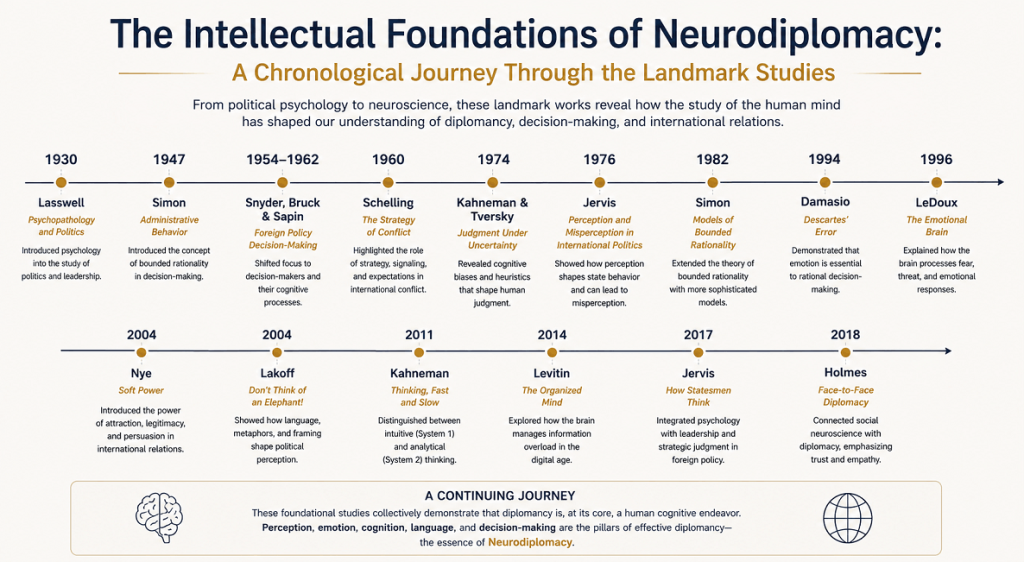
Although the handbook does not explicitly discuss Neurodiplomacy, many of its central arguments closely align with neurodiplomatic theory.
Public diplomacy fundamentally seeks to influence how foreign audiences:
-
Attend to information.
-
Interpret messages.
-
Form perceptions.
-
Build trust.
-
Develop emotional responses.
-
Construct identities.
-
Make political judgments.
These processes are inherently cognitive.
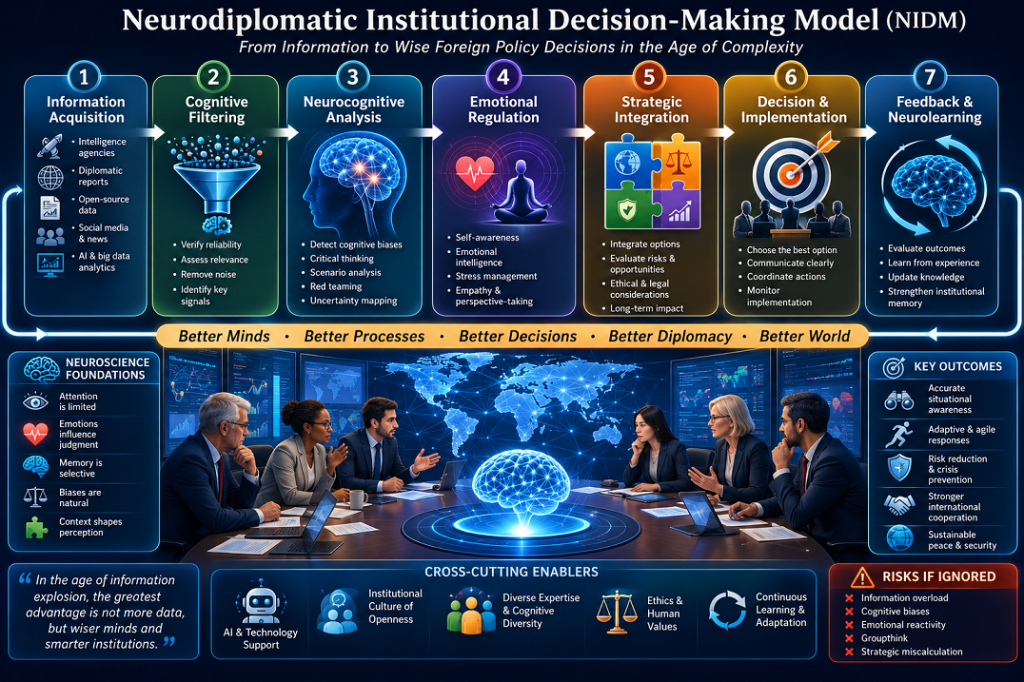
From a Neurodiplomatic perspective, diplomatic communication does not directly determine behaviour. Rather, every diplomatic message passes through cognitive filters influenced by prior experience, cultural values, historical memory, identity, beliefs, emotions, and expectations before meaning is constructed.
Consequently, public diplomacy succeeds not simply because information is transmitted but because communication influences the mental processes through which international reality is interpreted.
The handbook therefore provides an excellent foundation for extending public diplomacy through Neurodiplomacy by incorporating findings from neuroscience, cognitive psychology, behavioural science, and decision-making research.
Relevance to Digital Diplomacy
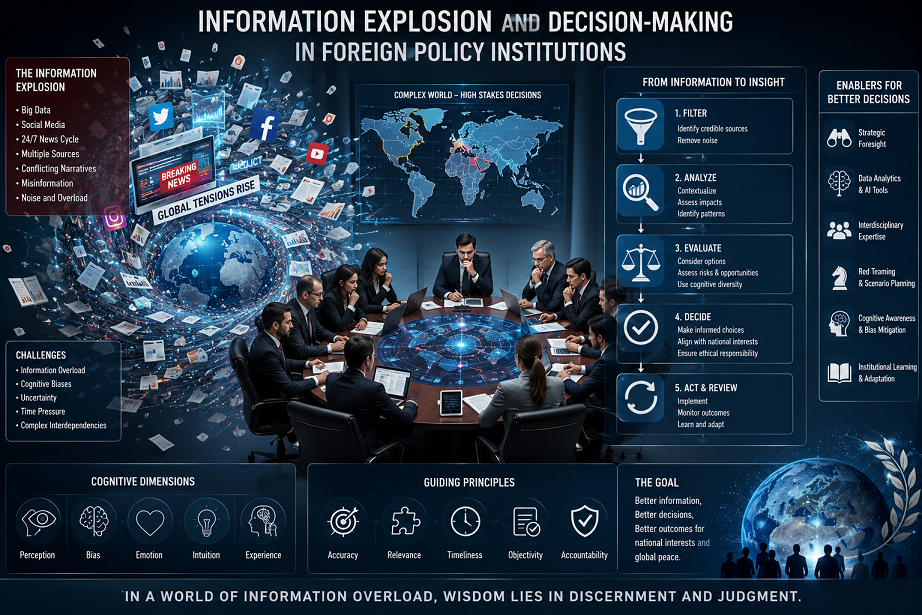
The volume is particularly important for understanding diplomacy within the contemporary digital information environment.
Digital technologies have transformed diplomatic practice by enabling governments to communicate continuously with global audiences.
At the same time, digital environments intensify competition over narratives, credibility, and attention.
From a Neurodiplomatic perspective, these developments highlight the growing importance of:
-
Cognitive framing.
-
Emotional engagement.
-
Trust formation.
-
Information overload.
-
Cognitive bias.
-
Attention management.
Future diplomacy will increasingly depend upon understanding how digital communication interacts with human cognition.
Strengths of the Handbook
Comprehensive Scope
The handbook provides perhaps the most complete contemporary survey of public diplomacy available.
Its breadth makes it suitable both as a reference work and as an advanced academic textbook.
Interdisciplinary Scholarship
By integrating communication studies, diplomacy, political science, media studies, and international relations, the handbook offers a multidimensional understanding of diplomatic communication.
Practical Relevance
The contributors successfully bridge theoretical analysis with practical diplomatic challenges, making the volume valuable for scholars and practitioners alike.
Global Perspective
The inclusion of numerous regional and national case studies significantly enhances the handbook’s international relevance and avoids an overly Western-centric perspective.
Limitations
Limited Cognitive Perspective
Although the handbook discusses persuasion, narratives, trust, credibility, and public engagement, relatively little attention is devoted to the cognitive and neural mechanisms that underlie these processes.
Greater integration of cognitive science and neuroscience would strengthen explanations of how diplomatic communication influences perception and decision-making.
Rapid Technological Evolution
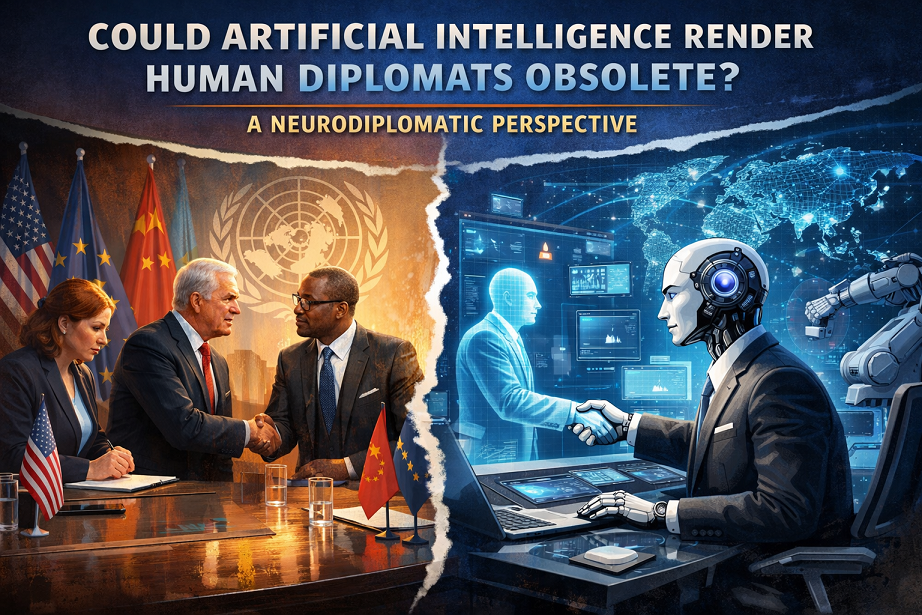
Because digital technologies evolve rapidly, discussions concerning social media platforms and digital communication will require continual updating as artificial intelligence, immersive technologies, and algorithmic communication reshape international diplomacy.
Limited Discussion of Decision-Making
While communication strategies receive extensive attention, the handbook devotes comparatively less analysis to how diplomats cognitively process information during negotiation and crisis management—an area where Neurodiplomacy offers valuable complementary insights.
Conclusion
The Routledge Handbook of Public Diplomacy represents one of the most important scholarly contributions to contemporary diplomatic studies. By demonstrating that diplomacy increasingly depends upon communication, credibility, trust, and engagement with foreign publics, the editors provide a comprehensive framework for understanding international influence in an interconnected and digital world.
Its interdisciplinary scholarship, global perspective, and practical relevance ensure that it will remain a foundational reference for students, scholars, diplomats, and policymakers for years to come.
From the perspective of Neurodiplomacy, the handbook offers a particularly valuable foundation. Many of its central themes—including perception, trust, narratives, persuasion, cultural understanding, and strategic communication—can be further enriched by incorporating insights from neuroscience and cognitive science. Neurodiplomacy extends these discussions by explaining how diplomatic messages are cognitively filtered, emotionally evaluated, and transformed into political judgments and diplomatic behaviour.
For researchers interested in diplomacy, public diplomacy, international relations, strategic communication, political psychology, cognitive science, and Neurodiplomacy, this handbook is indispensable reading and stands among the most authoritative works in the field.