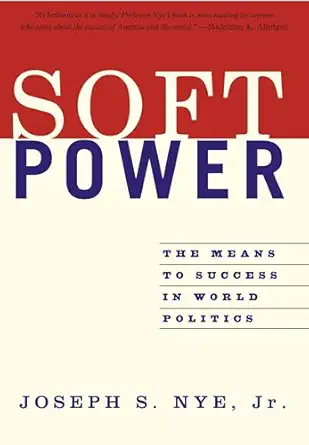
Nye, Joseph S. Jr. Soft Power: The Means to Success in World Politics. New York: Public Affairs, 2004. 191 pages.
Introduction
Joseph S. Nye Jr.’s Soft Power: The Means to Success in World Politics is one of the most influential contributions to contemporary international relations and diplomatic studies. Since its publication in 2004, the book has transformed scholarly and policy discussions about the nature of power in world politics. Nye, a renowned scholar of international relations and former Assistant Secretary of Defense of the United States, challenges traditional conceptions of power that focus primarily on military capabilities and economic resources. Instead, he introduces and develops the concept of soft power, defined as the ability to influence others through attraction, persuasion, and legitimacy rather than coercion or payment.
Written in the context of globalization, the information revolution, and shifting patterns of international influence, the book argues that successful states increasingly rely on intangible resources such as culture, values, institutions, and foreign policy legitimacy to achieve their objectives. Nye’s work has become foundational not only for the study of international relations but also for diplomacy, public diplomacy, international communication, strategic studies, and global governance.
Overview of the Book
The central question addressed by Nye is simple yet profound: What constitutes power in the twenty-first century?
Traditional approaches to international relations often equated power with military strength and economic capacity. Nye argues that while these forms of power remain important, they are insufficient for understanding influence in an increasingly interconnected world.
The book distinguishes between three forms of power:
Hard Power
Hard power refers to the ability to influence others through:
-
Military force
-
Economic sanctions
-
Coercion
-
Threats
-
Material incentives
Hard power relies on compelling others to act against their preferences through the use of pressure or rewards.
Soft Power
Soft power, by contrast, is the ability to shape the preferences and behavior of others through attraction and persuasion.
According to Nye:
«”Soft power rests on the ability to shape the preferences of others.”»
Rather than forcing compliance, soft power encourages others to voluntarily support or emulate a state’s objectives because they find its values, culture, or policies attractive.
Smart Power
Although developed more fully in Nye’s later works, the book implicitly introduces the idea that successful foreign policy requires combining hard and soft power resources effectively.
This balanced approach would later become known as smart power.
Theoretical Contributions
Reconceptualizing Power
The book’s most significant contribution is its redefinition of power itself.
Nye argues that power is not merely the possession of resources but also the ability to influence outcomes. This broader understanding recognizes that influence can be achieved through attraction as well as coercion.
By expanding the concept of power, Nye provides a more comprehensive framework for analyzing international relations in the information age.
This reconceptualization has had a profound impact on both academic scholarship and foreign policy practice.
Three Sources of Soft Power
Nye identifies three primary sources of soft power:
Culture
Culture generates soft power when it appeals to others and embodies values that resonate internationally.
Examples include:
-
Literature
-
Cinema
-
Music
-
Educational institutions
-
Scientific achievements
-
Popular culture
Nye emphasizes that cultural attraction can shape perceptions and foster goodwill toward a country.
Political Values
Political values become a source of attraction when they are consistently practiced domestically and promoted internationally.
Democracy, human rights, freedom of expression, and the rule of law can enhance a nation’s legitimacy and attractiveness.
However, Nye stresses that credibility is essential. Values that are not reflected in actual behavior may undermine rather than strengthen soft power.
Foreign Policy
Foreign policy contributes to soft power when it is perceived as legitimate, ethical, and beneficial to the international community.
Policies that support international cooperation, multilateralism, and global public goods tend to enhance a country’s attractiveness.
Conversely, unilateral or coercive policies may weaken soft power resources.
Methodology and Approach
The book adopts an interdisciplinary approach that combines:
-
International relations theory
-
Political science
-
History
-
Communication studies
-
Foreign policy analysis
Rather than relying on formal quantitative methods, Nye employs conceptual analysis supported by historical examples and contemporary policy discussions.
The book examines various dimensions of American power while also drawing broader conclusions applicable to other states and international actors.
Although primarily theoretical, the analysis remains closely connected to practical foreign policy concerns.
Contributions to Diplomacy
Public Diplomacy
One of the book’s most important contributions is its emphasis on public diplomacy.
Nye argues that governments must communicate not only with foreign governments but also with foreign populations. In an age of global media and digital communication, public opinion increasingly influences international outcomes.
Public diplomacy therefore becomes an essential mechanism for generating soft power.
The book highlights the importance of:
-
Cultural exchanges
-
Educational programs
-
International broadcasting
-
Strategic communication
-
International cooperation
These instruments help shape perceptions and build long-term relationships between societies.
Cultural Diplomacy
Nye’s framework significantly strengthened academic interest in cultural diplomacy.
The book demonstrates that culture is not merely an expression of national identity but also a strategic asset capable of enhancing international influence.
This insight has inspired extensive research on:
-
Cultural institutions
-
International education
-
Language promotion
-
Cultural exchange programs
as tools of foreign policy.
Legitimacy and International Leadership
The book argues that legitimacy is a critical source of diplomatic influence.
States perceived as legitimate and trustworthy are often more successful in building alliances, leading international initiatives, and mobilizing support for their policies.
This emphasis on legitimacy remains highly relevant in contemporary diplomatic practice.
Relevance to International Relations Theory
Beyond Realism
Nye’s concept of soft power challenges traditional realist assumptions that power is primarily military and material.
While not rejecting realism entirely, Nye demonstrates that ideas, perceptions, and attraction also play important roles in shaping international outcomes.
Liberal and Constructivist Insights
The book incorporates elements commonly associated with liberalism and constructivism.
Soft power depends heavily upon:
-
Norms
-
Values
-
Institutions
-
Identities
-
Social interactions
These factors are central concerns within constructivist and liberal approaches to international relations.
Consequently, the book serves as an intellectual bridge between competing theoretical traditions.
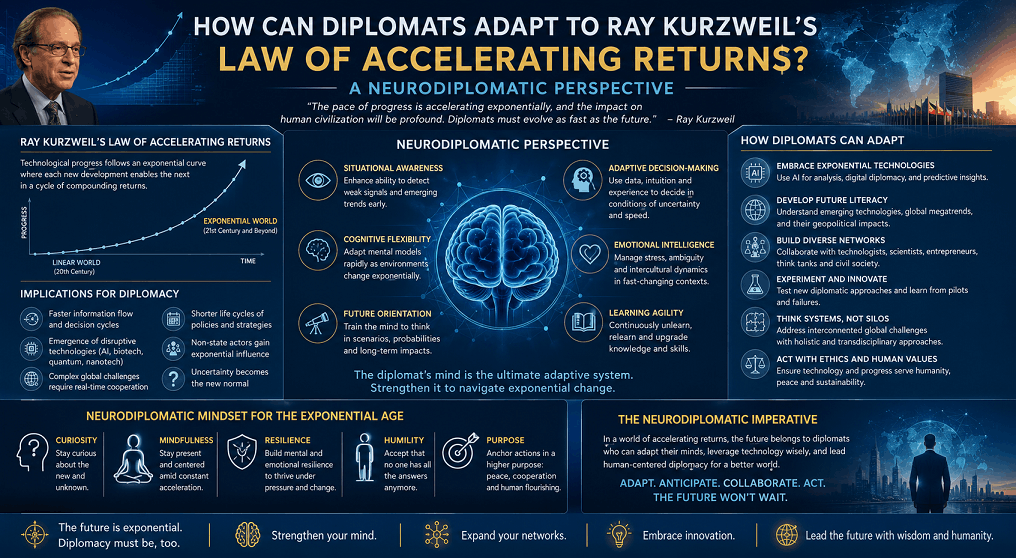
Relevance to Cognitive Science and Neurodiplomacy
Although Nye does not explicitly engage with cognitive science, many of the mechanisms underlying soft power involve cognitive and psychological processes.
Soft power operates through:
-
Perception
-
Attention
-
Trust
-
Emotional engagement
-
Identity formation
-
Attitude change
-
Narrative influence
Individuals and societies respond to attraction because of how they cognitively interpret information and emotionally relate to symbols, values, and cultural products.
From the perspective of Neurodiplomacy, soft power can be understood as a form of influence that functions through the human mind rather than through material coercion.
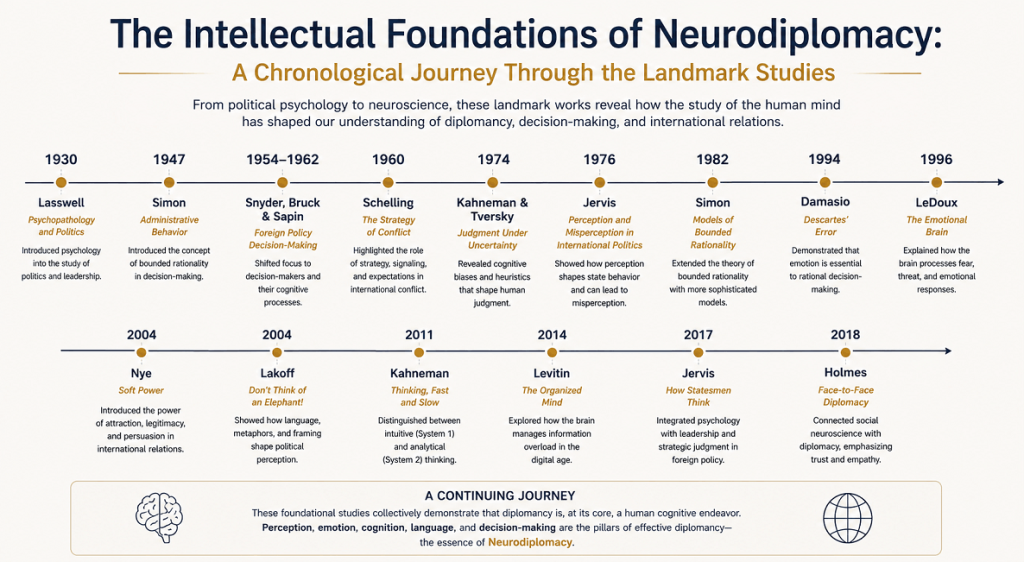
Neurodiplomacy seeks to integrate diplomacy with cognitive science, neuroscience, psychology, and communication studies. Nye’s theory provides a valuable foundation for this endeavor because it emphasizes how perceptions, emotions, beliefs, and narratives shape international influence.
Indeed, many contemporary discussions of strategic communication, nation branding, public diplomacy, and influence operations build directly upon mechanisms that are fundamentally cognitive and psychological in nature.
Strengths of the Book
Conceptual Innovation
The introduction of soft power represents one of the most important conceptual innovations in modern international relations.
Few concepts have achieved comparable influence across both academic and policy communities.
Policy Relevance
The book successfully bridges theory and practice.
Its insights have influenced governments, international organizations, diplomats, and policymakers around the world.
Accessibility
Nye writes with remarkable clarity and precision.
Complex theoretical ideas are presented in a manner accessible to students, scholars, and practitioners alike.
Enduring Influence
Nearly two decades after its publication, soft power remains a central concept in discussions of diplomacy, foreign policy, and global influence.
Criticisms and Limitations
Measurement Problems
One of the principal criticisms concerns the difficulty of measuring soft power.
Unlike military expenditure or economic output, attraction and legitimacy are difficult to quantify and compare systematically.
Conceptual Ambiguity
Some scholars argue that soft power overlaps with related concepts such as:
-
Public diplomacy
-
Legitimacy
-
Reputation
-
Persuasion
-
Influence
This overlap can create challenges for empirical research.
Western Bias
Critics have suggested that Nye’s discussion occasionally reflects assumptions associated with Western liberal values and American foreign policy.
As a result, some scholars question the universality of certain aspects of the theory.
Nevertheless, these limitations do not diminish the book’s overall significance.
Conclusion
Soft Power: The Means to Success in World Politics is a landmark work that fundamentally transformed our understanding of power in international relations. By demonstrating that attraction, legitimacy, and persuasion are critical sources of influence, Joseph Nye broadened the analytical framework through which scholars and policymakers understand diplomacy and global politics.
The book’s interdisciplinary perspective, conceptual originality, and practical relevance have ensured its enduring importance within international relations scholarship. Its insights continue to shape debates concerning public diplomacy, cultural influence, strategic communication, global governance, and international leadership.
For students and scholars of diplomacy, international relations, political communication, cognitive science, and neurodiplomacy, Soft Power remains essential reading and one of the most influential works of the twenty-first century.
Overall Evaluation
A pioneering and indispensable contribution to international relations that redefined the concept of power and established attraction, legitimacy, and persuasion as central elements of diplomacy and global influence.