Book Information
Jervis, Robert. Perception and Misperception in International Politics. Princeton, NJ: Princeton University Press, 1976.
Introduction
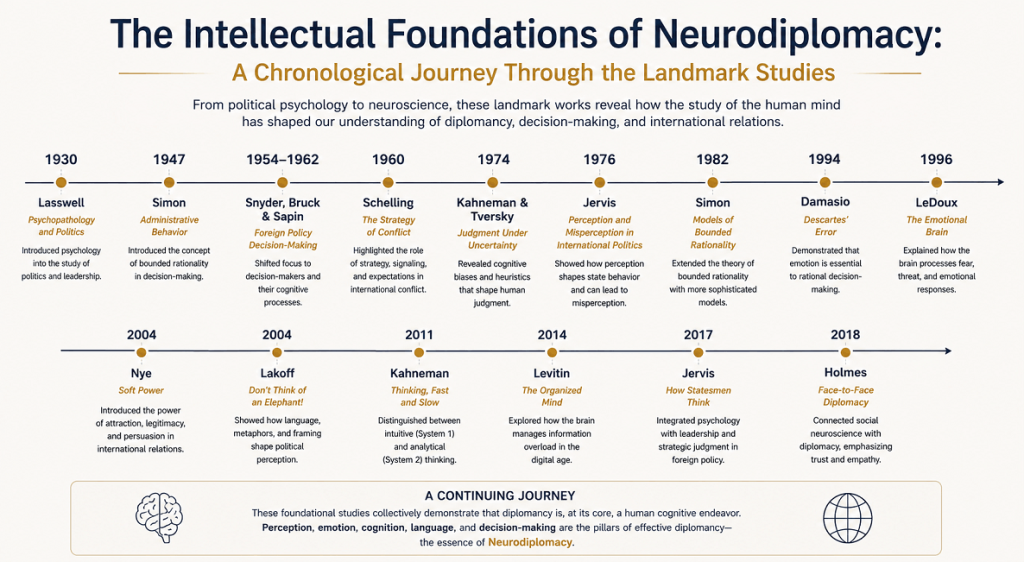
Robert Jervis’s Perception and Misperception in International Politics is widely regarded as one of the most influential works in the fields of international relations, foreign policy analysis, and political psychology. Published in 1976, the book challenged the dominant realist assumption that states and their leaders behave as fully rational actors responding objectively to external realities. Instead, Jervis argued that international politics is profoundly influenced by how decision-makers perceive, interpret, and sometimes misinterpret the actions and intentions of other states.
Drawing upon psychology, cognitive theory, and historical case studies, Jervis demonstrates that perceptions often matter as much as material capabilities in shaping foreign policy decisions and international outcomes. The book represents one of the earliest systematic efforts to integrate cognitive and psychological insights into the study of international relations, making it a foundational text for contemporary research on decision-making, cognitive biases, and political behavior.
Overview of the Book
The central premise of the book is that policymakers do not respond directly to objective reality. Rather, they respond to their perceptions of reality, which are shaped by prior beliefs, historical experiences, cognitive frameworks, cultural assumptions, and psychological biases.
Jervis argues that decision-makers frequently interpret information through pre-existing mental models. These models help simplify a complex international environment but can also distort judgment and produce serious errors. Consequently, leaders may misunderstand the intentions of allies and adversaries, overestimate threats, underestimate risks, or misinterpret signals during crises.
The book explores several key questions:
-
How do policymakers perceive international events?
-
Why do states misinterpret each other’s intentions?
-
What role do cognitive biases play in foreign policy?
-
How do misperceptions contribute to international conflict?
-
Why do states often fail to recognize opportunities for cooperation?
Through these questions, Jervis develops a sophisticated framework for understanding the psychological dimensions of international politics.
Major Contributions
The Role of Cognitive Processes in International Relations
One of Jervis’s most significant contributions is his demonstration that cognition matters in world politics. At a time when many international relations theories emphasized structural factors such as power distribution and military capabilities, Jervis highlighted the importance of individual perception and interpretation.
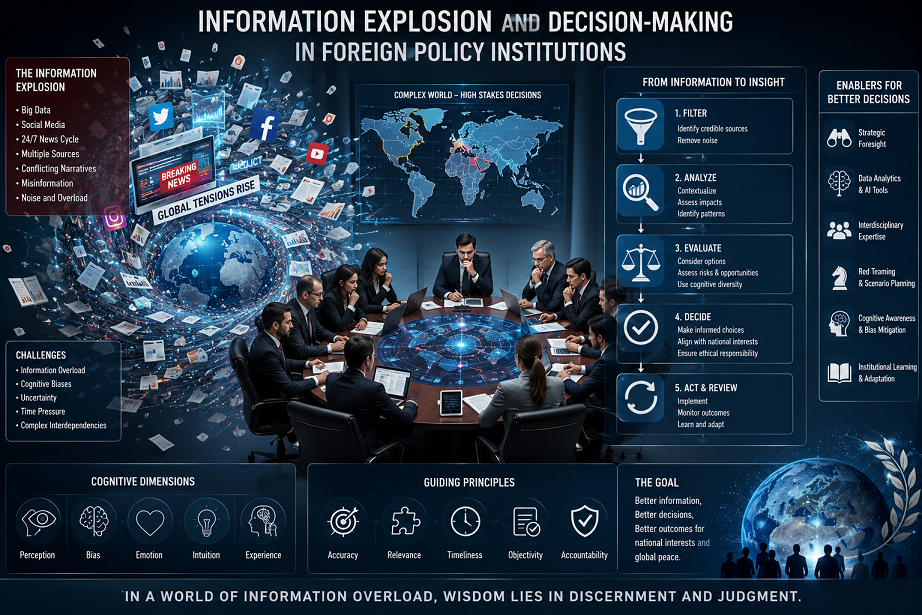
He argues that decision-makers face environments characterized by uncertainty, incomplete information, and ambiguity. Under such conditions, leaders rely on cognitive shortcuts and pre-existing beliefs to make sense of events. These mental processes influence how information is received, interpreted, and acted upon.
This insight laid the foundation for later developments in political psychology and cognitive approaches to foreign policy analysis.
Analysis of Cognitive Biases
The book provides a detailed examination of cognitive biases that affect diplomatic and strategic decision-making.
Among the biases discussed are:
Confirmation Bias
Decision-makers tend to seek and interpret information in ways that confirm their existing beliefs while discounting contradictory evidence.
Consistency Bias
Policymakers often strive to maintain coherent belief systems, making it difficult for them to revise assumptions even when presented with new information.
Attribution Errors
Leaders frequently attribute hostile actions by opponents to aggressive intentions while explaining their own actions as responses to circumstances.
Selective Perception
Individuals tend to notice and remember information that aligns with their expectations while overlooking conflicting evidence.
Jervis demonstrates how these biases can contribute to miscalculations and policy failures.
The Security Dilemma
Another major contribution of the book is its discussion of the security dilemma.
Jervis explains how states seeking to increase their security may unintentionally threaten others. Defensive measures can be interpreted as offensive preparations, prompting reciprocal responses that increase tensions and insecurity.
The security dilemma highlights how misperception can generate conflict even when neither side desires confrontation. This insight remains highly relevant to contemporary issues such as arms races, military modernization, and regional security competition.
Integration of Psychology and International Relations
Perhaps the book’s most enduring achievement is its successful integration of psychological theory into international relations.
Jervis demonstrates that understanding international politics requires more than analyzing material power and strategic interests. It also requires examining how individuals process information, form beliefs, and make decisions.
This interdisciplinary approach expanded the scope of international relations scholarship and encouraged greater engagement with psychology, cognitive science, and behavioral research.
Strengths of the Book
Theoretical Innovation
The book’s greatest strength lies in its theoretical originality. Jervis challenged dominant assumptions about rationality and introduced a richer understanding of human behavior in international affairs.
His emphasis on perception and cognition represented a major intellectual shift that continues to influence contemporary scholarship.
Interdisciplinary Approach
Jervis successfully bridges political science and psychology, demonstrating the value of interdisciplinary research. By drawing upon psychological theories, he provides deeper explanations for foreign policy behavior than traditional realist models alone can offer.
Enduring Relevance
Despite being published nearly five decades ago, the book remains remarkably relevant.
Contemporary international politics continues to be shaped by:
-
Strategic misperceptions.
-
Information warfare.
-
Nationalist narratives.
-
Cognitive biases in leadership.
-
Misunderstandings between rival states.
The book’s insights remain applicable to modern geopolitical tensions and diplomatic challenges.
Rich Analytical Framework
Rather than offering simple explanations, Jervis develops a sophisticated framework capable of explaining a wide range of international phenomena.
His analysis recognizes the complexity of decision-making and avoids reducing behavior to purely rational calculations.
Limitations and Criticisms
Limited Empirical Testing
One criticism concerns the difficulty of empirically measuring perceptions and cognitive processes.
While Jervis provides compelling theoretical arguments and historical illustrations, some scholars argue that it is challenging to systematically test many of his claims.
Potential Underestimation of Structural Factors
Realist scholars have argued that Jervis places excessive emphasis on psychological variables while underestimating the influence of structural constraints such as power distributions, strategic interests, and geopolitical realities.
From this perspective, some international conflicts may be driven more by objective security concerns than by cognitive misperceptions.
Methodological Challenges
Because perceptions are often internal and subjective, researchers may struggle to determine whether specific policy decisions resulted from cognitive biases or rational strategic calculations.
This challenge continues to affect research in political psychology and foreign policy analysis.
Relevance to Cognitive Science
The book has become increasingly important in light of developments in cognitive science.
Many concepts discussed by Jervis—including cognitive schemas, selective perception, information processing, and decision-making biases—are now central topics within cognitive psychology and cognitive science.
Modern research on:
-
Heuristics,
-
Prospect theory,
-
Framing effects,
-
Social cognition,
-
Decision-making under uncertainty,
has reinforced many of Jervis’s original insights.
Consequently, the book can be viewed as an early contribution to what would later become the cognitive turn in international relations.
Relevance to Diplomacy and Neurodiplomacy
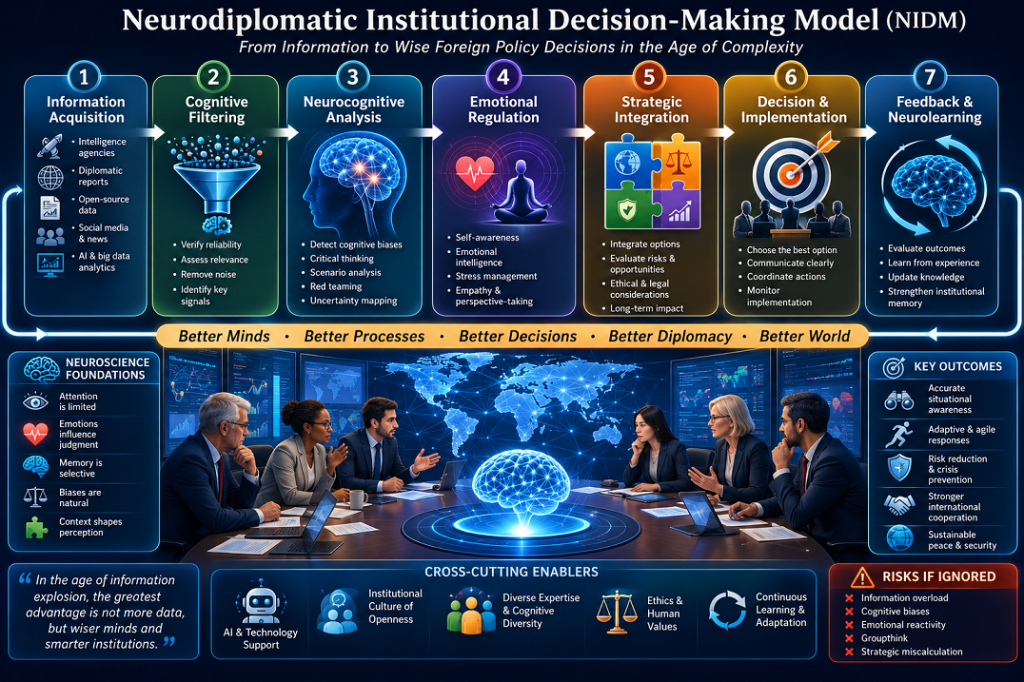
The book is particularly significant for contemporary discussions of diplomacy and neurodiplomacy.
Jervis demonstrates that diplomatic success depends not only on power and interests but also on understanding how others perceive reality. Negotiators who fail to recognize cognitive biases and perceptual distortions may inadvertently escalate tensions or miss opportunities for cooperation.
Within a neurodiplomatic framework, the book provides theoretical support for integrating:
-
Cognitive science,
-
Political psychology,
-
Behavioral decision-making,
-
Communication studies,
-
Strategic negotiation,
into diplomatic practice.
Its emphasis on perception, trust, interpretation, and misinterpretation aligns closely with emerging efforts to understand the cognitive foundations of international relations.
Conclusion
Perception and Misperception in International Politics remains one of the most influential and intellectually significant works in international relations scholarship. Robert Jervis fundamentally transformed the study of foreign policy and diplomacy by demonstrating that international politics is shaped not only by power and interests but also by perception, cognition, and psychological processes.
The book’s enduring contribution lies in its recognition that leaders do not act on objective reality alone; they act on their interpretations of reality. By highlighting the role of cognitive biases, misperceptions, and mental frameworks, Jervis provided a more nuanced understanding of international behavior and conflict.
Although some methodological and theoretical criticisms remain, the book continues to serve as a foundational text for scholars of international relations, political psychology, cognitive science, and diplomacy. Its insights are particularly valuable in the contemporary era, where understanding how leaders think, perceive, and communicate is essential for effective diplomacy, conflict prevention, and global cooperation.
Overall Assessment: A seminal and indispensable work that revolutionized the study of decision-making, perception, and cognition in international politics and remains essential reading for students and scholars of diplomacy, foreign policy, and international relations.