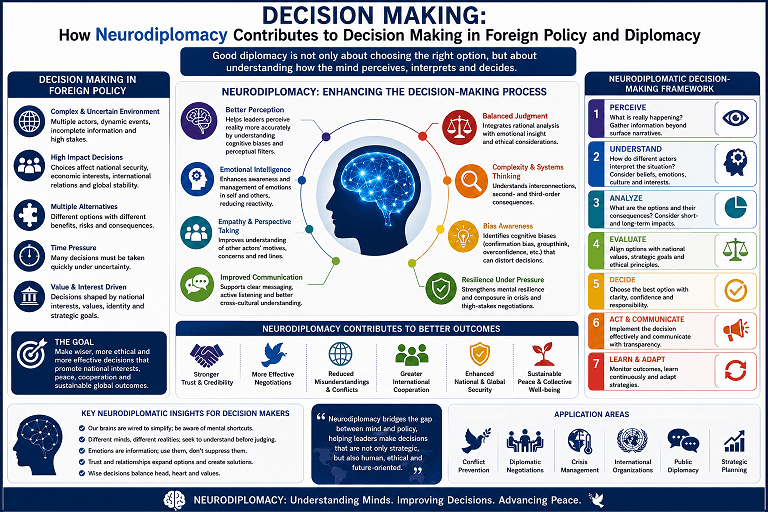
Introduction
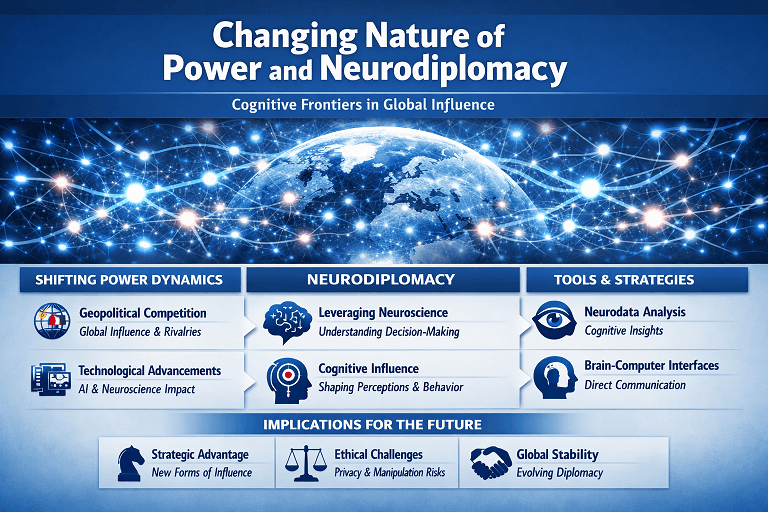
The role of diplomats has changed dramatically in the twenty-first century. Traditionally, diplomats were primarily responsible for representing their states, negotiating agreements, gathering information, and maintaining relations with foreign governments. However, globalization, digital technologies, artificial intelligence, social media, transnational challenges, and the increasing importance of perception and communication have transformed the diplomatic profession.
In this new environment, diplomats are no longer merely negotiators or messengers between governments. They have become managers of perceptions, builders of trust, facilitators of dialogue, interpreters of cultures, strategic communicators, and architects of international cooperation. From a neurodiplomatic perspective, diplomats are increasingly required to understand not only political interests but also the cognitive, emotional, and communicative processes that shape international behavior.
From Traditional Diplomacy to Neurodiplomacy
Traditionally, diplomats focused on:
State interests
Security concerns
Treaty negotiations
Political reporting
Bilateral relations
Today, diplomats must also manage:
Perceptions
Narratives
Emotions
Cultural differences
Public opinion
Digital communication
Cognitive biases
Trust-building processes
The modern diplomat therefore operates at the intersection of politics, psychology, communication, and technology.
Diplomats as Managers of Perceptions
One of the central principles of Neurodiplomacy is:
People do not respond to reality itself; they respond to their perceptions of reality.
Many international crises emerge from misunderstanding, misinterpretation, and misperception rather than objective conflicts of interest.
The modern diplomat must therefore:
Understand how other actors perceive events.
Identify sources of misperception.
Clarify intentions.
Reduce misunderstandings.
Create shared interpretations of reality.
In this sense, diplomats become managers of international perceptions.
Diplomats as Builders of Trust
Trust has become one of the most valuable resources in international relations.
Without trust, it becomes difficult to:
Negotiate agreements.
Resolve conflicts.
Share information.
Coordinate international action.
Neurodiplomacy views trust as a cognitive and emotional process rather than merely a political calculation.
The diplomat’s role increasingly includes:
Building credibility.
Demonstrating reliability.
Maintaining consistency.
Facilitating long-term relationships.
In a world characterized by uncertainty and competition, trust becomes a strategic asset.
Diplomats as Strategic Communicators
Communication has always been important in diplomacy, but today it is central.
The modern diplomat must communicate effectively with:
Governments
International organizations
Media
Civil society
Foreign publics
Digital audiences
The Neurodiplomatic perspective emphasizes that:
The effectiveness of communication depends not on what is said, but on how it is perceived.
Consequently, diplomats must understand:
Message framing
Audience psychology
Narrative construction
Emotional impact
Cross-cultural communication
Diplomats are increasingly becoming communication strategists.
Diplomats as Interpreters of Cognitive Maps
The NLP principle:
“The map is not the territory”
has important implications for diplomacy.
Different societies possess different:
Historical memories
Cultural narratives
Political beliefs
Strategic assumptions
These create different “maps” of reality.
The diplomat’s role is to:
Understand competing maps.
Translate between them.
Create common understanding.
Reduce cognitive barriers.
In many cases, diplomatic success depends upon understanding how others think rather than simply knowing what they want.
Diplomats as Facilitators of Dialogue
Contemporary international politics often involves deeply polarized actors.
Diplomats increasingly function as facilitators who help adversaries communicate.
This requires:
Active listening.
Empathy.
Rapport-building.
Reframing conflicts.
Finding common interests.
From a neurodiplomatic perspective, dialogue is not merely an exchange of information; it is a process of transforming perceptions and relationships.
Diplomats as Emotional Intelligence Practitioners
Traditional diplomacy often emphasized rationality.
Neurodiplomacy recognizes that emotions play a crucial role in international relations.
Diplomats must learn to understand and manage:
Fear
Anger
Trust
Hope
Humiliation
Pride
Emotional intelligence becomes an essential diplomatic skill.
A diplomat who can recognize emotional dynamics is often better equipped to:
Prevent escalation.
Manage crises.
Facilitate negotiations.
Build cooperation.
Diplomats as Digital Actors
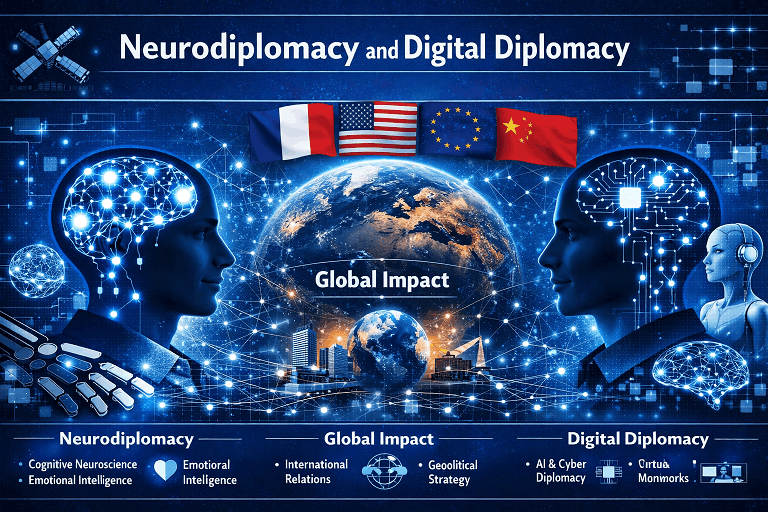
The rise of digital diplomacy has transformed diplomatic practice.
Today’s diplomats operate in an environment of:
Social media
Real-time information
Online diplomacy
Digital campaigns
Artificial intelligence
This requires new skills:
Digital communication.
Information analysis.
Online engagement.
Countering misinformation.
Narrative management.
The diplomat is no longer confined to embassies and conference rooms; diplomacy now takes place continuously in digital spaces.
Diplomats as Conflict Resolution Specialists
The complexity of modern conflicts requires diplomats to move beyond traditional negotiation techniques.
Neurodiplomatic conflict resolution focuses on:
Perceptions
Identity
Emotions
Historical narratives
Communication patterns
Diplomats increasingly act as mediators who help parties:
Reframe disputes.
Build trust.
Recognize shared interests.
Develop mutually acceptable solutions.
Diplomats as Cultural and Cognitive Bridges
Globalization has increased interactions among societies with different values and worldviews.
Diplomats serve as bridges between:
Cultures
Political systems
Identities
Narratives
This requires:
Cultural intelligence.
Cognitive flexibility.
Perspective-taking.
Intercultural communication skills.
The ability to understand how others interpret reality becomes a strategic diplomatic capability.
Diplomats as Architects of International Cooperation
Many contemporary challenges cannot be solved by individual states acting alone.
Examples include:
Climate change
Artificial intelligence governance
Cybersecurity
Pandemics
Migration
Energy security
Diplomats play a central role in building cooperative frameworks capable of addressing these issues.
From a neurodiplomatic perspective, cooperation depends not only on institutions but also on:
Trust
Shared perceptions
Effective communication
Common narratives
The Neurodiplomatic Diplomat
The diplomat of the future combines traditional diplomatic skills with insights from cognitive science, psychology, and communication studies.
Such a diplomat must possess:
Cognitive Awareness
Understanding how perceptions influence decisions.
Emotional Intelligence
Recognizing and managing emotional dynamics.
Communication Competence
Crafting and interpreting messages effectively.
Cognitive Flexibility
Adapting to changing circumstances.
Strategic Empathy
Understanding how others view the world.
Digital Literacy
Operating effectively in information-rich environments.
Interdisciplinary Thinking
Integrating political, psychological, and technological perspectives.
Conclusion
The changing nature of world politics has transformed the role of diplomats from traditional representatives of state interests into managers of perceptions, builders of trust, facilitators of dialogue, strategic communicators, and architects of international cooperation. In the age of Neurodiplomacy, successful diplomacy depends not only on understanding power and interests but also on understanding how people think, perceive, communicate, and make decisions.
The diplomat of the twenty-first century must therefore be more than a negotiator; they must be a cognitive strategist, an emotional intelligence practitioner, a cultural interpreter, and a bridge between competing perceptions and realities. As international relations become increasingly shaped by information, narratives, emotions, and human cognition, the importance of these neurodiplomatic competencies will continue to grow.
Neurodiplomatic Vision of the Diplomat
The diplomat of the future is not merely a representative of a state but a manager of perceptions, a builder of trust, a translator of worldviews, and a facilitator of human understanding. In a world where communication shapes power and perception shapes reality, diplomacy becomes the art of connecting minds before aligning interests.