Bibliographic Information
Langholtz, Harvey J., and Chris E. Stout, eds. The Psychology of Diplomacy. Westport, CT: Praeger Security International, 2004.
Introduction
The Psychology of Diplomacy is a pioneering interdisciplinary volume that explores the complex relationship between psychological processes and diplomatic practice. Edited by Harvey J. Langholtz and Chris E. Stout, the book brings together scholars and practitioners from psychology, international relations, conflict resolution, and diplomacy to examine how human cognition, emotion, perception, communication, and behavior influence international negotiations and foreign policy outcomes.
Traditionally, diplomacy has been studied primarily through political, legal, strategic, and institutional frameworks. This volume challenges such approaches by emphasizing that diplomacy is fundamentally a human activity conducted by individuals whose judgments, perceptions, emotions, and personalities significantly affect international interactions. The editors argue that understanding diplomacy requires not only knowledge of state interests and power politics but also an appreciation of the psychological mechanisms that shape decision-making, negotiation, conflict management, and intercultural communication.
The book represents one of the earliest systematic attempts to integrate psychological science into diplomatic studies and remains a valuable contribution to the fields of international relations, political psychology, and conflict resolution.
Purpose and Scope of the Book
The primary objective of The Psychology of Diplomacy is to demonstrate that psychological factors are essential for understanding diplomatic behavior and international political outcomes.
The contributors examine a wide range of topics, including:
-
Perception and misperception
-
Cognitive biases
-
Leadership psychology
-
Negotiation behavior
-
Conflict resolution
-
Trust-building
-
Cultural differences
-
Communication processes
-
Emotional influences
-
Decision-making under uncertainty
Through these themes, the volume seeks to explain how psychological dynamics influence diplomatic interactions at both individual and collective levels.
Unlike traditional diplomatic studies that focus primarily on state interests and institutional structures, the book highlights the human dimensions of diplomacy and emphasizes the importance of understanding the minds of diplomats, leaders, negotiators, and policymakers.
Major Themes and Contributions
Psychology as a Foundation of Diplomacy
One of the central arguments of the volume is that diplomacy is inherently psychological.
Diplomats constantly engage in activities that involve:
-
Perceiving intentions
-
Interpreting signals
-
Assessing credibility
-
Building trust
-
Managing emotions
-
Negotiating agreements
These processes depend heavily on cognitive and psychological mechanisms.
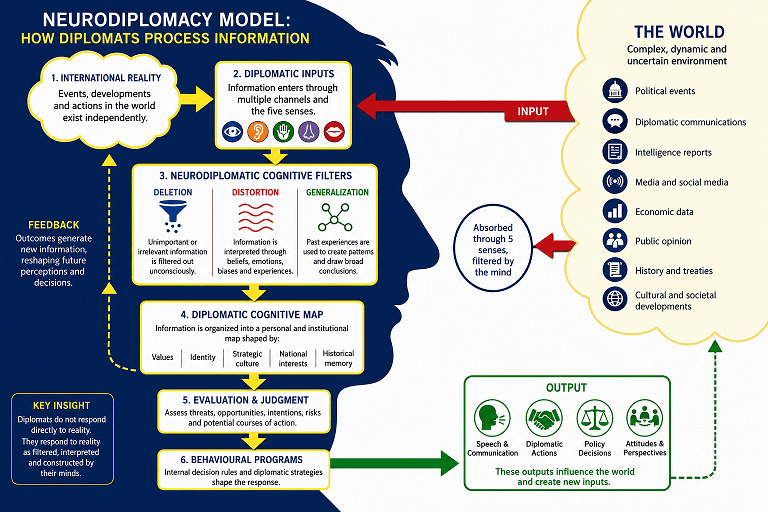
The contributors demonstrate that diplomatic outcomes are often shaped not only by objective political realities but also by how those realities are perceived and interpreted by the actors involved.
This perspective significantly broadens conventional understandings of diplomatic practice.
Perception and Misperception
A recurring theme throughout the book is the importance of perception in international relations.
Drawing upon the work of scholars such as Robert Jervis, several contributors emphasize that leaders frequently act based on their interpretations of events rather than objective realities.
Diplomatic failures often emerge from:
-
Misunderstood intentions
-
Faulty assumptions
-
Stereotypes
-
Cognitive biases
-
Inaccurate threat assessments
The volume demonstrates that many international crises can be traced to perceptual errors rather than deliberate hostility.
This insight underscores the importance of effective communication and mutual understanding in diplomatic practice.
Decision-Making Under Uncertainty
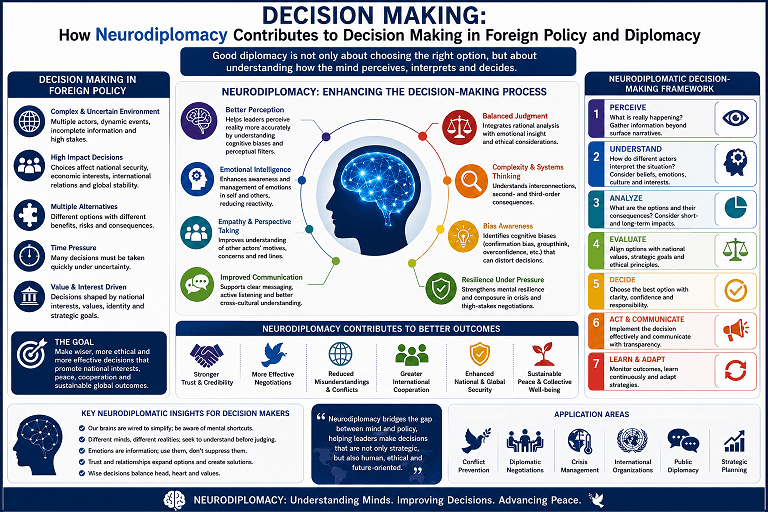
The book highlights the challenges diplomats face when making decisions in uncertain environments.
International politics is characterized by:
-
Incomplete information
-
Ambiguous signals
-
Rapidly changing circumstances
-
Complex strategic interactions
Under such conditions, policymakers often rely on cognitive shortcuts and mental models.
The contributors examine how psychological processes influence:
-
Risk perception
-
Strategic judgment
-
Crisis management
-
Foreign policy formulation
This analysis provides a more realistic account of diplomatic decision-making than traditional rational actor models.
Negotiation and Conflict Resolution
A major strength of the volume is its focus on negotiation psychology.
Diplomatic negotiations involve not only material interests but also psychological factors such as:
-
Trust
-
Identity
-
Emotions
-
Expectations
-
Communication styles
The contributors demonstrate how successful negotiators manage interpersonal dynamics, build relationships, and create environments conducive to cooperation.
The book also explores how psychological insights can improve mediation, conflict resolution, and peacebuilding efforts.
Cultural and Cross-Cultural Dimensions
The volume recognizes that diplomacy increasingly operates in multicultural environments.
Different cultures may possess distinct:
-
Communication patterns
-
Negotiation styles
-
Perceptions of authority
-
Approaches to conflict
-
Interpretations of political behavior
The contributors argue that cultural competence is an essential diplomatic skill.
By understanding cultural differences, diplomats can reduce misunderstandings and improve international cooperation.
Theoretical Contributions
Bridging Psychology and International Relations
Perhaps the book’s most important contribution is its successful integration of psychology into diplomatic studies and international relations.
The volume demonstrates that political outcomes cannot be explained solely through:
-
Power distributions
-
National interests
-
Institutional arrangements
Psychological variables also play a critical role.
This interdisciplinary approach enriches traditional international relations theory and offers a more comprehensive understanding of diplomatic behavior.
Expanding the Study of Diplomacy
The book broadens the study of diplomacy beyond formal negotiations and statecraft.
Diplomacy is presented as a process involving:
-
Human interaction
-
Social cognition
-
Emotional regulation
-
Relationship management
-
Communication strategies
This expanded perspective has influenced subsequent research on public diplomacy, intercultural diplomacy, and diplomatic communication.
Relevance to Political Psychology
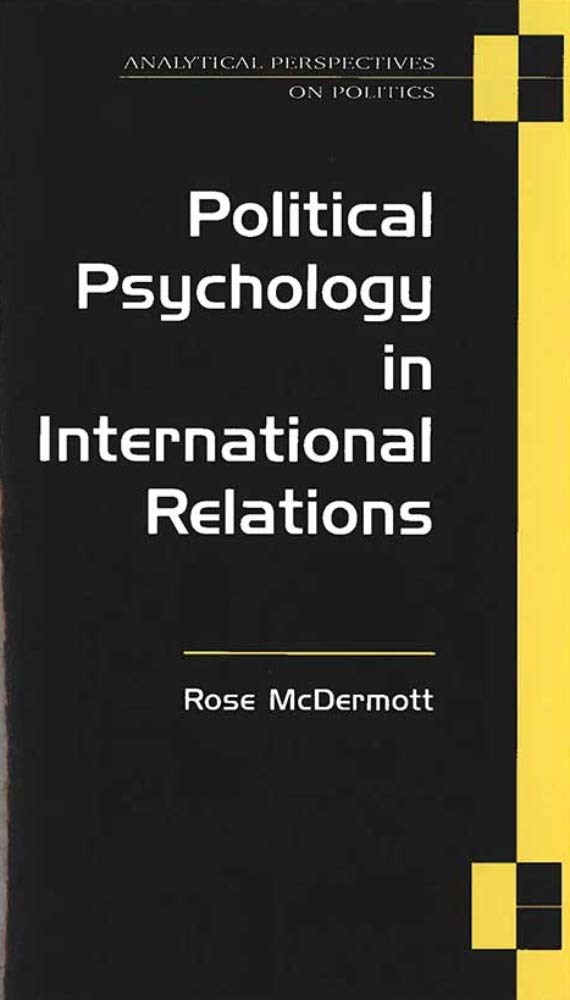
The volume is an important contribution to political psychology because it applies psychological theories directly to international political behavior.
Topics explored include:
-
Cognitive biases
-
Leadership psychology
-
Group decision-making
-
Social identity
-
Emotional influences
-
Judgment under uncertainty
By connecting these themes to diplomatic practice, the book demonstrates the practical value of political psychology for understanding international affairs.
Relevance to Cognitive Science
The book is highly relevant to cognitive science because many of its central concerns involve cognitive processes.
The contributors examine how individuals:
-
Process information
-
Form perceptions
-
Interpret signals
-
Make decisions
-
Manage uncertainty
These issues are central to contemporary cognitive science.
Although the volume predates many recent developments in neuroscience, its emphasis on cognition anticipates later research on decision-making, attention, memory, and social cognition.
Relevance to Neurodiplomacy
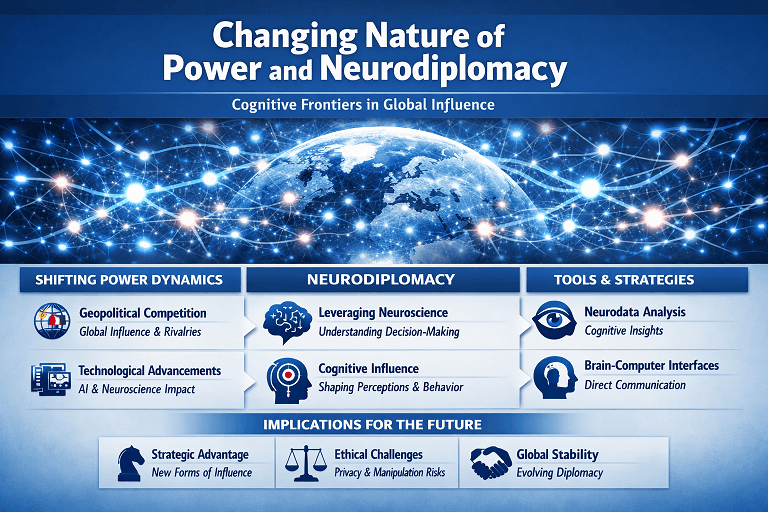
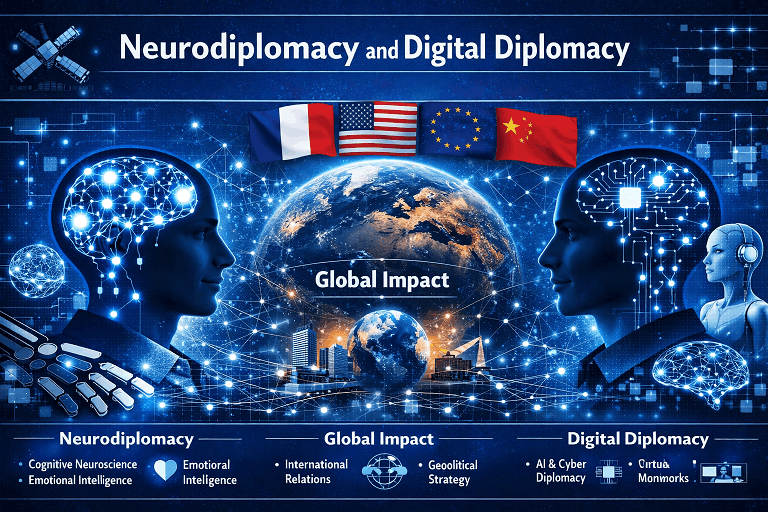
From the perspective of Neurodiplomacy, The Psychology of Diplomacy is a foundational text.
Neurodiplomacy seeks to integrate:
-
Diplomacy
-
Cognitive science
-
Political psychology
-
Strategic communication
to better understand diplomatic behavior and international cooperation.
Many of the themes explored in this volume directly support neurodiplomatic research, including:
-
Perception and misperception
-
Emotional influences on decision-making
-
Trust formation
-
Cognitive biases
-
Negotiation psychology
-
Intercultural communication
The book demonstrates that successful diplomacy depends not only on geopolitical calculations but also on understanding how the human mind processes information, evaluates risks, and responds to social interactions.
In this respect, the volume can be regarded as an intellectual precursor to contemporary neurodiplomatic approaches that seek to combine scientific insights about the mind with diplomatic practice.
Strengths of the Book
Interdisciplinary Innovation
The book successfully bridges multiple disciplines, creating a rich framework for understanding diplomacy.
Practical Relevance
Many chapters offer insights that are directly applicable to real-world diplomatic practice, negotiation, and conflict management.
Comprehensive Coverage
The volume addresses a broad range of psychological factors affecting diplomacy, making it useful for scholars and practitioners alike.
Scholarly Significance
As one of the earliest systematic explorations of diplomacy through a psychological lens, the book occupies an important place in the development of diplomatic studies.
Limitations
Limited Neuroscientific Integration
Published before the rapid expansion of social and cognitive neuroscience, the book contains relatively little discussion of neural mechanisms underlying decision-making and behavior.
Diversity of Perspectives
As an edited volume, the chapters vary in theoretical orientation and methodological approach. While this diversity enriches the discussion, it occasionally reduces conceptual coherence.
Historical Context
Some case studies reflect the geopolitical concerns of the early twenty-first century and may require updating in light of contemporary developments.
Nevertheless, these limitations do not diminish the book’s overall value.
Conclusion
The Psychology of Diplomacy is a landmark contribution to the interdisciplinary study of diplomacy and international relations. By demonstrating that diplomatic behavior is profoundly influenced by cognitive, emotional, and social psychological processes, the volume broadens traditional understandings of diplomacy and provides valuable insights into negotiation, conflict resolution, and international cooperation.
The book successfully bridges psychology and international relations, offering a richer and more human-centered perspective on diplomatic practice. Its discussions of perception, decision-making, trust, communication, and negotiation remain highly relevant to contemporary scholarship and practice.
For scholars of diplomacy, political psychology, cognitive science, conflict resolution, and neurodiplomacy, The Psychology of Diplomacy remains essential reading and an important foundation for future research on the psychological dimensions of international affairs.
Overall Evaluation
A pioneering and intellectually significant volume that demonstrates how psychological processes shape diplomacy, negotiation, and international relations, laying important foundations for contemporary research in political psychology, cognitive science, and neurodiplomacy.