
The Role of Artificial Intelligence and Neurodiplomacy in Contemporary International Relations

Introduction The emergence of Artificial Intelligence (AI) represents one of the most transformative developments in twenty-first-century international relations. AI is rapidly reshaping economic systems, military capabilities, governance structures, diplomatic practices, and global power dynamics. Simultaneously, growing recognition of the importance of human cognition, perception, emotions, and decision-making in international affairs has contributed to the development […]
Technological Advancements, Environmental Challenges, and Neurodiplomacy in World Politics

Introduction The twenty-first century has witnessed unprecedented technological innovation alongside mounting environmental challenges that increasingly shape international relations and global governance. Artificial intelligence, big data, biotechnology, digital communication, quantum computing, and advanced information networks are transforming the conduct of diplomacy and international politics. Simultaneously, climate change, biodiversity loss, water scarcity, environmental degradation, and natural disasters […]
“The Map Is Not the Territory” in Neurodiplomacy
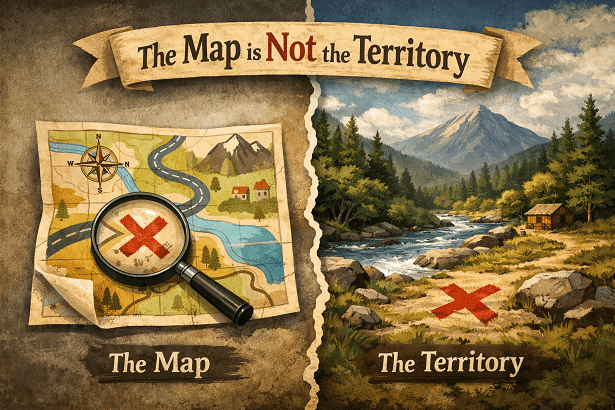
One of the most profound concepts for understanding Neurodiplomacy is the famous statement: “The map is not the territory.” This principle was introduced by the Polish-American philosopher and scientist Alfred Korzybski in his work on General Semantics. The phrase means that our mental representations of reality (“maps”) are not reality itself (“the territory”). Human beings […]
Perceptions as a Main Subject of Neurodiplomacy
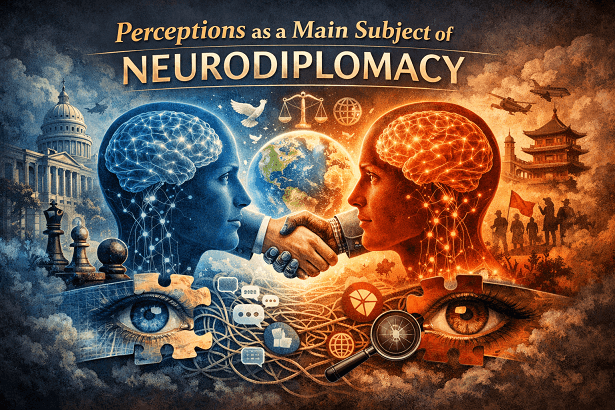
Introduction Among the various concepts that constitute the intellectual foundation of Neurodiplomacy, perception occupies a central and arguably the most important position. While traditional diplomacy often focuses on material capabilities, strategic interests, military power, and institutional arrangements, Neurodiplomacy emphasizes that international political behavior is fundamentally shaped by how individuals, leaders, and societies perceive reality. States […]
The Role of Diplomats in the Age of Neurodiplomacy

Introduction The role of diplomats has changed dramatically in the twenty-first century. Traditionally, diplomats were primarily responsible for representing their states, negotiating agreements, gathering information, and maintaining relations with foreign governments. However, globalization, digital technologies, artificial intelligence, social media, transnational challenges, and the increasing importance of perception and communication have transformed the diplomatic profession. In […]