Book Information
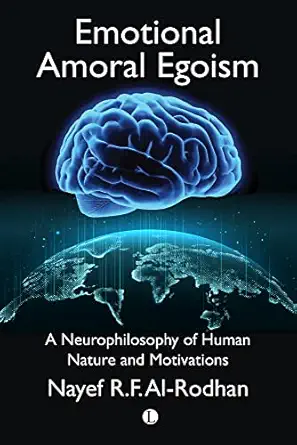
Emotional Amoral Egoism
Author: Nayef R. F. Al-Rodhan
First Edition: 2008
Revised Edition: 2021 (Emotional Amoral Egoism: A Neurophilosophy of Human Nature and Motivations)
Field: Neurophilosophy, Political Psychology, Cognitive Science, International Relations, Security Studies, Ethics (Open Library)
Introduction
Emotional Amoral Egoism is an ambitious and highly interdisciplinary work that seeks to develop a comprehensive theory of human nature by integrating neuroscience, psychology, philosophy, evolutionary theory, and political analysis. In this book, Nayef Al-Rodhan challenges traditional assumptions that human beings are fundamentally rational or inherently moral. Instead, he proposes the theory of Emotional Amoral Egoism (EAE), arguing that human behavior is primarily driven by emotional self-interest and that individuals are neither naturally moral nor immoral but fundamentally amoral, with moral behavior emerging largely from social and environmental conditions. (Goodreads)
The book extends beyond philosophical anthropology and explores the implications of human nature for governance, identity formation, conflict, security, globalization, and international relations. As a result, it occupies a unique position at the intersection of cognitive science and political theory.
Central Argument
The central thesis of the book is that human beings are motivated primarily by emotional self-interest rather than pure rationality or innate moral principles. Al-Rodhan argues that emotions are not peripheral to human behavior but constitute the principal drivers of thought, motivation, and decision-making. According to his theory, individuals are predisposed to pursue their own interests, but the form that this self-interest takes depends heavily on social, cultural, political, and institutional environments. (Goodreads)
The concept of “amoral” is particularly important. Al-Rodhan does not claim that humans are immoral; rather, he suggests that morality is not an innate and fixed characteristic. Instead, moral conduct develops through socialization, governance structures, and contextual incentives. Consequently, societies and political institutions play a crucial role in channeling human motivations toward cooperation rather than conflict. (Open Library)
Theoretical Contributions
A Neurophilosophical Theory of Human Nature
One of the book’s most significant contributions is its attempt to construct a neurophilosophical framework for understanding human behavior.
Al-Rodhan synthesizes insights from:
-
Neuroscience
-
Evolutionary biology
-
Psychology
-
Philosophy
-
Political theory
to explain why humans think and behave as they do. Rather than treating cognition and emotion as separate domains, he emphasizes their interconnectedness and argues that emotions are central to human reasoning and action. (JSTOR)
This perspective aligns with contemporary developments in cognitive neuroscience, which increasingly recognize that emotion and cognition operate together rather than as opposing forces.
Human Motivation and the “Neuro P5”
The book develops a theory of motivation that seeks to explain recurring patterns of human behavior. Al-Rodhan examines how emotional needs, identity concerns, security considerations, and social environments shape individual and collective actions. (JSTOR)
By grounding motivation in neurobiological and psychological processes, the author attempts to move beyond purely rational-choice explanations of political and social behavior.
Human Dignity and Governance
Perhaps the most original aspect of the book is its application of human nature theory to governance.
Al-Rodhan argues that effective governance must recognize the realities of human emotional self-interest. He therefore proposes a model of dignity-based governance, emphasizing institutions that satisfy fundamental human needs while minimizing the destructive consequences of emotional egoism. (JSTOR)
This normative dimension distinguishes the book from many works in neuroscience and political psychology, which often focus primarily on explanation rather than policy implications.
Relevance to Cognitive Science
The book has considerable relevance for cognitive science because it directly addresses fundamental questions concerning:
-
Human motivation
-
Decision-making
-
Emotional processing
-
Identity formation
-
Social behavior
Al-Rodhan’s argument that emotions play a primary role in cognition reflects a broader shift within cognitive science away from purely rational models of the mind. His emphasis on emotional influences anticipates contemporary research demonstrating that emotions significantly affect judgment, memory, risk assessment, and social interaction. (JSTOR)
Although the book is not a technical neuroscience text, it successfully introduces cognitive and neurobiological perspectives into debates traditionally dominated by philosophy and political theory.
Relevance to Diplomacy and International Relations
The implications of Emotional Amoral Egoism for diplomacy are particularly noteworthy.
Understanding International Conflict
Al-Rodhan argues that many forms of conflict emerge from identity concerns, insecurity, emotional motivations, and group-based self-interest. This perspective challenges explanations that rely solely on material interests or power politics. (JSTOR)
From a diplomatic perspective, understanding the emotional drivers of political behavior can improve:
-
Conflict prevention
-
Crisis management
-
Peace negotiations
-
Reconciliation efforts
Trust and International Cooperation
The theory suggests that successful cooperation requires institutions capable of addressing fundamental psychological and emotional needs.
This insight is highly relevant to international organizations, diplomatic institutions, and global governance structures seeking to foster long-term cooperation among states and societies.
Human-Centered Security
A major contribution of the book is its emphasis on “universal security.” Rather than focusing exclusively on military threats, Al-Rodhan broadens the concept of security to include dignity, identity, well-being, and social stability. (Goodreads)
This broader conception aligns with contemporary approaches to human security and sustainable peacebuilding.
Relevance to Neurodiplomacy
For scholars interested in Neurodiplomacy, this book is exceptionally valuable.
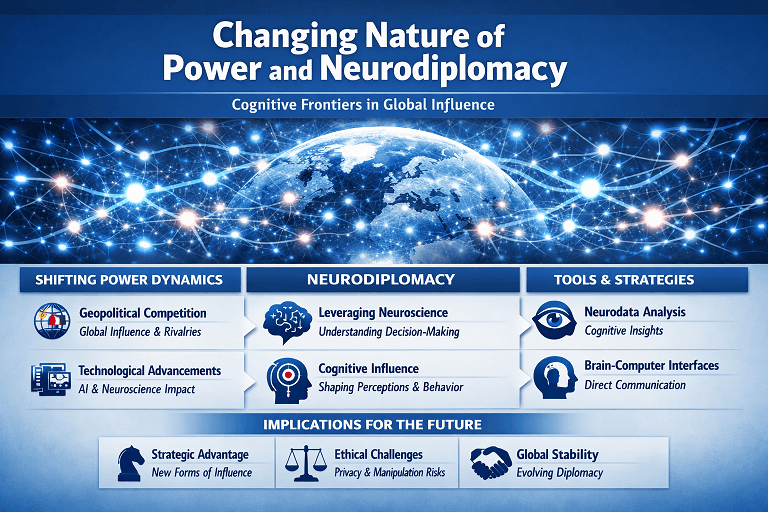
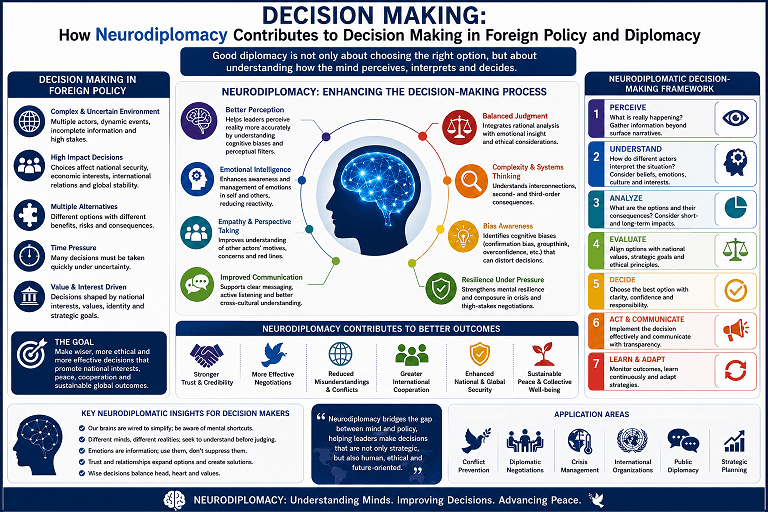
Neurodiplomacy seeks to integrate diplomacy with:
-
Cognitive science
-
Neuroscience
-
Political psychology
-
Strategic communication
Al-Rodhan’s theory provides a strong conceptual foundation for this endeavor.
His argument that human behavior is driven primarily by emotional and cognitive processes suggests that diplomatic effectiveness depends on understanding:
-
Emotional motivations
-
Identity formation
-
Perception and misperception
-
Trust-building
-
Human dignity
-
Communication dynamics
These themes are central to contemporary neurodiplomatic thinking.
In many respects, Emotional Amoral Egoism can be viewed as one of the earliest attempts to connect neuroscience-informed understandings of human nature with international relations and global governance.
Strengths
Interdisciplinary Breadth
One of the book’s greatest strengths is its ability to bridge multiple disciplines. Few works attempt to integrate neuroscience, philosophy, psychology, and international relations into a single theoretical framework.
Originality
The concept of Emotional Amoral Egoism is highly original and offers a fresh perspective on longstanding debates concerning human nature, morality, and political behavior.
Policy Relevance
Unlike many theoretical works, the book explicitly addresses practical implications for governance, security, and international cooperation.
Contribution to Emerging Fields
The book contributes significantly to emerging areas such as:
-
Neurophilosophy
-
Political neuroscience
-
Cognitive security studies
-
Neurodiplomacy
-
Political psychology
Limitations and Criticisms
Theoretical Scope
The book’s ambitious scope is both a strength and a weakness. Because it attempts to explain human nature, morality, governance, and international relations simultaneously, some arguments occasionally appear overly broad.
Empirical Verification
Certain aspects of Emotional Amoral Egoism remain difficult to test empirically. Critics may question whether the theory can be systematically validated across diverse cultural and political contexts.
Debate Over Human Nature
The claim that humans are fundamentally amoral and primarily motivated by emotional self-interest is likely to generate debate among philosophers, psychologists, and neuroscientists. Alternative theories emphasize innate cooperation, empathy, altruism, or moral intuitions as equally important components of human behavior.
Nevertheless, these criticisms do not diminish the book’s significance as a thought-provoking contribution to interdisciplinary scholarship.
Conclusion
Emotional Amoral Egoism is a bold and intellectually ambitious work that seeks to redefine our understanding of human nature through the integration of neuroscience, philosophy, psychology, and political theory. By proposing that human behavior is driven primarily by emotional self-interest and shaped by social environments, Nayef Al-Rodhan offers a compelling framework for understanding individual behavior, political systems, international conflict, and global governance. (Goodreads)
The book is particularly valuable for scholars interested in cognitive science, political psychology, international relations, and neurodiplomacy. Its emphasis on emotions, identity, human dignity, and governance provides important insights into the psychological foundations of diplomacy and world politics.
Overall Assessment
A highly original and interdisciplinary contribution that successfully bridges neuroscience, philosophy, and international relations, offering a powerful framework for understanding human motivation, governance, security, and the cognitive foundations of diplomacy and global politics.