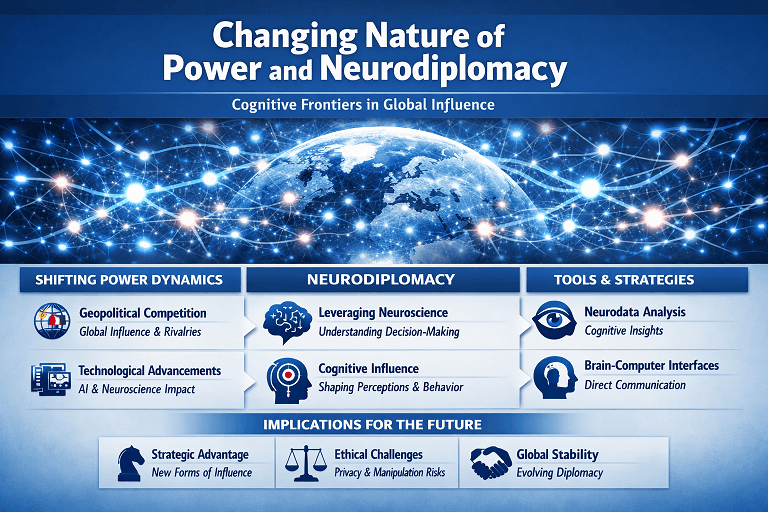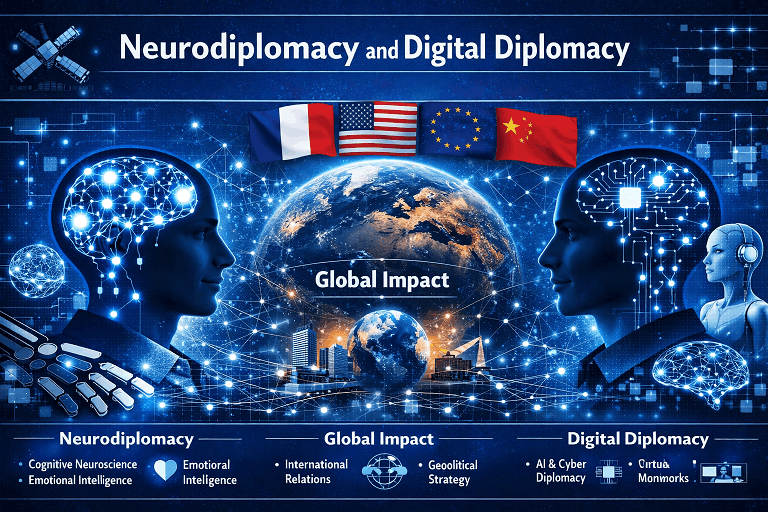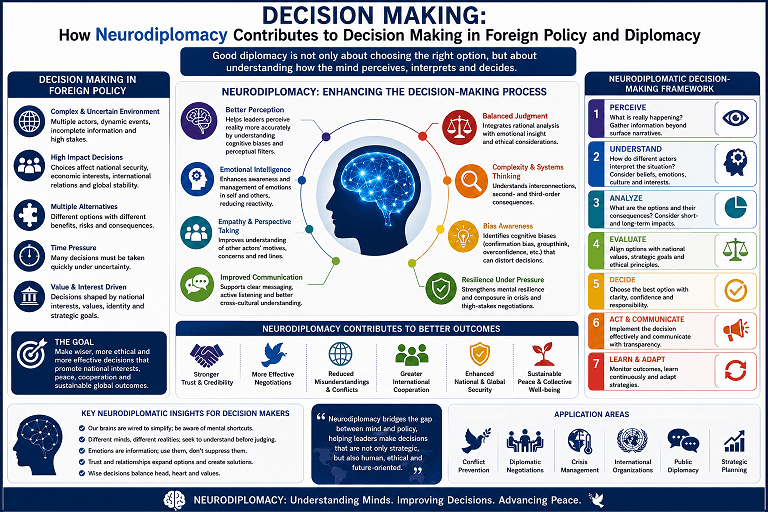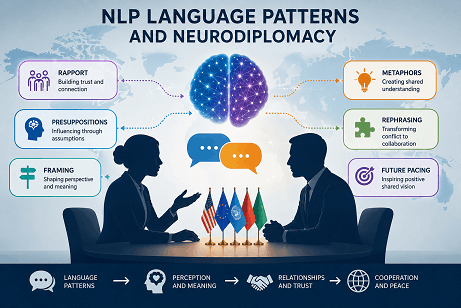
Neurodiplomacy seeks to understand how perception, cognition, emotion, communication, and identity influence diplomatic behavior and international relations. Since diplomacy is fundamentally a process of communication, language becomes one of the most powerful instruments through which diplomats shape perceptions, influence decisions, build trust, and resolve conflicts.
Within this context, Neuro-Linguistic Programming (NLP) language patterns offer valuable insights into how language affects thinking and behavior. NLP proposes that language not only reflects mental processes but also influences how individuals and groups construct reality. Neurodiplomacy can therefore utilize language patterns as tools for enhancing diplomatic communication, negotiation, conflict resolution, and foreign policy decision-making.
Language as a Diplomatic Instrument
Traditional diplomacy often focuses on interests, power, and strategy. Neurodiplomacy adds another dimension by emphasizing that diplomatic outcomes are influenced by how messages are framed and interpreted.
Diplomatic language can:
-
Reduce tension or escalate conflict.
-
Build trust or create suspicion.
-
Encourage cooperation or reinforce resistance.
-
Expand possibilities or limit options.
-
Shape collective perceptions.
Thus, the language used by diplomats becomes an important factor in international outcomes.
The NLP Meta Model and Diplomacy
The NLP Meta Model is designed to clarify communication by identifying distortions, deletions, and generalizations in language.
For diplomats, Meta Model questioning can help uncover:
Hidden Assumptions
Example:
“We cannot negotiate with them.”
Meta Model question:
“What specifically prevents negotiation?”
This shifts discussion from absolute statements toward concrete analysis.
Generalizations
Example:
“They never cooperate.”
Question:
“Never? Can you identify occasions when cooperation occurred?”
Such questions encourage cognitive flexibility and reduce stereotyping.
Distortions
Example:
“Their military exercises prove hostile intentions.”
Question:
“How exactly do we know that those exercises indicate hostility?”
This helps diplomats avoid misperceptions and attribution errors.
The Milton Model and Diplomatic Influence
While the Meta Model seeks precision, the Milton Model utilizes intentionally broad and flexible language to encourage cooperation and create rapport.
Examples include:
Presuppositions
“We can begin exploring solutions when both sides are ready.”
This presupposes that solutions exist and readiness is achievable.
Open Possibilities
“Many constructive outcomes may emerge from this dialogue.”
Such language expands perceived options rather than limiting them.
Indirect Suggestions
“As discussions continue, new perspectives often become available.”
This encourages openness without imposing pressure.
In diplomatic negotiations, indirect language often reduces resistance and preserves face.
Reframing and Neurodiplomacy
Reframing is one of the most useful NLP techniques for diplomacy.
Conflicts frequently persist because parties interpret events through rigid frames.
For example:
Original Frame
“Our neighbor is a threat.”
Reframed
“Our neighbor’s actions may reflect security concerns similar to our own.”
The facts remain unchanged, but the meaning changes.
Neurodiplomatically, reframing influences:
-
Threat perception.
-
Emotional responses.
-
Negotiation behavior.
-
Conflict escalation.
Successful diplomats often function as expert reframers.
Presuppositions and Diplomatic Communication
NLP presuppositions can encourage constructive thinking in negotiations.
Examples include:
“The map is not the territory”
Diplomatic perceptions are not objective reality.
This principle encourages humility and openness to alternative interpretations.
“Flexibility means more choices”
Diplomatic adaptability creates opportunities for cooperation.
“There is no failure, only feedback”
Unsuccessful negotiations become sources of learning rather than permanent setbacks.
“You cannot not communicate”
Every action, silence, gesture, or delay sends a message in international politics.
These presuppositions align closely with Neurodiplomacy’s emphasis on perception and communication.
Rapport Building and International Relations
NLP places considerable emphasis on rapport.
Rapport involves creating trust and psychological connection through:
-
Active listening.
-
Matching communication styles.
-
Respecting perspectives.
-
Demonstrating understanding.
In Neurodiplomacy, rapport contributes to:
-
Trust formation.
-
Relationship building.
-
Conflict prevention.
-
Negotiation effectiveness.
Many diplomatic breakthroughs occur only after sufficient rapport has been established.
Language Patterns and Identity
Constructivist theory argues that identities shape international behavior.
NLP language patterns influence identity through repeated narratives.
Examples:
Identity-Based Language
“We are a peace-seeking nation.”
“We are responsible members of the international community.”
Such statements reinforce collective identities that influence future behavior.
Neurodiplomacy recognizes that diplomatic narratives contribute to national self-perception and foreign policy choices.
Language, Emotion, and Decision-Making
Modern cognitive science demonstrates that emotion and cognition are interconnected.
Certain language patterns activate emotional responses:
Threat Language
-
Danger
-
Crisis
-
Enemy
-
Aggression
These words may trigger defensive reactions.
Opportunity Language
-
Partnership
-
Cooperation
-
Innovation
-
Shared future
These words encourage collaborative thinking.
Neurodiplomacy therefore pays close attention to emotional framing in diplomatic communication.
Applications in Negotiation
NLP language patterns can support diplomatic negotiations through:
Outcome-Oriented Questions
“What outcome would satisfy both parties?”
Future Pacing
“How would regional stability look if an agreement were reached?”
Reframing Positions into Interests
Position:
“We demand control.”
Interest:
“We seek security.”
This shift often opens new negotiating possibilities.
Neurodiplomacy as a Communication Model
From a neurodiplomatic perspective, communication follows a cycle:
-
Event occurs.
-
Perception filters process information.
-
Meaning is assigned.
-
Emotional response develops.
-
Language expresses interpretation.
-
Communication influences others.
-
New perceptions emerge.
NLP language patterns operate within this cycle by influencing how meaning is constructed and communicated.
The Future of NLP and Neurodiplomacy
As diplomacy increasingly occurs within digital environments characterized by information overload, cognitive biases, and competing narratives, language will become even more important.
Future diplomats may require training in:
-
Advanced communication skills.
-
Cognitive awareness.
-
Perception management.
-
Reframing techniques.
-
Conflict communication.
-
Narrative construction.
Neurodiplomacy offers a framework for integrating these skills into diplomatic practice.
Conclusion
NLP language patterns provide Neurodiplomacy with practical tools for understanding and influencing communication in international relations. Through questioning techniques, reframing, rapport building, presuppositions, and strategic language use, diplomats can better manage perceptions, reduce misunderstandings, and facilitate cooperation.
While power, interests, and institutions remain important, Neurodiplomacy argues that international politics is also shaped by language, meaning, and human cognition. NLP language patterns therefore offer valuable mechanisms for translating neurodiplomatic theory into diplomatic practice. In an increasingly interconnected world, the ability to communicate effectively across cognitive, cultural, and political boundaries may become one of the most important skills of twenty-first-century diplomacy.