Bibliographic Information
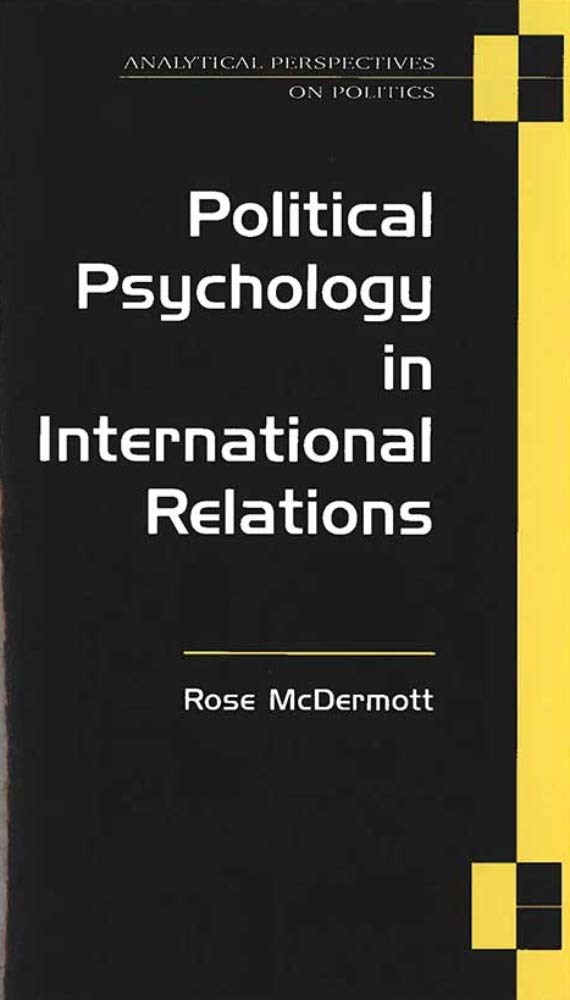
McDermott, Rose. Political Psychology in International Relations. Ann Arbor: University of Michigan Press, 2004.
Introduction
Rose McDermott’s Political Psychology in International Relations is a pioneering and influential work that bridges the disciplines of international relations, political science, and psychology. At a time when mainstream international relations theories were predominantly focused on structural factors such as power, institutions, and the international system, McDermott brought attention to the role of individual cognition, emotion, personality, and psychological processes in shaping political behavior and international outcomes.
The book represents a major contribution to the growing field of political psychology and offers a compelling critique of purely rationalist explanations of foreign policy decision-making. McDermott argues that understanding international relations requires more than analyzing states as abstract actors; it also requires examining the psychological characteristics and cognitive processes of the individuals who make political decisions.
By integrating findings from psychology with theories of international politics, McDermott provides a comprehensive framework for understanding how leaders perceive threats, evaluate risks, make decisions, and respond to crises. The book remains a foundational text for scholars interested in decision-making, leadership, foreign policy analysis, diplomacy, and the human dimensions of international relations.
Central Argument
The central thesis of the book is that psychological factors play a critical role in international politics and foreign policy decision-making.
McDermott challenges the traditional assumption that political leaders are fully rational actors who objectively evaluate information and consistently pursue national interests. Instead, she argues that decision-makers are influenced by a variety of psychological processes, including:
-
Cognitive biases
-
Emotions
-
Personality traits
-
Perceptions
-
Belief systems
-
Group dynamics
-
Risk preferences
These factors affect how leaders interpret information, assess threats, formulate policy, and respond to international events.
According to McDermott, international outcomes cannot be fully explained without understanding the psychological mechanisms that influence individual and collective political behavior.
Overview of the Book
The book examines several major themes in political psychology and their relevance to international relations.
Cognition and Information Processing
One of McDermott’s primary concerns is how political leaders process information.
International politics is characterized by uncertainty, ambiguity, and incomplete information. Decision-makers must therefore rely on cognitive shortcuts and mental models to simplify complex situations.
McDermott discusses how cognitive processes influence:
-
Perception of threats
-
Evaluation of alternatives
-
Strategic judgment
-
Policy selection
-
Crisis management
The analysis demonstrates that leaders often interpret events through pre-existing beliefs and expectations, which can lead to systematic errors in judgment.
Cognitive Biases
A major contribution of the book is its examination of cognitive biases in political decision-making.
McDermott explores several well-established psychological phenomena, including:
Confirmation Bias
Decision-makers often seek information that supports their existing beliefs while ignoring contradictory evidence.
Attribution Errors
Political leaders may attribute adversaries’ actions to hostile intentions while viewing their own actions as responses to circumstances.
Availability Heuristics
Leaders frequently rely on recent or memorable events when assessing risks and probabilities.
Overconfidence
Policymakers may overestimate their ability to predict outcomes and control events.
McDermott demonstrates how these biases can affect foreign policy decisions and international interactions.
Emotions and Political Behavior
The book challenges the traditional separation between emotion and rationality.
McDermott argues that emotions are not merely irrational influences on decision-making; rather, they are integral components of human cognition and behavior.
She examines the political effects of:
-
Fear
-
Anger
-
Anxiety
-
Pride
-
Hope
These emotional states influence how leaders perceive risks, interpret information, and respond to international crises.
The discussion anticipates later developments in affective neuroscience and emotion research, which increasingly emphasize the close relationship between emotion and cognition.
Leadership and Personality
Another important theme concerns the role of personality in international politics.
McDermott argues that leaders possess distinctive psychological characteristics that shape their political behavior.
Individual differences in:
-
Risk tolerance
-
Motivation
-
Cognitive complexity
-
Leadership style
-
Emotional disposition
can significantly influence foreign policy outcomes.
The book highlights the importance of studying political leaders as individuals rather than treating states as unitary actors.
Theoretical Contributions
Integrating Psychology and International Relations
The book’s most significant contribution is its successful integration of psychology into international relations theory.
McDermott demonstrates that political behavior cannot be fully understood through structural explanations alone. International outcomes are also shaped by the psychological processes of the individuals who make decisions.
This interdisciplinary approach broadens the analytical scope of international relations and enriches our understanding of foreign policy behavior.
Challenging Rational Choice Models
The book offers a powerful critique of purely rationalist approaches to international politics.
While acknowledging the usefulness of rational choice theory, McDermott argues that real-world decision-making is constrained by cognitive limitations, emotional influences, and informational uncertainty.
This perspective aligns with the concept of bounded rationality and contributes to a more realistic understanding of political behavior.
Advancing Foreign Policy Analysis
The book significantly advances the field of foreign policy analysis by emphasizing the role of individual decision-makers.
McDermott demonstrates that foreign policy outcomes often depend on how leaders perceive and interpret international events rather than on objective conditions alone.
Methodological Strengths
Interdisciplinary Scholarship
One of the book’s greatest strengths is its interdisciplinary nature.
McDermott effectively combines insights from:
-
Cognitive psychology
-
Social psychology
-
Behavioral decision theory
-
Political science
-
International relations
This integration produces a rich and nuanced understanding of political behavior.
Empirical Foundations
The book draws extensively on empirical research from psychology and applies these findings to international political phenomena.
This evidence-based approach strengthens the credibility of its theoretical arguments.
Accessibility
Despite addressing complex psychological concepts, McDermott writes in a clear and accessible style, making the book valuable for both students and experienced scholars.
Relevance to Diplomacy
The book offers important insights for the study and practice of diplomacy.
Diplomatic interactions are fundamentally psychological processes involving:
-
Communication
-
Perception
-
Trust-building
-
Negotiation
-
Interpretation of signals
McDermott’s analysis helps explain why diplomatic misunderstandings occur and how psychological factors influence negotiation outcomes.
Her work suggests that effective diplomacy requires not only strategic skill but also an understanding of human cognition and behavior.
The book is particularly valuable for understanding:
-
Crisis diplomacy
-
Conflict resolution
-
International negotiations
-
Cross-cultural communication
Relevance to Cognitive Science
The book is highly relevant to cognitive science because it applies core cognitive concepts to political behavior.
Among the cognitive science themes addressed are:
-
Information processing
-
Mental models
-
Decision-making under uncertainty
-
Attention and perception
-
Cognitive biases
-
Learning and adaptation
McDermott demonstrates that international politics is deeply influenced by cognitive mechanisms that shape how individuals interpret and respond to complex environments.
Her work contributed to what is often described as the “cognitive turn” in international relations scholarship.
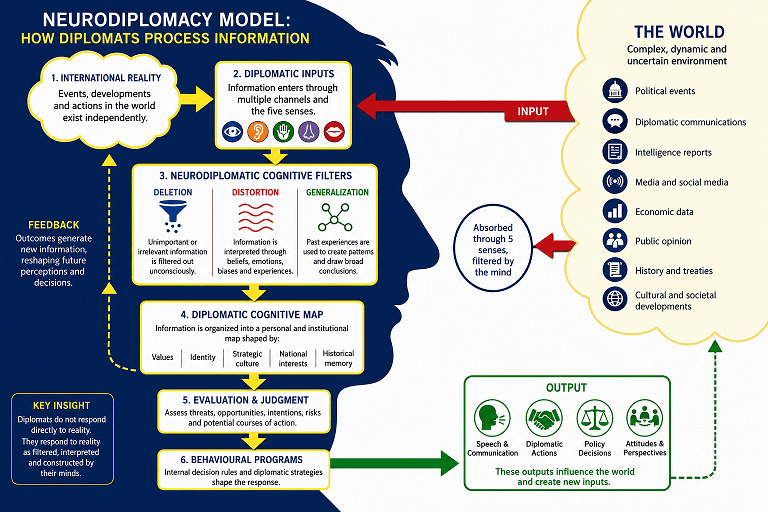
Relevance to Neurodiplomacy
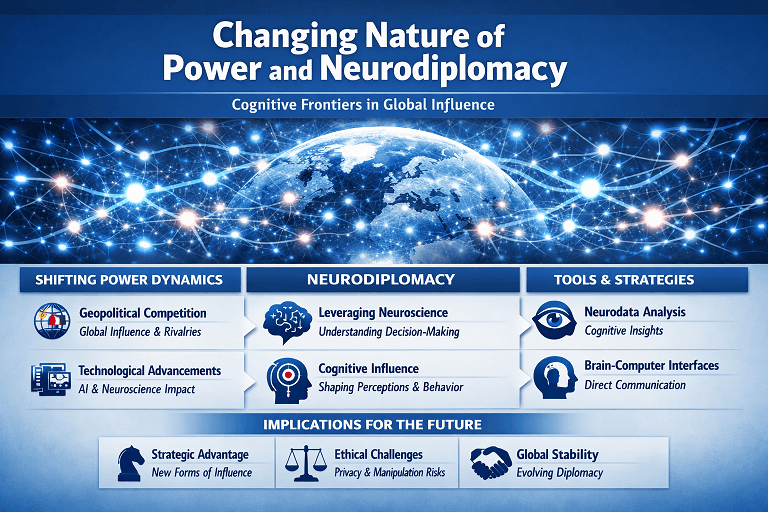
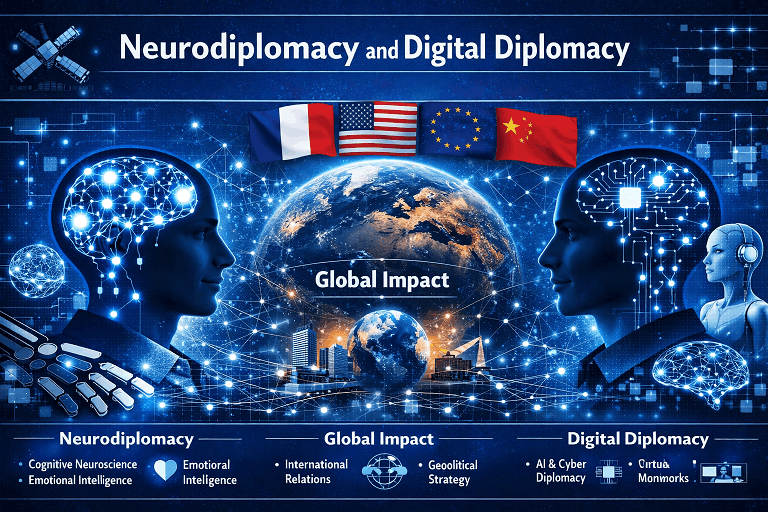
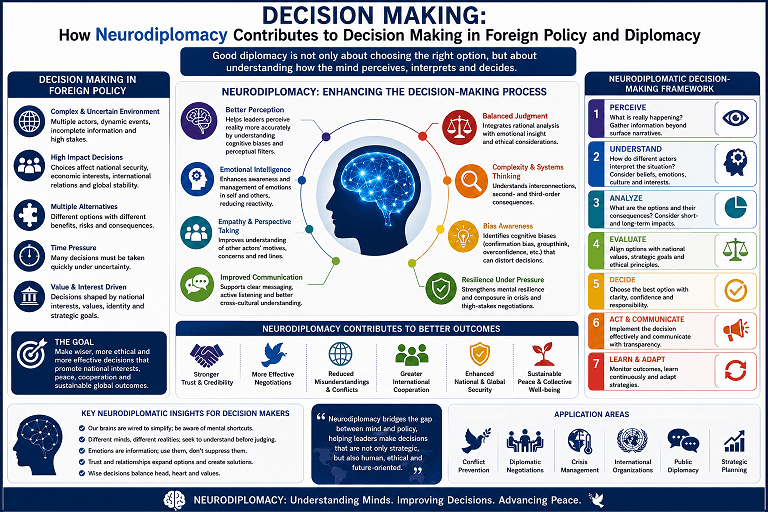
For scholars interested in Neurodiplomacy, Political Psychology in International Relations is particularly important. McDermott’s work provides a strong theoretical foundation for this emerging field.
Several themes explored in the book are central to neurodiplomatic research, including:
-
Perception and misperception
-
Emotional influences on decision-making
-
Leadership psychology
-
Trust formation
-
Cognitive biases
-
Strategic communication
The book demonstrates that diplomatic outcomes are influenced not only by material interests and geopolitical factors but also by the psychological processes operating within decision-makers.
In many respects, McDermott’s work serves as a bridge between traditional international relations scholarship and contemporary neurocognitive approaches to diplomacy and global governance.
Conclusion
Political Psychology in International Relations is a landmark contribution to the study of international politics, foreign policy, and political behavior. Rose McDermott successfully demonstrates that psychological processes are essential for understanding how political leaders perceive, interpret, and respond to international events.
By integrating psychology with international relations, the book expands traditional approaches to foreign policy analysis and provides a more comprehensive understanding of political decision-making. Its discussions of cognition, emotion, personality, and perception remain highly relevant to contemporary scholarship.
The book is particularly valuable for researchers interested in diplomacy, leadership studies, cognitive science, political psychology, and neurodiplomacy. It continues to serve as one of the foundational texts for understanding the human dimensions of international relations.
Overall Evaluation
A pioneering and intellectually rigorous work that successfully integrates psychology and international relations, offering indispensable insights into the cognitive and emotional foundations of political decision-making, diplomacy, and world politics.