“Better Decisions Begin with Better Understanding: Perceptions, Perspectives, and Neurodiplomatic Thinking.”
Practical Tools for Understanding Perceptions, Managing Complexity, and Making Better Decisions
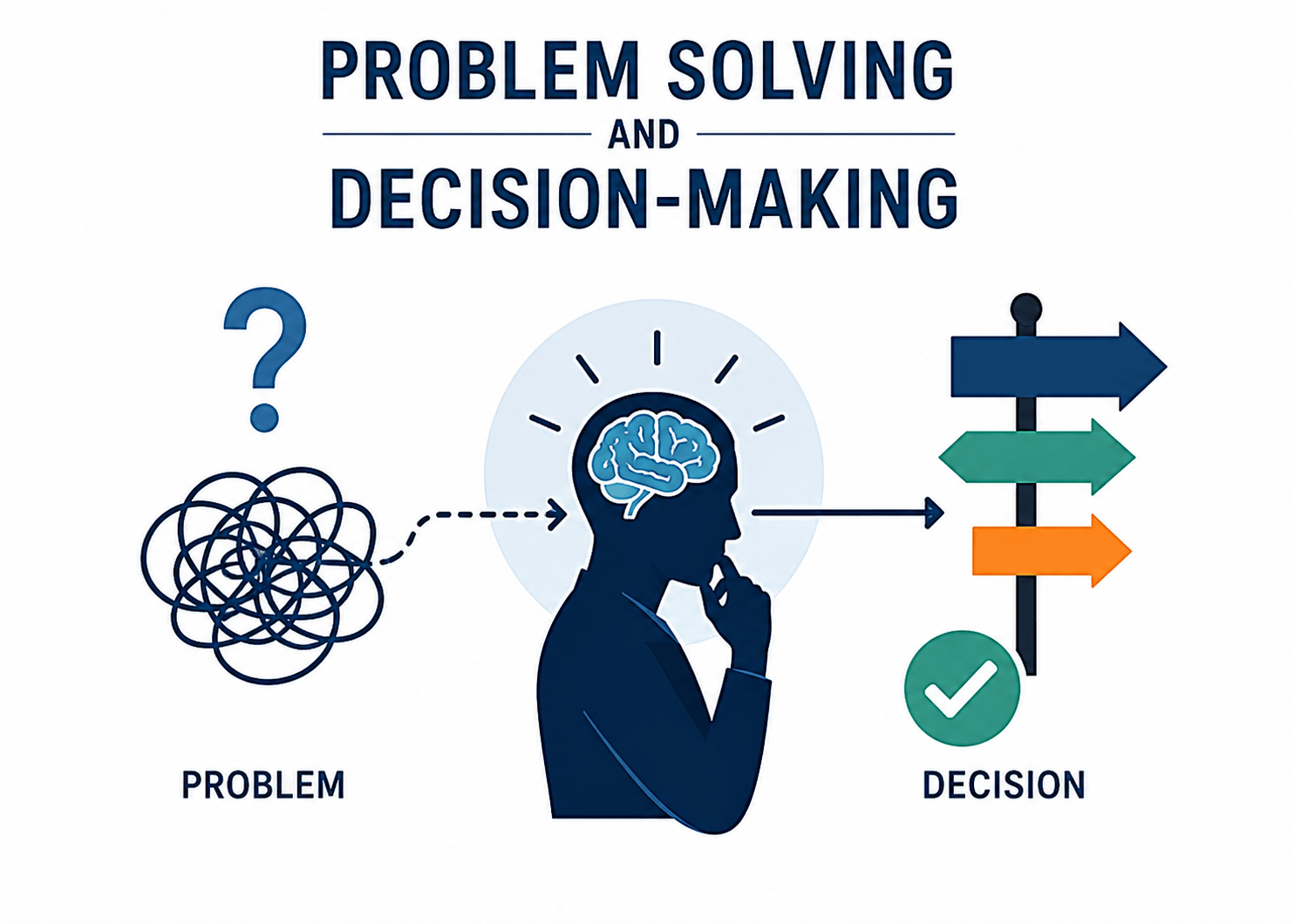
32-hour practical workshop on Problem Solving and Decision-Making from a Neurodiplomatic Perspective
Day 1 (8 Hours)
Understanding How the Mind Solves Problems and Makes Decisions
Session 1
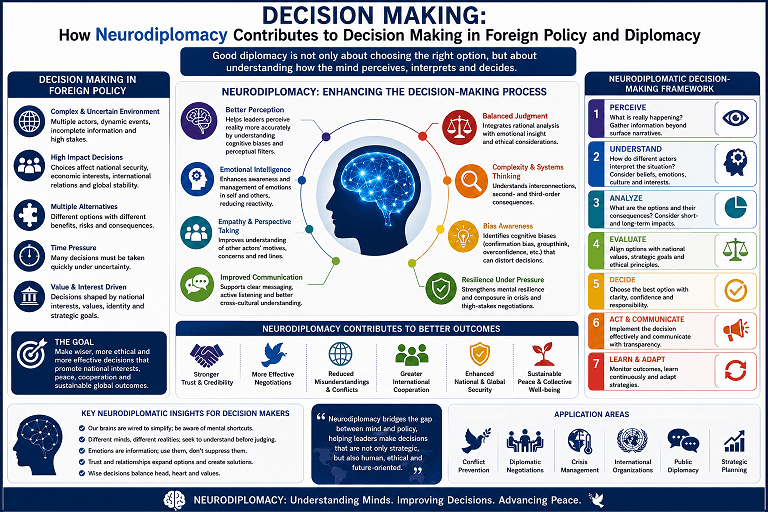
Introduction to Neurodiplomatic Decision-Making: Why Minds Matter in Complex Environments
Practical Exercise: Personal decision-making style assessment.
Session 2
Perception and Reality: How We Construct the Problems We Seek to Solve
Practical Exercise: Multiple-perspective analysis of the same problem.
Session 3
The Map Is Not the Territory: Cognitive Maps in Decision-Making
Practical Exercise: Building individual and group cognitive maps.
Session 4
Understanding Cognitive Biases in Problem Solving
Practical Exercise: Bias identification and debiasing activities.
Session 5
The Role of Emotions in Decision-Making
Practical Exercise: Emotional awareness and decision simulation.
Session 6
Strategic Thinking Under Uncertainty
Practical Exercise: Decision-making under incomplete information.
Session 7
Problem Identification and Problem Framing
Practical Exercise: Reframing complex challenges.
Session 8
Decision Laboratory I: Solving Complex Problems Through Multiple Perspectives
Practical Exercise: Team-based problem-solving challenge.
Day 2 (8 Hours)
Neurodiplomatic Tools for Effective Problem Solving
Session 9
The Neurodiplomatic Problem-Solving Model
Practical Exercise: Applying the model to real-world issues.
Session 10
Perception Management and Strategic Sense-Making
Practical Exercise: Stakeholder perception analysis.
Session 11
Questioning Techniques for Better Decisions
Practical Exercise: Strategic questioning drills.
Session 12
Creative Thinking and Innovation in Problem Solving
Practical Exercise: Divergent and convergent thinking exercises.
Session 13
Flexibility Means More Choices: Expanding Decision Options
Practical Exercise: Generating alternative solutions.
Session 14
Systems Thinking and Interconnected Problems
Practical Exercise: Systems mapping workshop.
Session 15
Collaborative Problem Solving and Group Decision-Making
Practical Exercise: Consensus-building simulation.
Session 16
Decision Laboratory II: Solving a Multi-Stakeholder Crisis
Practical Exercise: Team crisis-management exercise.
Day 3 (8 Hours)
Neurodiplomacy, Leadership, and Strategic Decision-Making
Session 17
How Leaders Think: Cognitive Processes in High-Level Decision-Making
Practical Exercise: Leadership decision simulation.
Session 18
Robert Dilts’ Pyramid and Neurodiplomatic Decision-Making
Practical Exercise: Applying the six levels to a policy challenge.
Session 19
Identity, Beliefs, and Values as Hidden Drivers of Decisions
Practical Exercise: Identifying assumptions and mental models.
Session 20
Decision-Making in Diplomacy and International Relations
Practical Exercise: Foreign policy scenario analysis.
Session 21
Managing Conflict Through Neurodiplomatic Problem Solving
Practical Exercise: Conflict-resolution workshop.
Session 22
Strategic Empathy and Perspective-Taking
Practical Exercise: Role reversal and stakeholder analysis.
Session 23
Negotiation as a Problem-Solving Process
Practical Exercise: Interest-based negotiation simulation.
Session 24
Decision Laboratory III: International Crisis Decision-Making Exercise
Practical Exercise: Crisis management simulation.
Day 4 (8 Hours)
Advanced Decision-Making and Future Challenges
Session 25
Decision-Making in Complex and Rapidly Changing Environments
Practical Exercise: Adaptive decision-making scenarios.
Session 26
Digital Information, Artificial Intelligence, and Decision Quality
Practical Exercise: Evaluating information and reducing misinformation.
Session 27
Neurodiplomacy and Strategic Foresight
Practical Exercise: Scenario planning workshop.
Session 28
Managing Uncertainty and Risk
Practical Exercise: Risk assessment simulation.
Session 29
Building Resilient Decision-Making Systems
Practical Exercise: Designing decision frameworks.
Session 30
Learning from Failure: Feedback and Continuous Improvement
Practical Exercise: Post-decision review and lessons-learned process.
Session 31
Capstone Preparation: Solving a Global Governance Challenge
Practical Exercise: Team strategy development.
Session 32
Grand Neurodiplomatic Simulation: Decision-Making During an International Crisis
Practical Exercise: Full-scale simulation integrating all workshop tools and techniques.
Expected Learning Outcomes
By the end of the workshop, participants will be able to:
- Understand how perceptions shape problems and decisions.
- Identify and manage cognitive biases.
- Apply neurodiplomatic tools to problem solving.
- Improve strategic thinking under uncertainty.
- Use Robert Dilts’ Pyramid as a decision-making framework.
- Enhance creativity and flexibility in generating solutions.
- Improve group and organizational decision-making.
- Manage conflict through structured problem-solving techniques.
- Apply systems thinking to complex challenges.
- Make more effective decisions in diplomacy, leadership, and international affairs.
This workshop is particularly suitable for diplomats, foreign ministry officials, policy analysts, negotiators, managers, military officers, international organization staff, and leadership professionals because it combines cognitive science, diplomacy, strategic thinking, problem solving, negotiation, and decision-making into a highly practical learning experience.