Applying Cognitive Science, Communication, and Decision-Making Tools in Diplomacy and International Relations
3-Day (20-Hour) Professional Workshop Structure
Day 1 (7 Hours)
Understanding Perceptions, Communication, and the Neurodiplomatic Mind
Session 1
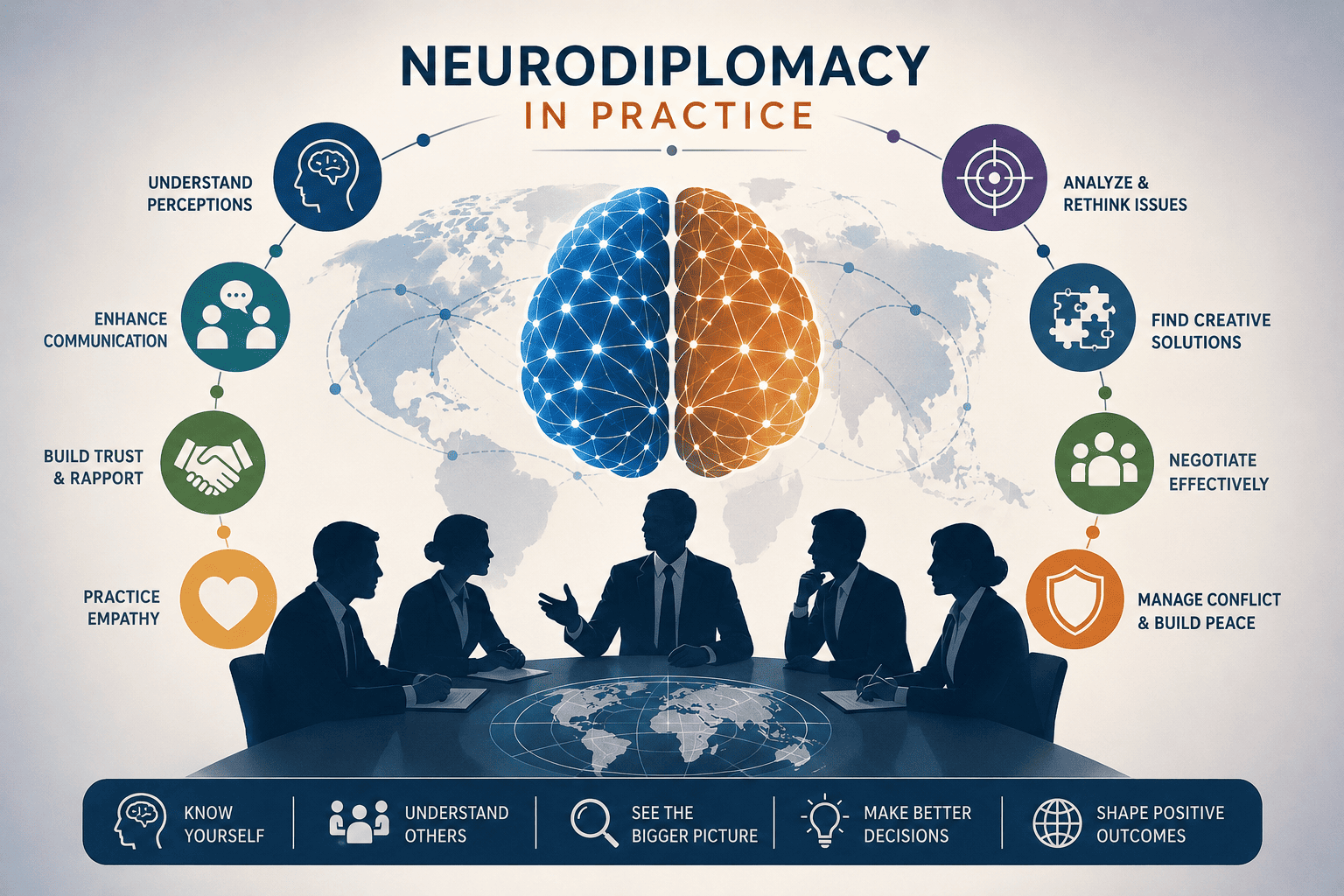
Introduction to Neurodiplomacy: Why Understanding Minds Matters in Diplomacy
Practical Exercise: Self-assessment of diplomatic communication styles.
Session 2
The Map Is Not the Territory: Perception, Misperception, and International Politics
Practical Exercise: Analyzing multiple interpretations of the same international event.
Session 3
How Leaders Think: Cognitive Maps and Foreign Policy Decision-Making
Practical Exercise: Mapping the perceptions of world leaders during international crises.
Session 4
Building Rapport in Diplomacy: Establishing Trust Across Cultures
Practical Exercise: Rapport-building techniques and diplomatic interaction drills.
Session 5
You Cannot Not Communicate: Verbal and Nonverbal Communication in Diplomacy
Practical Exercise: Decoding diplomatic messages, gestures, silence, and signaling.
Session 6
Strategic Listening and Questioning Techniques for Diplomats
Practical Exercise: Active listening and diplomatic interviewing simulation.
Session 7
Case Study Laboratory: Perception and Misperception in International Crises
Practical Exercise: Group analysis of historical diplomatic crises.
Day 2 (7 Hours)
Neurodiplomacy in Negotiation, Conflict Resolution, and Influence
Session 8
Neurodiplomacy and International Negotiation: Understanding the Human Factor
Practical Exercise: Bilateral negotiation simulation.
Session 9
Strategic Empathy: Understanding the Other Side Without Agreeing With It
Practical Exercise: Perspective-taking exercises.
Session 10
Reframing Diplomatic Problems: Turning Obstacles into Opportunities
Practical Exercise: Reframing difficult diplomatic scenarios.
Session 11
Managing Emotions in Negotiations and International Disputes
Practical Exercise: Emotional intelligence and diplomatic self-regulation techniques.
Session 12
The Role of Trust in International Cooperation
Practical Exercise: Trust-building simulation among competing actors.
Session 13
Neurodiplomacy and Conflict Resolution
Practical Exercise: Mediation and conflict de-escalation role-play.
Session 14
Simulation Exercise: Resolving an International Crisis Through Neurodiplomatic Techniques
Practical Exercise: Team-based diplomatic crisis simulation.
Day 3 (6 Hours)
Neurodiplomatic Decision-Making and the Future of Diplomacy
Session 15
Robert Dilts’ Pyramid as a Neurodiplomatic Decision-Making Model
Practical Exercise: Applying the six levels to a foreign policy problem.
Session 16
Identity, Beliefs, and Values in International Relations
Practical Exercise: Identifying hidden assumptions in diplomatic disputes.
Session 17
Analyzing Foreign Policy Through a Neurodiplomatic Lens
Practical Exercise: Group analysis of a contemporary international issue.
Session 18
Digital Diplomacy, Artificial Intelligence, and Strategic Communication
Practical Exercise: Designing a neurodiplomatic communication strategy.
Session 19
The Neurodiplomatic Diplomat: Essential Skills for the Twenty-First Century
Practical Exercise: Competency assessment and skills-development workshop.
Session 20
Capstone Simulation: Neurodiplomatic Summit on a Global Crisis
Practical Exercise: Participants conduct a full diplomatic negotiation using all workshop techniques.
Expected Learning Outcomes
By the end of the workshop, participants will be able to:
- Analyze diplomatic situations through a neurodiplomatic framework.
- Identify perception gaps and sources of misperception.
- Build rapport and trust in international interactions.
- Apply communication and listening techniques effectively.
- Use strategic empathy in negotiations.
- Employ reframing techniques in conflict resolution.
- Apply Robert Dilts’ Pyramid to foreign policy analysis.
- Enhance decision-making and negotiation skills.
- Understand the role of emotions, identity, and beliefs in diplomacy.
- Design neurodiplomatic strategies for contemporary international challenges.
This workshop typically works very well for diplomats, foreign ministry officials, negotiators, international civil servants, graduate students in international relations, and peacebuilding practitioners because roughly 60% of the workshop is experiential learning and simulation-based, reflecting the practical nature of Neurodiplomacy.