Book Information
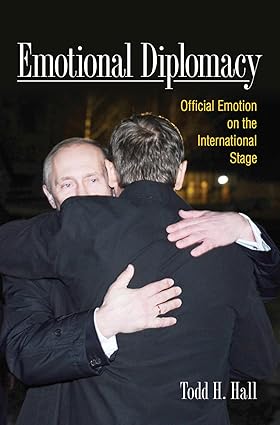
Emotional Diplomacy: Official Emotion on the International Stage
Author: Todd H. Hall
Publisher: Cornell University Press
Year: 2015
Field: International Relations, Diplomacy, Political Psychology, Foreign Policy Analysis
Introduction
Emotional Diplomacy: Official Emotion on the International Stage represents a significant contribution to the growing literature on emotions in international relations. In this groundbreaking work, Todd H. Hall challenges the long-standing assumption that diplomacy and foreign policy are primarily driven by rational calculations of interests and power. Instead, he argues that emotions are not merely private feelings experienced by political leaders but can be strategically expressed and managed by states as instruments of diplomacy. (OUP Academic)
The book occupies an important place within the broader “emotional turn” in international relations scholarship, which seeks to understand how emotions shape political behavior, diplomatic interactions, and international outcomes. Hall’s central innovation is the concept of emotional diplomacy, which he defines as coordinated state behavior that officially projects a particular emotional response toward another state in pursuit of political objectives. (DOI)
By combining insights from international relations theory, sociology, psychology, and diplomacy studies, Hall provides a compelling framework for understanding the strategic role of emotions in world politics.
Central Argument
The book’s primary argument is that states deliberately employ emotional expressions as tools of diplomatic strategy. These expressions are not simply symbolic gestures or rhetorical devices; rather, they are coordinated political performances designed to influence the perceptions, expectations, and behavior of other actors in the international system. (ResearchGate)
Hall contends that official emotional displays can have tangible political consequences, affecting:
-
Diplomatic negotiations,
-
Alliance relationships,
-
International cooperation,
-
Military decision-making,
-
Crisis management,
-
Reconciliation processes.
According to Hall, understanding international politics requires analyzing not only material capabilities and strategic interests but also the emotional signals that states communicate to one another. (OUP Academic)
This argument challenges traditional realist and rationalist approaches that often treat emotions as irrelevant or irrational elements of political life.
Structure and Content
The book is organized around three major forms of emotional diplomacy:
The Diplomacy of Anger
Hall examines how states strategically display anger to communicate resolve, deterrence, and dissatisfaction.
Official expressions of anger can serve multiple functions:
-
Demonstrating commitment to national interests.
-
Signaling willingness to escalate disputes.
-
Influencing adversaries’ calculations.
-
Mobilizing domestic and international audiences.
The analysis of the 1995–1996 Taiwan Strait Crisis provides a particularly insightful illustration of how emotional signaling can shape international crises and strategic interactions. (Google Books)
The Diplomacy of Sympathy
The book also explores how states employ sympathy and compassion during crises and humanitarian emergencies.
Hall argues that expressions of sympathy can:
-
Build trust,
-
Strengthen diplomatic relationships,
-
Promote cooperation,
-
Facilitate reconciliation.
His examination of international reactions following the September 11 terrorist attacks demonstrates how sympathy can become a powerful diplomatic resource that reshapes political relationships and strategic alignments. (ResearchGate)
The Diplomacy of Guilt
Perhaps the most original section of the book concerns the role of guilt in international politics.
Hall analyzes postwar relations between West Germany and Israel, showing how official expressions of guilt and remorse became central components of reconciliation and diplomatic engagement. (ResearchGate)
This discussion highlights how emotions can contribute not only to conflict but also to healing historical wounds and rebuilding international relationships.
Theoretical Contributions
Advancing the Emotional Turn in International Relations
One of the book’s most important contributions is its advancement of emotion as a legitimate category of analysis within international relations.
For decades, mainstream theories focused primarily on:
-
Power,
-
Security,
-
Institutions,
-
Rational choice.
Hall demonstrates that emotional expressions themselves can function as strategic instruments that influence international behavior. (Wikipedia)
This contribution broadens the analytical scope of international relations theory and encourages scholars to consider dimensions of diplomacy that had previously received limited attention.
Bridging Psychology and Diplomacy
The book successfully bridges political psychology and diplomatic studies.
Hall shows that diplomatic communication involves more than the transmission of information; it also involves the management of emotions, symbols, identities, and social expectations.
This insight is particularly relevant for contemporary diplomacy, where public narratives, symbolic gestures, and emotional appeals increasingly influence international interactions.
Expanding the Concept of Strategic Communication
Another significant contribution is Hall’s treatment of emotional expression as a form of strategic communication.
States do not merely communicate policies; they communicate emotional positions that can alter the interpretation of those policies.
By conceptualizing emotional displays as strategic acts, Hall provides a more sophisticated understanding of diplomatic signaling and international persuasion.
Methodological Strengths
Strong Empirical Foundation
A major strength of the book is its extensive empirical research.
Hall draws upon:
-
Government documents,
-
Diplomatic statements,
-
Interviews,
-
Historical records,
-
Sources in multiple languages.
This broad evidentiary base enhances the credibility of his arguments and demonstrates the practical relevance of emotional diplomacy. (ResearchGate)
Comparative Case Studies
The selection of diverse case studies strengthens the book’s explanatory power.
By examining anger, sympathy, and guilt across different historical and political contexts, Hall demonstrates the versatility of his theoretical framework.
The comparative approach also helps illustrate how different emotions generate distinct diplomatic effects.
Relevance to Cognitive Science
The book has considerable relevance for cognitive science because it examines how emotional signals influence perception, judgment, and decision-making.
Many of Hall’s arguments align with findings in cognitive psychology regarding:
-
Emotional cognition,
-
Information processing,
-
Social perception,
-
Trust formation,
-
Decision-making under uncertainty.
The book implicitly recognizes that diplomats and political leaders are cognitive actors whose decisions are influenced by emotional as well as rational considerations.
From a cognitive science perspective, emotional diplomacy can be viewed as a mechanism for shaping mental models, expectations, and interpretations within international interactions.
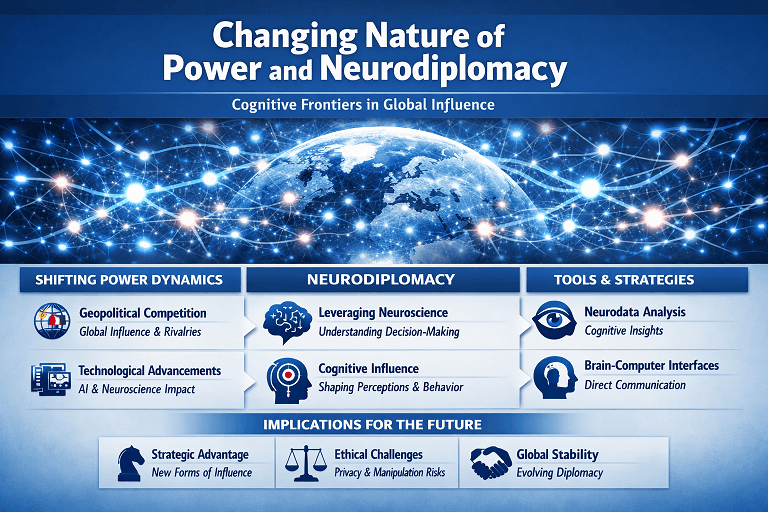
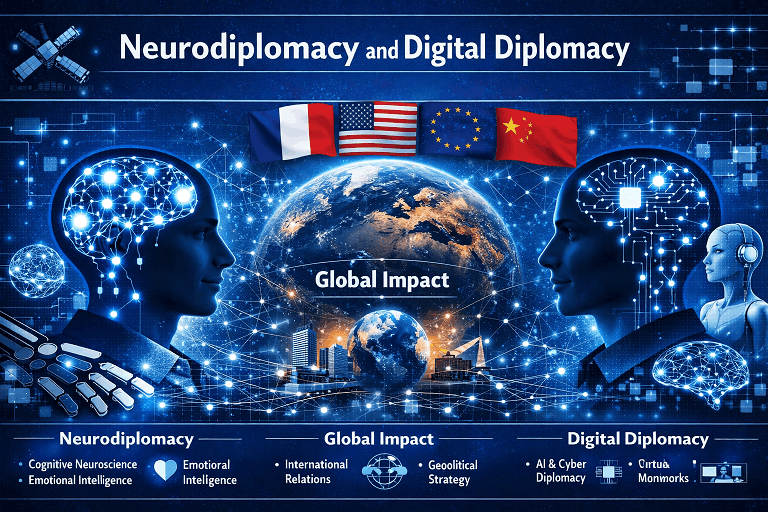
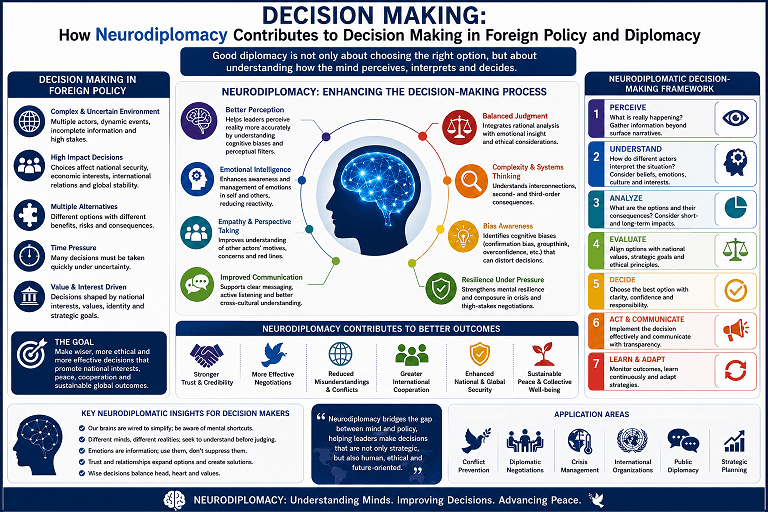
Relevance to Neurodiplomacy
For scholars interested in neurodiplomacy, Hall’s work is particularly valuable.
Neurodiplomacy seeks to integrate diplomacy with cognitive science, neuroscience, and communication studies. Hall’s analysis directly supports this approach by demonstrating that:
-
Emotions influence diplomatic outcomes.
-
Perceptions shape international interactions.
-
Communication extends beyond factual information.
-
Trust and empathy have strategic significance.
-
Psychological processes affect foreign policy behavior.
His work provides an important theoretical foundation for understanding how emotional and cognitive mechanisms operate within diplomatic environments.
Indeed, Emotional Diplomacy can be regarded as one of the most important intellectual precursors to contemporary neurodiplomatic thinking.
Criticisms and Limitations
Despite its strengths, the book has some limitations.
Measurement Challenges
One challenge concerns measuring emotions at the state level.
States do not literally experience emotions; rather, political actors perform and communicate emotional images on behalf of states. Determining the authenticity of these expressions can therefore be difficult.
Limited Engagement with Neuroscience
While the book draws heavily on sociology and political psychology, it engages less extensively with developments in cognitive neuroscience.
Future research could build upon Hall’s framework by incorporating findings from neuroscience regarding emotion regulation, empathy, trust, and decision-making.
Generalizability
Some readers may question whether all emotional expressions in international politics can be explained through strategic logic. In certain cases, emotions may emerge spontaneously rather than as deliberate diplomatic performances.
Nonetheless, these limitations do not significantly diminish the book’s overall contribution.
Conclusion
Emotional Diplomacy: Official Emotion on the International Stage is a pioneering and intellectually sophisticated work that significantly advances the study of diplomacy and international relations. By demonstrating that states strategically deploy emotional expressions to influence international outcomes, Todd Hall expands our understanding of how diplomacy operates in practice.
The book successfully challenges conventional assumptions about rational state behavior and offers a compelling framework for analyzing the role of anger, sympathy, and guilt in international politics. Its interdisciplinary approach, strong empirical foundation, and theoretical originality make it an essential text for scholars of diplomacy, international relations, political psychology, and cognitive approaches to world politics. (OUP Academic)
For researchers interested in diplomacy, cognitive science, emotional intelligence, strategic communication, and neurodiplomacy, Hall’s work remains one of the most important contributions to understanding the human dimensions of international relations.
Why It Matters for Neurodiplomacy
This book is particularly relevant to Neurodiplomacy because it demonstrates that diplomatic interactions are influenced not only by rational calculations of power and interests but also by emotional signaling, perception, trust, empathy, and communication. Its arguments complement cognitive science perspectives on decision-making and provide a valuable foundation for understanding the psychological and emotional dimensions of diplomacy in international relations and world politics.
Overall Assessment
A pioneering and highly influential study that demonstrates how emotions function as strategic instruments of diplomacy and international politics, fundamentally enriching our understanding of state behavior in the global arena.